A Response to A2IM’s Objection to the New Statutory Mechanical Rates: Part 1

By Chris Castle

This post first appeared on MusicTechPolicy

A2IM, the independent label trade association, filed comments with the Copyright Royalty Board opposing increasing the mechanical royalty to songwriters from the “frozen rates” to the 12¢ (plus cost of living adjustment) settlement rate of the participating record companies with the NMPA and NSAI. I wrote a reply to the A2IM comment that was timely filed with the CRB–barely. I will repost that comment in a few parts here on MTP. As I had about 10 minutes to write the comment due to the lateness of the A2IM filing, I will add some bracketed language to make it a bit less inside baseball.

Unfortunately, A2IM did not participate in the Phonorecords IV proceeding and came in a bit late to the party complaining of the check. Nobody stopped them from participating; it appears they put it all on red and it came up black.

As I told the Judges, I will focus on a few issues raised by the American Association of Independent Music regarding the CRB settlement process in general, the penny rate structure of the mechanical royalty system in the United States, and their proposal that mechanical licensing for physical configurations be handed over to the Mechanical Licensing Collective.

The Clean Slate

A2IM raises the idea of compensating songwriters on a percentage of wholesale basis which is how mechanicals are paid in many if not most other countries.  I understand why labels favor this structure but I also understand why publishers and songwriters do not.

First, I am of the view that a percentage of wholesale royalty is incompatible with a compulsory license.  [To my knowledge, the European countries operating on a percentage of wholesale basis do not have a compulsory licensing regime.] Imposing a compulsory obligation to have a third party set the “just compensation” for rights the government takes from the songwriter has that unconstitutional ring to it [see 5th Amendment and Takings by Prof. Richard Epstein, an oldie but goodie].

And that really is the problem with a percentage of wholesale royalty—it allows the conflicted record company to call the tune [for songwriters] which is the very definition of moral hazard.  Having said all that, I am happy to have a conversation about a clean slate and reimagining of the entire structure as long as it really is a clean slate.  Of course, that will mean throwing away the entire controlled composition structure.

It must be said that in countries with a percentage of dealer price mechanical royalty there [are] no controlled composition terms at all.  So if we are to have the discussion, let’s have all the discussion for all the record companies including catalog.  If we want to be like Europe, let’s be European.

We cannot overlook that changing that compensation system will throw royalty compliance examinations of every record company onto the table with great force.  How can songwriters be asked to give up a system that has been in place since 1909 without knowing whether they have gotten a straight count heretofore?

It must also be said that if A2IM members feel justified in changing the entire U.S. mechanical rate system, there is nothing stopping them from creating such terms in their new signings under controlled compositions clauses.  In fact, such arrangements might be a good laboratory to experiment with these alternative structures.

[To be continued.]

Do Songwriters Want the Cheese or to Escape the Trap in Phonorecords IV?

By Chris Castle

Here it is.  The US economic data is undeniably leading to a stagflationary outlook reminiscent of the 1970s.  If you don’t have first hand knowledge of the inflation that started under Nixon and Arthur Burns, burned through Ford and Carter and finally came to rest with Federal Reserve Chair Paul Volker and President Ronald Reagan that ultimately resolved in the low inflation that began trending downward in 1983, trust me; it was awful.  

This is why it is insane–if not actually cruel–to force songwriters to take a fixed five year mechanical rate with no downside inflation protection in the form of a cost-of-living adjustment. What is bizarre is that this just happened in the streaming mechanical for the Phonorecords IV proceeding, in case you didn’t hear it over the sound of the backslapping.

It appears that songwriters will get the cost of living adjustment (or “COLA”) on the physical mechanical side–you know, the one the smart people told us was unimportant–but failed to get it on the streaming mechanical side which the smart people tell us is critical to the continuation of life as we know it. Even though it certainly looks more likely than not that growth of the money supply and government debt produces the rocket fuel for the inflation that took 1200 points off of the DJIA in one day. 1970s all over again, including James Taylor crooning “Fire and Rain.”

But economists are beginning to remind us that what makes anyone think the 1970s is the worst it can get?  There’s a tendency to think of 1970s stagflation as a downside boundary.  It’s not.  It just happens to be the worst sustained economic times in living memory as the Depression-era Greatest Generation settles into the silence of old age.  However, there’s nothing magical about the 1970s. 

As it stands today, over 40 countries already have an inflation rate in the double digits, America is a debtor nation, Wall Street has sold a huge number of jobs off shore, productivity growth is lower than the 1970s and we’ve gone along with the central banks’ zero interest rate policies in the years since the 2008 crash.  The piper must be paid for the Lehman Bros. of this world leading us all over the cliff in the great recession, even though the central banks’ easy money policy has delayed that payback.  All of these are reasons why there must be a cost of living adjustment in any government imposed statutory rate that takes away bargaining rights. But wait, there’s more.

When Federal Reserve Chair Jay Powell changed the Fed’s inflation targeting (remember “transitory inflation”?), he blew an opportunity to start fixing the real problem.  But no more.  The chickens are coming home to roost with increases in interest rates and yet-to-materialize promise of quantitative tightening. Now that Mr. Powell was reconfirmed for another term.

If there’s even a chance—any chance—that 1970s style stagflation and depression-level demand destruction may be the best we can hope for, anyone setting a wage control like the statutory mechanical royalty rate simply cannot order that rate for five years and fail to take into account the potential for a coming inflation spike even if the smart people sign a suicide pact.  Yet this is exactly what just happened with the settlement of the streaming mechanical rates for Phonorecords IV at the Copyright Royalty Board.

Admittedly, the Copyright Royalty Judges are boxed in given the preference for voluntary settlements baked into the Copyright Act.  That gives the smart people far too much credit and fails miserably to allow the Judges to do what judges do—bring contemplative thought to the problem.  This is what judges do, it is not what lobbyists and their lawyers do.  But unless the public raises the failure to include a cost of living adjustment in comments, so far there’s little basis for the Judges to correct the defective settlement.

It is essential that the Judges are allowed to do their job outside the hurley burley of the commercial relationship with the biggest corporations in history whose lawyers are hell-bent on conducting a scorched earth litigation campaign to crush songwriters.  This is especially true of Google, Amazon and Spotify who have demonstrated truly vile behavior during the entire proceeding, a bully-fest beyond category.

George Johnson hit upon a potential solution in his recent comment. If one applies the COLA to the royalty pool after the mind-numbing “greater than/lesser of formula” created by those seeking full employment for lobbyists, lawyers and accountants, that’s actually a pretty elegant solution. I would quibble a little bit with the idea and apply the COLA as an uplift to the actual royalty statement so that the royalty recipients could see how that uplift was arrived at (which in theory would make them less likely to audit the MLC). That “show your work” approach would allow the payee to see how the MLC got there and make it easier to audit upstream for obvious mistakes.

It will also make it easier for the Judges to add the COLA because the building blocks of the calculation won’t change from the voluntary settlement (TCC, revenue share, etc.).

If songwriters are forced to stay in the confines of the statutory license trap, at least a COLA keeps the cheese from melting before their eyes. Plus they’re not required to guess today what the cost of food at home, shelter and gasoline will be five or six years from now.

The Judges would also have the opportunity to bring the services into a new era of fairness and wipe out the bullying of process as punishment that we all had to endure through two different proceedings.

Remember, as you have probably read or realized yourselves, all the US needs is one more good exogenous roundhouse shock to the economy (such as the world abandoning petrodollars for a basket of currency such as the ruble, the renminbi and the real to pick a few out of thin air), and we are in serious economic straights with hyperinflation as the real bugaboo.

Remember also that the US bonds pay interest at less than the inflation rate.

The decline of the dollar as the premier world reserve currency will put a stop to that interest/inflation spread practically overnight. The US government will not be able to borrow from a seemingly bottomless pit of lenders paying US dollars for US bonds at any price for the stability and transferability. What happens then? Probably interest rates will increase–a lot–to make it worth the lender’s money. Which means the debt service will take up an even bigger chunk of the US budget which will give us less to spend on the “Cross of Iron” weaponry that got us into the petrodollar business in the first place. And so it goes.

Songwriters may not be able to do anything tangible to stop cataclysmic economic events, but they can demand at least a bare minimum of downside protection through a COLA.

You may say, why so cynical? I’m not altogether cynical, I hope that I’m just cynical enough. The numbers don’t lie. If you know anyone who was a child during the Great Depression, or is the child of that person, ask them what it was like.

The overarching point is why would you want to take a chance and bet it all on the smart people?

The cheese or the trap. Which will you have?

Where Was the Board? AdRev and YouTube Play Essential Supporting Roles in one of the Biggest YouTube Scams According to Billboard’s Reporting by @wordsbykristin

By Chris Castle

And that’s saying a lot. Thanks to first-class investigative reporting by Kristin Robinson at Billboard, the story of what looks to be one of the biggest advertising fraud cases can be told. It involves a whole lot of people looking the other way starting with the boards of directors of Downtown Music (which owns AdRev) and YouTube (which doles out access to Content ID).

This isn’t the first time Google and YouTube have been caught up with shady dealings due to Google being the paymaster of piracy and handing out advertising money which is the mothers milk of online crime. Trichordist readers will recall Maria Schneider’s 2016 post (“YouTube, Pushers of Piracy“) that foreshadowed her 2020 lawsuit against YouTube over the effects of YouTube’s restrictive access to Content ID that is now poised to go to trial

Trichordist readers will also recall the bad old days of brand sponsored piracy led by Google and Google’s ad serving deal with Megavideo according to the Megavideo indictment in an extradition proceeding that somehow…ahem…has been stalled offshore for ten years by a bottom less pit of legal fees paid for by someone in.a scene worthy of Hieronymus Bosch. 

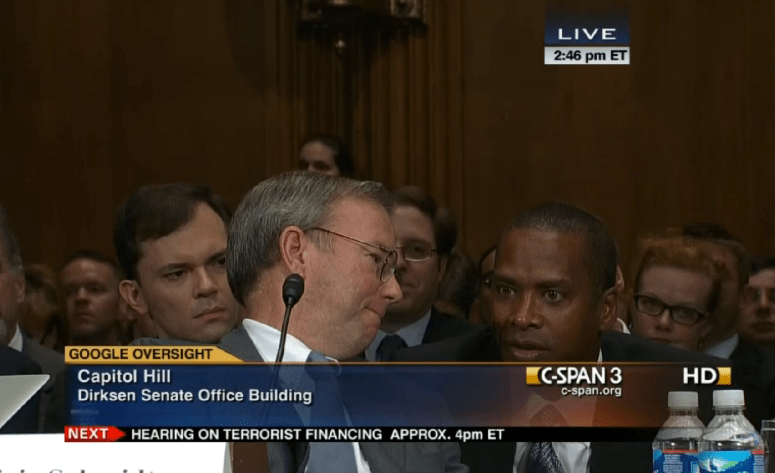
And who can forget Google’s $500,000,000 non prosecution agreement with the DOJ when the Obama Justice Department refused to actually indict Larry Page, Sergei Brin and Eric Schmidt for violating the Controlled Substances Act and even apologized to Google–despite the 4,000,000 documents and who knows how much in person testimony before a Rhode Island grand jury that directly implicated Larry Page and the massive shareholder lawsuit and settlement against Google for squandering the shareholders money keeping the C-suite’s butts out of prison. When questioned about the nonprosecution agreement by Senator John Cornyn before the Senate Antitrust Subcommittee, Eric “Uncle Sugar” Schmidt refused to answer on the advice of counsel, often referred to as “taking the Fifth.”

L-R Google Brain Trust Chief Shill Pablo Chavez, Uncle Sugar, Head Lawyer David Drummond

But it is the first time that Downtown has been involved. I have the same question of both companies: Where was the board? The reason we have boards of directors is to protect the shareholders from exactly this kind of thing. In YouTube’s case, they have another layer of fiduciary duty–protecting the advertisers–both large and small–who trust them with billions of the advertisers’ money. Not to mention the children that the platform caters to.

Take the time to read Kristin Robinson’s outstanding journalism and then see if you can answer the question–where were the boards? I think the entire story hasn’t been told.

@SchneiderMaria Rolls Over YouTube in Her Copyright Infringement Case

By Chris Castle

It’s been just over two years since Maria Schneider sued YouTube for copyright infringement. But the court has now cleared a path for her to actually proceed with her main case by dismissing–emphatically–YouTube’s motion to dismiss for failure to state a claim.

According to Reuters:

Schneider sued YouTube in 2020 on behalf of a proposed class of small copyright owners, arguing the platform only protects large copyright owners from infringement while allowing pirated content from others in order to draw in users. The group said major companies have access to YouTube’s advanced Content ID software to scan for and automatically block infringing content, while individual creators are left “out in the cold.”

But that’s not the critical part. Maria’s lawsuit alleges that YouTube YouTube removed copyright management information (CMI) in violation of 17 U.S.C. § 1202(b)–potentially intentionally.

The amended complaint states that YouTube knew that files containing audio and/or video works routinely contain CMI, that CMI is valuable for protecting copyright holders, and that the distribution of works with missing CMI on YouTube has induced, enabled, facilitated, and concealed copyright infringement. The plausible inference from these and similar allegations is that YouTube removed the CMI from plaintiffs’ works with knowledge that doing so carried a “substantial risk” of inducing infringement. 

One could see how anyone who intentionally removes one brick from the complex wall that protects big infringers like YouTube from truly massive liability for copyright infringement would be in a whole heap of trouble for inducing infringement (which gets you into Grokster land).

Personally, it’s my view that this is exactly what YouTube and Google do on a massive scale and that they should pay the class damages that will dwarf all the fines these people have already paid for everything from violations of the Controlled Substance Act to competition law violations. Truly Carl Sagan level damages…billions and billions.

We’re lucky Maria’s on the side of the angels. Fight on.

@MMercuriadis on the @CMAgovUK’s Whiff on the Streaming Report

Hipgnosis CEO Merck Mercuriadis had a strong statement in Music Week about the Competition and Markets Authority’s swing and a miss at the obviously absurd music streaming system as it was clearly identified by the groundbreaking report from the Digital Culture Media and Sport Select Committee of the UK Parliament. Given the good work done by the DCMS committee, the CMA report is simply insulting to those Members of Parliament.

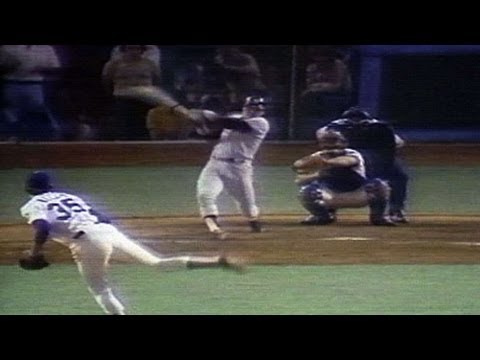
Bob Welch and Reggie Jackson, Game 2 1978 World Series

Unfortunately the CMA report reads like a lobbyist’s press release and Mercuriadis lays it down and calls them out. Even though this is a little inside baseball in the UK, Trichordist readers understand that the underlying issues involve every songwriter and involve every artist regardless of where you live and regardless of where you claim as home. Mercuriadis is exactly right, the money is there it’s just not getting to the right people.

The battle continues.

“[Hipgnosis] would like to thank the Competition and Markets Authority for acknowledging in its report today the lack of transparency in the music streaming market, and for highlighting the continued dominance of the market by the major labels and recorded music, along with the severely adverse impact this is having on songwriters’ ability to earn a living,” he said. “However, with 70% of all those responding to the CMA consultation calling for reform, it is regrettable that the CMA is not minded to investigate and address the clear failures its study identified.

“The Digital Culture Media and Sport select committee in its July 2021 report on the economics of music streaming – ‘Music streaming must modernize. Is anybody listening?’ – called for the CMA to address the economic impact of the music majors’ dominance.

“Today the CMA has not acted to address the impact on the creative songwriting community, and this is a missed opportunity to follow up on those concerns raised by Members of Parliament on the Digital Culture Media and Sport select committee. It is a disappointment for songwriters who earn pitiful returns from streaming, not because there is not enough to go round, but simply because it is not being shared fairly and equitably.”

Mercuriadis added: “Hipgnosis will continue to call for fundamental reform of a broken system which does not recognise the paramount role of the songwriter in the music ecosystem. We have always believed that the ultimate solution lies within the music industry itself and we will continue to advocate on behalf of songwriters with the major recorded music companies to push for a fair and equitable split. There would be no recorded music industry without songwriters.

“Legislative and government authorities have the power to redress the economic imbalance where major recorded music companies that own and control the major publishing companies are purposefully undervaluing the songwriter’s contribution. The Intellectual Property Office [UK’s Copyright Office] has a key role to play in redressing the imbalance and we will continue to support its work and efforts.

“Hipgnosis will continue to campaign for change at the highest levels, using our success to advocate and fight on behalf of the songwriting community and to take the songwriter from the bottom of the economic equation to the top.”

The @CMAgovUK UK Competition and Markets Authority’s Missed Opportunity: Reaction from @MrTomGray #BrokenRecord

The literature suggests that in the presence of…positive feedbacks [from the Get Big Fast strategy], firms should pursue an aggressive strategy in which they seek to grow as rapidly as possible and preempt their rivals. Typical tactics include pricing below the short-run profit-maximizing level (or even below the cost of goods sold), rapidly expanding capacity, advertising heavily, and forming alliances to build market clout with suppliers and workers and to deter entry of new players. Intuitively, such aggressive strategies are superior because they increase both industry demand and the aggressive firm’s share of that demand, stimulating the positive feedbacks described above.

Limits to Grown in the NEw Economy: Exploring the Get big Fast strategy in ecommerce https://scripts.mit.edu/~jsterman/docs/Oliva-2003-LimitsToGrowthInTheNewEconomy.pdf

By Chris Castle

You may have seen that the UK Competition and Markets Authority released a report on music streaming in the UK. Of course, because the same players dominate the UK market like they do in France…sorry, I meant Germany…sorry I meant Canada…sorry I meant Sweden…sorry I meant the United States…how different could the competition issues be for US artists and songwriters? You have the biggest corporations in commercial history (Apple, Amazon, Facebook and Google) and the “get big fast” wannabes like Spotify (and Pandora in the US) on one side, the three major labels and the music publishing affiliates on the other side and the artists, songwriters, indie labels, indie publishers and especially the session musicians and vocalists squeezed in the middle.

Plus you have all of the biggest of Big Tech companies as well as wannabe Get-Big-Fast acolytes like Spotify and Pandora setting almost identical price points and freezing them there for a decade while refusing to exercise pricing power and nobody finds that just a trifle odd? Then in the grandest of grand deflections passing this off as the “pie” that everyone should look at instead of acknowledging that it’s the poptart served at the kid’s table in the nursery instead of the feast at the adult’s table in the dining room where the gravy bowls of shares of public stock are handed out dot-bomb style with a side of advertising barter. All while singing an apologia for payola and consumer welfare based on cheapness? You know there’s another way to get really, really cheap goods for consumers that ain’t quite so well received in history.

And yet somehow the Competition and Markets Authority passes this off as good for the consumer? With no meaningful discussion of the Malthusian and anticompetitive effects of the pro-rata model and pretty much summarily ignoring the actual revenue earned by “successful” artists in the beggar-thy-neighbor pricing and revenue charade. Not to mention the complete failure to discuss the supervoting stock at Spotify, Google and Facebook and all the other accoutrements of power that give Daniel Ek, Martin Lorentzen, Tim Cook, Sergey Brin, Larry Page, Mark Zuckerberg and Jeff Bezos control over the global music industry–pale males one and all and also looking pretty stale around the edges the singularity notwithstanding. And then there’s Bytedance and Tencent.

The logic of the CMA in avoiding these issues rivals the Warren Commission’s Single Bullet Theory. But makes total sense as the triumph of the lobbyists for the biggest corporations in commercial history. And sometimes you just might find you get what you need.

We will continue to dig into this latest report and its methodology as will others like Tom Gray, the dynamic founder of the hugely effective #BrokenRecord campaign that led to this investigation which is not over by a long shot. Tom had this reaction to a what’s next question and we take his guidance:

The CMA’s initial findings are:

the music market doesn’t have much competition;

the actions of the Majors and DSPs actively reduce that competition;

artists and songwriters are mostly, if not entirely, doing badly out of it;

but they accept the status quo using the narrowest paradigm of competition and its value to the consumer. It doesn’t go near the fact that the Majors used market power to create the very ‘norms’ the report resigns us to.

A difficult read: one which points to the weakness or indifference of national ‘authorities’ in the face of the gross expansion of multi-nationals unfettered by regulation. Monopolies should be broken to protect citizens and workers, not only to defend consumerism’s need of a saving.

What’s most ironic is you could take the CMA’s findings to a different authority with a more progressive outlook and get a completely different result. They simply don’t seem to have considered it their job to care about the hugely visible negative consequences of concentrated power on musicmakers.

If you would like to tell the Competition and Markets Authority what you think about their statements they want to hear from you.

Streaming Mechanical Complexity Begets Complexity Begets Legal Fees

Remember how the physical mechanical increased from 9.1¢ to 12¢? And it applies to each record sold? If a songwriter got a cut and the artist sold 100 records, the songwriter got $12. That’s $12 today, next month, six months from now. You could plan. You could complain about a statement to the record company. If the record company wanted you to write more songs for their artists, they’d listen and might even fix an error on your statement. Remember: On records and downloads, the record companies pay.

But what about streaming? The record companies don’t pay on streaming, Big Tech pays. The biggest corporations in the world pay: Spotify, Amazon, Apple, Google, Pandora, and their dozens of lawyers. Artist Rights Watch posted a series of Tweets that shows excerpts from the proposed regulations to calculate streaming royalties–and remember this is the one that we’re told is the important one, the one that dozens of lawyers spend millions in legal fees to come up with. It reads kind of like a drunk you can smell a block away but who sits down next do you and asks how do they look for three days?

The first think you realize is that unlike the 12¢ rate for physical, there’s no way anyone call tell a songwriter how much they’re going to make today or next year on a per play. They can’t even tell you how much you’re going to make today for a burger next Tuesday. Or Wednesday. Or Thursday. But one thing you definitely know is that the lawyers are going to make bank writing this crap, appealing this crap, renegotiating this crap. This section here is a big part of what the fight is all about, can you believe it? This is what the Big Boys and Girls think is important and you can understand why. It puts more legal fees on the table and you know who eventually pays for the legal fees one way or another? Take a look in the mirror.

And understand this: If you get a royalty statement for streaming royalties, take a look at the per-stream rate! It usually starts three or four or even five zeros to the right of the decimal place. It’s even worse than the recording royalty. And DIMA wants us to fight among ourselves against the record companies after all this?

David Brooks and @knopps Give The Other Side of Dynamic Pricing: Big Tech Scalpers

What we don’t like about dynamic pricing is that it’s necessary because of free riding scalpers and the artists get blamed.

Bruce Springsteen fans had a rough introduction to the world of dynamic ticket pricing Wednesday (July 20), as many logged into Ticketmaster’s Verified Fan platform to buy tickets for his upcoming tour with the E Street Band and experienced sticker shock at the cost of the best seats.

Those prices – which climbed into the thousands of dollars, as widely reported – represented about 1 percent of the tickets listed on the Ticketmaster Verified Fan sale, but they became a sore point for fans who felt that they no longer had a shot at great seats after years of loyalty to the Boss.

By selling high-priced platinum tickets, Ticketmaster argues, the company can prevent the best seats from being bought and resold by scalpers. That money can instead go to Springsteen. However, this only works when the tickets cost enough to prevent scalpers from making a profit.

Sources tell Billboard that early numbers show that less than 10 percent of tickets sold for the five concerts that went on sale Wednesday ended up on the secondary market – lower than average – and that despite complaints about four-figure prices, only 1 percent of tickets were above $1,000.

Read the post on Billboard

Judge Rejects Spotify’s Privilegium Regale Theory, Ek Must Be Deposed Under Oath

By Chris Castle

Judge Trauger rejected Spotify’s theory of privilegium regale that would have protected Daniel Ek from being deposed in the Eight Mile Style case against Spotify and the Harry Fox Agency. His Danielness will now have to submit to deposition testimony under oath in the case that seeks to show Spotify failed to comply with their Title I of the Music Modernization Act as drafted by Spotify’s lobbyists and the regulations overseen by Spotify’s head DC government relations person.

The Judge ruled that Spotify was pushing a theory that the relevant rules applicable to the deposition should be more deferential to high level executives. As a matter of law. That hasn’t been true since Magna Carta. (In 1215 for those reading along at home.)

Oopsie.

Needless to say but I’ll say it, it will be an absolute side splitter if Spotify ends up losing the safe harbor they drafted into US Copyright Law to protect themselves from songwriters seeking justice. And then there’s the HFA issue–you know, the ones that are backend for the MLC that can’t match $500,000,000 of other people’s money.

Stay tuned kids.

@KerryMuzzey Calls Out Chinese Streamer iQiyi and Tencent for Massive Infringement of Composers

Readers will recall Kerry Muzzey, a leading film composer and outspoken advocate for composers. Kerry’s testimony before the U.S. Senate is some of the best analysis of the struggle of independent creators against the DMCA onslaught. We’ve also been lucky to have him post on MusicTechPolicy and Trichordist.

As Kerry has taught us, composers are often ripped off by some of the biggest names in streaming, some of which are based in China. This is particularly ironic given the long arm of companies like Tencent into the legitimate music business.

Never say never, but it does seem like the mainstream trade press never reports on this angle: These companies are ripping off our artists in a whole other kind of human rights violation because artist rights are human rights.