[This post originally appeared on MusicTechPolicy.]
Yesterday (Dec. 29), the Big Tech tetrarchy got dealt some bad cards: New York Governor Kathy Hochul vetoed their unconstitutional land grab for a compulsory license for books that would have had a crippling effect on New York authors. Authors everywhere should appreciate Governor Hochul’s clear-eyed rejection of the Big Tech metashills at “Library Futures” and their mean-spirited end run around centuries of US copyright law. The wheels of justice turn slowly, but they do turn.
How did this veto happen? First, I want to thank all of the Trichordist readers who signed the petition calling on Governor Hochul to veto NY Assembly bill 5827B. (Read the backgrounder here.) There is no substitute for direct grass roots action on these efforts, particularly when you are on the side of righteousness in the season of hope. But it must also be said that authors should thank the Authors Guild, the Association of American Publishers and the Copyright Alliance for standing in the breach against the horrendous injustice of the vile legislation. I know our readers are not always joiners and are often skeptical of these groups, but it’s a round world and they did a fabulous job in marshaling resources and focus.
But most of all, we have to be grateful to Governor Hochul who realized that she was being jammed by a bunch of low down grifters pushing hateful legislation and gave them what they deserved. In the words of Maria Pallante, head of the American Association of Publishers, a long-time defender of copyright:
We thank Governor Hochul for taking decisive action to protect the legal framework that has long incentivized the American private sector to invest in, publish, and distribute original works of authorship to the public, in service to society. The bill that she vetoed was rushed through the state legislature in response to a coordinated, misinformation campaign supported by Big Tech interests and lobbying groups that are notorious for wanting to weaken copyright protections for their own gain.
What she said.
So let’s give a cheer for the team and then get back up on the wall. The price of liberty is eternal vigilance. The metashills are not going away and the fight goes on.
We did a casual poll on Twitter to see what our readers thought about streaming as a livable revenue source. Rather surprising unanimity that streaming is not sustainable for artists or songwriters!
By Chris Castle [This post first appeared on MusicTechPolicy]
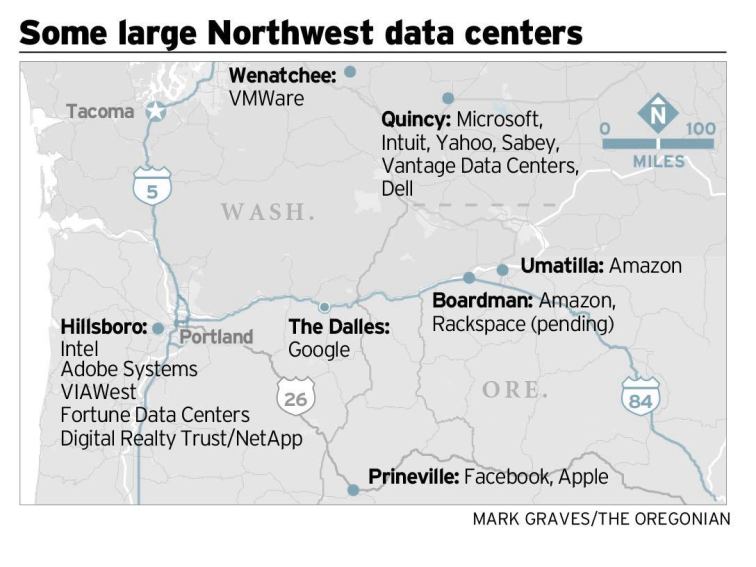
[Trichordist readers will not be surprised to know that Artist Enemy No. 1 Senator Ron Wyden (aka Senator Data Center) is leading the charge of the insane bagmen to impose a compulsory license on any content that gets in the way of Facebook, Google and the metaverse.]
Google has led a long march through the institutions to weaken copyright by propping up proxy warriors who mean to take us in a rush. That effort has now come to a head in Maryland with a bizarre statute that got through the Maryland legislature Tommy Carcetti-style–a state law compulsory license for ebooks. (Maryland Education Code §§ 23-701, 23-702).
The Maryland law is wrong for so many reasons, but is also an unconstitutional usurpation of the federal government’s exclusive domain over copyright. This is a solution in search of a problem–ebooks are already routinely licensed to libraries under voluntary agreements at a market rate. The legislation would allow the State of Maryland to force the authors to license but the state would set the rates. Songwriters can tell you this is a nightmarish process at the federal level–and by the way songwriters, you’re next, just see the fever dream of compulsory licenses for sync (see Here Comes the New Dark Age: Blanket Licenses for Everything Based on the MMA). Just because a library is a non-profit doesn’t mean they get everything free or get to dictate the price. The librarians certainly don’t work for free so how can they expect the authors to do so?
There has never been a compulsory license for books and you have to believe that the Maryland law is a probing operation by Big Tech to see whether their land grab works at the state level. Do you think the oligarchs could jam a compulsory license for books through Congress if their true invisible hand was seen? Unlikely. If they couldn’t do it with wind in their sales from a noxious disease that devastated those pesky small businesses but enriched Big Tech beyond comprehension, it seems unlikely that they could get it through Congress during the nadir of Big Tech popularity.
This machine-state strategy is also an in-your-face rebuke to Senator Thom Tillis’ opposition to the Internet Archive’s pandemic rights-gouging practices, a rebuke that is supported by the “Library Futures” front group (which bears a striking strategic similarity to Engine Advocacy). Needless to say these “metashills” include all the usual suspects among their members including the Internet Archive next to the panoply of anti-artist groups.
The way shills become metashills is that they get grouped togther–economical for the donors and makes them look bigger than they are like a self-inflating animal.
Why does an obviously unconstitutional bill become law? Unhinged, you say? Blatantly unconstitutional from another looneyverse? True, and yet there it is, a monument to bagmen and shills. There is no other explanation for how this legislation got through that paragon of high-minded public policy, that epitoma suprema of the virtuous life and good government where corruption fears to tread also known as the Maryland General Assembly. (Followed closely in Annapolis’s sister city Albany, another hotbed of honesty.)
What about Google’s long march through the institutions? You may have neutral to fond memories of librarians from school days but I encourage you to look deeper. Is that librarian a helpful smart person? Or someone else. Is that librarian someone who grew up feeling ignored and overlooked like the one who never got asked to do the fun things? Is that librarian the one who really wrote the Great American Novel but had that Creative Writing Masters Thesis go–gasp–unpublished? Is that librarian someone who is ripe for manipulation and grooming by unfathomably rich people in the addiction business who claim to understand their problems and want to be their allies to Alinsky those who dared to commercialize their beloved books, those helpful tech moguls who want to build the Digital Library of Alexandria for the greater good and promise to not be evil? You know, for all mankind?
Whatever actually happened, Google has weaponized libraries starting at least with their mass digitization project that ultimately became the kloogy Google Books that one academic described as a “disaster for scholars” and that was the subject of criticism as culturally biased by no less than Jean-Noël Jeanneney, a former president of France’s Bibliothèque nationale in a scathing critique.
So not all librarians sip the Kool-Aid imported from the Googleplex or aspire to heated bidets. And not all state houses are as welcoming to Google and the other Tech Oligarchs as they were even a year ago or so when Senator Tillis recognized that the Internet Archive was being weaponized by its honcho Brewster Kahle (pronounced “kale”) against the world’s authors. Why do I think this? Because an anonymous whistleblower librarian gave us some insight into what is really going on in the faculty dining room in an open letter to Brewster Kahle during his pandemic-induced land grab he called the “National Emergency Library”:
You claim [the Archive is a] charitable organization. Charitable organizations provide money from their own funds to those in need or they collect donations of money or property, voluntarily offered by the original owners, to distribute to those in need. Taking from others despite their objections and offering the stolen material to those in need does not fall into the description of a charitable organization. It is, as has been pointed out, looting.
Your activity undermines the copyright system for your own benefit and in the financial interests of some of the wealthiest corporations in history. As has been said, the Internet Archive is not a public service but a pirate website. You are not here to help others- you are helping yourself to others’ property. It’s unfortunate that your supporters can’t admit this, or don’t realize it.
Well said. And let’s understand that what the Silicon Valley oligarchs really want is a true compulsory license for all works of copyright–which I think is exactly what the eponymous Mr. Kahle was actually after with his National Emergency Library, what Google wanted with Google Books, what YouTube wanted with the DMCA, and what Grokster and Morpheus wanted with file sharing. (Note that Napster was always trying to get a license, however hamhandedly, and shut down when they couldn’t get one.)
The Anonymous Librarian goes on to offer a lifeboat, which, unfortunately, will be summarily ignored by the metashills. While she was speaking of the pandemic effort at a compulsory license, these are words that will ring through the history of all these misguided efforts at undermining copyright:
It is a tragedy within a tragedy that anyone supports you in this effort to steal livelihoods away from authors who struggle to create the works that we love to read, as is evidenced by the glowing praise for the books you have taken and given away.
Brewster, you claim that the Internet Archive is a library- but do you want to know what real libraries do? They pay license fees for e-books and then allow their users to access the books. To be decent and truly human, you will apologize to the world and discontinue your grotesquely unfair challenge to authors. You will transform into something resembling a real library and provide funds to license access to these books for the benefit of the public. You have enough financial assets to pay for licenses to use these works. It has been pointed out that you have more than 100 million dollars in your Kahle-Austin Foundation [Now where might that $100 million have come from?]. You could provide the books to the public by paying license fees to authors and publishers- that is what real libraries do.
You could do this, Brewster, and then you would get real praise, and you would be worthy of it.
Pitch perfect summary of what is going on in Maryland and what may be going on in New York. In order to stop the Maryland bill from going into effect in 2022, authors are going to have to dip into their pockets to litigate against states with unlimited litigation budgets backstopped by the biggest corporations in commercial history. This is a familiar role to anyone trying to protect artist rights which is a group that clearly doesn’t include the Maryland General Assembly or Maryland Governor Larry Hogan who should all be ashamed of themselves. If you want to tell the Governor what you think of his unconstitutional travesty, you can contact him here.
Worse yet, it appears that New York has passed similar legislation that may be sitting on the Governor’s desk. I guess the real question is whether New York Attorney General Leticia James would like to come by the Algonquin Hotel to explain why New York has a compelling interest in crushing New York authors.
Learn about Radio Royalties and the American Music Fairness Act from industry stakeholders and experts during this FREE educational webinarsponsored by: Austin Music Foundation, Austin Texas Musicians, I Respect Music Austin, SoundExchange and Texas Accountants and Lawyers for the Arts.
The American Music Fairness Act is a bipartisan bill which would establish a performance right for sound recordings broadcasted via terrestrial radio. As you may know, the United States is one of the few countries in the world and the only western democracy that does not recognize a performance right for sound recordings on terrestrial radio broadcasts.
Artists and record companies have long advocated for a change to the law to provide a payment when their recordings are broadcast. The U.S. made a step in this direction in 1995 with the Digital Performance Right In Sound Recordings legislation that led to the creation of SoundExchange and the compulsory license for digital performances like webcasting and satellite radio with a royalty rate set by the Copyright Royalty Board.
The legislation has many carve outs and special treatment for small radio stations, college or other non-profits and public radio.
The panelists will provide a background on the history of this issue and discuss how the American Music Fairness Act will ensure artists are compensated fairly for their works when broadcasted on terrestrial radio.
[Tee Double is speaking on the free “Radio Royalties and the American Music Fairness Act” live stream panel hosted by Texas Accountants and Lawyers for the Arts, Austin Texas Musicians, SoundExchange, I Respect Music Austin, Austin Music Foundation and Artist Rights Watch on December 8 at noon CST. Register on Eventbrite. If you’d like to support the American Music Fairness Act, you can sign the petition to Congress here.]
1. Tell us a little about your history as an artist and your work in the Texas music community. Well, I’ve been recording and releasing music since i was 9 years old in Austin, Texas around the same time I sent my first demo I self-produced and performed on to Warner bros. Records. I have been on various boards such as the Texas Chapter of The Grammys, Austin Music foundation, Black Fret a nonprofit which give artist grants yearly to further sustain their craft. I currently am the founder of the urban Artist Alliance which is a leader in education in the music business for underserved creatives who never have access to the tools to succeed in an ever-changing industry. Which recently won the Austin Business Chamber A-List award for Best Bootstrap Company FOR 2021.
2. Can you explain a bit about radio royalties as an artist and then as a songwriter? Sure. Royalties are one of the many ways artists can continue to benefit off their art in new platforms. As an artist, radio royalties are not paid to us even though we are the driving force behind why the song is a hit or synced for commercials and so on. We are as much a contributing factor as the song itself. As a songwriter which I am both an artist and a songwriter of my catalog, I receive those monies which depending on the frequency of the song can generate a nice bit of change. As an indie you don’t go rich but you have some sort of return on your time and effort of creating the song for which someone else ( in my case me) would perform.
3. When SoundExchange opened up a whole new income stream for webcasting and satellite radio, did that have an effect on your revenue as an artist? Any new platform is a good thing if it also includes some positive financial upside for the creatives. But artist must not just limit their potential revenue streams to radio as there are many channels to funnel your art through to add on top of that money. Education is key and adding a unified front to approach unfair practices or outdated laws that truly damage the livelihood of creatives is a step many should be taking moving forward.
4. How will the American Music Fairness Act help working artists, especially those who Blake Morgan calls “middle class artists”? TheAmerican Music Fairness Act will not just help “middle class artists” but also new artists first releasing music to be able to see the economic benefits of that art when it is played on radio now and future technology that will introduce new ways of sharing music. By keeping smaller stations unscathed and making sure larger ones are held accountable to the artist that sustain their ability to remain economically feasible by ads and so forth it is only a good thing.
5. When I speak to artists about copyright policy issues, they often seem overwhelmed by the process and tend to leave it to others. What advice do you have for artists to take direction action to get involved in copyright policy making? My advice would be to join organizations that have your interest at heart. Grammys on the hill is a great one as it also has artist going to their local reps to push their cause. Following blogs and publications that speak to YOU and build up a mental database of ever-changing ideas within the music industry. As I tell artists I mentor, if it makes you one more cent you should be aware of it because music is not a rich person’s game but a long-term journey. Stay the course and stay inspired.
[A little context: The public comments on the majors’ proposed settlement at the Copyright Royalty Board that freezes mechanical royalties on vinyl and CDs are again attracting first rate reporting and arguments. Public comments are designed to help the Copyright Royalty Judges focus on important nuances before they tell us all what’s fair.
Enter the connection between extending the fifteen year-old frozen mechanical rate for another five years in return for what may well be hundreds of millions under the unmatched “late fee waiver” settlement (total settlement value still undisclosed). It’s become obvious after the majors’ 11th hour reply comment in “#FrozenMechanicals Take One” that the majors have tied a settlement on what is essentially the late fee on black box mechanicals at the participating labels to getting a freeze on mechanicals. You can ask yourself how much of a risk it is that major publishers will sue their major label affiliates and what kind of a settlement avoiding that risk might drive.
NMPA 2018 Tax ReturnNMPA 2019 Tax Return
Fair enough, right? Well, maybe not. Thanks to excellent open-source research by Austin music lawyer Gwendolyn Seale in her new frozen mechanicals comment, it turns out that there are a couple of loose ends. First, the National Music Publishers Association’s tax returns for 2018 and 2019 suggest that the organization received several million dollars from the late fee waiver program over two years.
Where that money finally came to rest is unclear but something about the size of that sum sounds like “employee year-end performance bonus” to me although that’s just a guess. (Not the first time the unmatched issue has come up–remember the New York Attorney General back in 2004 who dropped the hammer on labels and at least one publisher who had egregious cases of unpaid royalties to people like David Bowie, John Mellencamp, David Matthews, Dolly Parton and Sean Combs.)
Gwen also did a deep dive on past late fee waiver settlements (commonly called “MOUs”) dating back to 2009 or so. These also had similar connective tissue between past mechanical royalty freezes and the late fee settlement dating back many years. (It would not be a shock if some of the more cold-blooded publishers preferred taking the late fee than the black box royalties because a late fee is an interest payment that may not have to be shared with their writers…just sayin’. Let’s not forget who works for whom.)
Not only is the CRB being asked to repeat the sins of the past with the justification that they accepted it before, Gwen discovered yet another wrinkle in the open-source rules of the prior MOUs–you have to join the NMPA and pay dues in order to get paid with what is ostensibly your own money. See what they did there? That’s probably old news to those who also read the establishment press, but worth mentioning in case you missed it.]
Gwendolyn Seale, Esq.
Chief Copyright Royalty Judge Suzanne Barnett
Copyright Royalty Judge David R. Strickler
Copyright Royalty Judge Steve Ruwe
US Copyright Royalty Board
101 Independence Ave SE / P.O. Box 70977
Washington, DC 20024-0977
SENT VIA ELECTRONIC DELIVERY
IN RE DETERMINATION OF ROYALTY RATES AND TERMS FOR MAKING AND DISTRIBUTING PHONORECORDS (Phonorecords IV)
Honorable Judges,
I am a music lawyer in Austin, Texas, and represent songwriters throughout the state of Texas. I appreciate the judges reopening the comment period with respect to the proposed settlement (“Proposed Settlement”) submitted by the three major labels, the National Music Publishers Association (“NMPA”) and the Nashville Songwriters Association International (“NSAI”) which, if adopted by the Judges, would freeze the statutory mechanical royalty rate at 9.1 cents for physical products and permanent digital downloads through 2027. For reference, my prior comment regarding the Proposed Settlement can be found in the footnote below,[1] and the purpose of this supplemental comment is to highlight the relevance of the Memorandum of Understanding 4 (“MOU4”) between the three major labels and the RIAA on the one hand and the NMPA and a select group of music publishers on the other hand (collectively “MOU Parties”) in the Judges’ consideration of the Proposed Settlement. As the Judges will see below, MOU4 appears to be additional consideration for the Proposed Settlement — consideration which is only able to be enjoyed by NMPA members. Binding the world’s songwriters to this Proposed Settlement when the overwhelming majority of songwriters cannot even reap the benefits of the additional consideration demonstrates there is no reasonable basis to adopt the rates and terms of the Proposed Settlement industrywide, and further, doing so would be patently unjust.
Please note that the views I am expressing here are not made on behalf of any client or the State Bar of Texas.
THE PLAIN LANGUAGE OF MOU4 MORE THAN SUGGESTS IT IS ADDITIONAL CONSIDERATION FOR THE PROPOSED SETTLEMENT
When the three major labels, the NMPA and NSAI submitted their motion to adopt the Proposed Settlement to the CRB, included was the following language that raised concerns during the first round of comments:
Concurrent with the settlement, the Joint Record Company Participants and NMPA have
separately entered into a memorandum of understanding addressing certain negotiated
In my prior comment, I posed the question, “[if] this Memorandum of Understanding is irrelevant to the proposed settlement, why would it be referenced in the motion to adopt the settlement?” At the time of drafting the prior comment, I will honestly say I was not too familiar with the previous MOUs and associated NMPA Late Fee Programs (“Late Fee Programs”). Subsequently, I began perusing through the sparse number of media articles concerning the MOU stemming from Phonorecords I (“MOU1”), along with information listed on the Late Fee Program website, and the text of each MOU to date (MOU1, MOU2 and MOU3). Examining the text of the MOUs was eye-opening; it became readily apparent that each, and their associated Late Fee Programs, would never have come into existence if the MOU Parties had not submitted settlement proposals to the Judges in connection with mechanical rates for physical product and permanent downloads (i.e., the mechanical royalties paid by record companies). In other words, there is no Proposed Settlement without MOU4 and there is no MOU4 without the Proposed Settlement – the two are inextricably intertwined. The longstanding history of this practice is first exhibited in the language from Section 1.0 of MOU2:
This MOU 2 shall not go into effect unless a proposed settlement of the 2013-2017 Proceeding is submitted to the Copyright Royalty Judges for approval, which the Parties anticipate happening promptly after this MOU 2 has been entered into by all Parties[3].
The key word to examine here is “unless.” MOU2 would not go into effect unlessa proposed settlement was submitted to the CRB in Phonorecords II (2013-2017). If the MOU Parties had not presented the proposed settlement in Phonorecords II to the CRB, MOU2 would have never gone into effect and thus, no Late Fee Program for that time period. A close review of the plain language of MOU2 is critical as it more than suggests MOU2 served as additional consideration for the proposed settlement in Phonorecords II, which extended the 9.1 cent mechanical rate freeze for physical products and permanent downloads that commenced in 2006.
Fast-forward to the language in Section 2 of MOU3, where the same condition is visible:
This MOU 3 is a separate, conditional agreement that shall not go into effect until NMPA and SME submit a motion to adopt a proposed settlement of the 2018-2022 Proceeding as to rates and terms presently addressed in 37 C.F.R. Part 385 Subpart A to the Copyright Royalty Judges, which the Parties anticipate happening promptly after this MOU 3 has been signed by all of the Parties. It is understood that SME, UMG, WMG, RIAA and NMPA will sign this MOU 3 at the outset, and that NMPA will use its best efforts to obtain the signatures of all the music publishers represented on its Board of Directors as additional Parties to this MOU 3 by October 28, 2016. The term of this MOU 3 shall commence on the date when a motion to adopt such a settlement is submitted to the Copyright Royalty Judges (the “Effective Date”), and continue until the End Date…[4]
Despite the removal of the word, “unless,” exhibited in MOU2, and the replacement with the word, “until,” the analysis remains the same. MOU3 appears to have been additional consideration for the proposed settlement in Phonorecords III, which furthermore extended the 9.1 cent mechanical rate freeze for physical products and permanent downloads.[5]
Finally, the same condition is found in MOU4’s language:
This MOU4 is a separate, conditional agreement that shall not go into effect until NMPA, SME, WMG’s affiliate Warner Music Group Corp., and UMG submit a motion to adopt a proposed settlement of the Phonorecords IV Proceeding as to statutory royalty rates and terms for physical phonorecords, permanent downloads, ringtones and music bundles presently addressed in 37 C.F.R. Part 385 Subpart B (the “Subpart B Configurations”), together with (1) certain definitions applicable to Subpart B Configurations presently addressed in 37 C.F.R. § 385.2 and (2) late payment fees under Section 115 for Subpart B Configurations presently addressed in 37 C.F.R. § 385.3, together with certain definitions applicable to such late payment fees presently addressed in 37 C.F.R. § 385.2, for the rate period covered by the Phonorecords IV Proceeding, which the Parties anticipate happening promptly after this MOU4 has been signed by SME, UMG, WMG, RIAA, NMPA, Sony Music Publishing, Universal Music Publishing Group, and Warner Chappell Music, Inc. (the “Initial Signatories”)…
The plain text of MOU4 and likewise, the plain text of MOU2 and MOU3 demonstrates MOU4 serves as additional consideration for the Proposed Settlement. If this is the case, the Proposed Settlement does not provide a reasonable basis for establishing Subpart B rates and terms because MOU4 is consideration which can only be enjoyed by select participants in Phonorecords IV, while songwriters worldwide are bound to rates and terms they do not approve and for which they receive no benefit of the MOU4 bargain. Further, in a stunning display of pretzel logic, if a self-published songwriter even wants to reap the benefits of MOU4, such songwriter would have to join the NMPA as a publisher to participate in Late Fee Program – which would entail paying to join an organization that has agreed multiple times to freeze the mechanical royalty rate for physical and download formats.[6]
Songwriters, including those who have submitted comments in this proceeding, have made it abundantly clear that they do not support extending a mechanical royalty rate freeze. So, the question becomes whether the Judges believe it is just and reasonable to subject songwriters to a rate freeze that they oppose, understanding that they will either never benefit from the additional consideration for the freeze or will have to pay dues to a party proposing the freeze they oppose to benefit from the additional consideration. Therefore, I ask the Judges to please determine whether MOU4 is additional consideration for the Proposed Settlement.
2. IF ALL SONGWRITERS ARE TO BE BOUND TO THE PROPOSED SETTLEMENT, ADDITIONAL TRANSPARANCY IS WARRANTED
The MOU Parties stated in their “Comments in Further Support of the Settlement of Statutory Royalty Rates and Terms for Subpart B Configurations” (“Reply Comment”) that they did not present MOU4 to the Judges as they regarded it to be routine and irrelevant to the Judges’ determination of the Proposed Settlement.[7] The MOU Parties further stated the payments under the previous MOU processes have resulted in hundreds of millions being properly paid to publishers and songwriters and enabled more successful identifications of musical works.[8] Additionally, the MOU Parties contended the history of the MOUs is no secret, pointing to a couple of articles from 2009-2010 and the NMPA Late Fee Settlement website.[9]
While the MOU Parties can generally state MOU4 and prior MOUs are no secret, the MOU process to date has hardly been transparent. While some media outlets published information about MOU1 in 2009-2010, over the last decade there has been virtually no reporting on the MOU program, encompassing MOU2 and MOU3. With respect to MOU1, outlets reported approximately $275 million was paid out from the labels and distributed to publishers via marketshare methodology.[10] Amounts paid out pursuant to MOU2 and MOU3 have not been publicly disclosed – and should be if MOU2 and MOU3 were additional consideration which continued the mechanical rate freeze to the present day.
The MOU Parties further state, “[c]ontrary to the conspiracy theories of others, there is no secret payoff to major publishers or to any other MOU participant.”[11] It is not conspiratorial to simply point out that the public is unaware of the amounts payable to publishers under these MOUs; it is further obvious the major publishers benefit from a settlement system which distributes funds to publishers in accordance with major label and HFA data via marketshare methodology. Additionally, according to the NMPA’s 2018 and 2019 IRS 990 filings, “Royalty Late Fee Program” was listed as an income line-item, reflecting $2,908,988.00 and $768,368.00, respectively, as revenue for the organization. If in fact this line item pertains to commissions taken by the NMPA on prior Late Fee Programs established by the MOUs, there is absolutely a payoff to a MOU participant, albeit, not secret.
Note that I have no issue with the notion of these MOUs and the Late Fee Programs, or which sums are paid out to whom, provided that the MOUs and associated Late Fee Programs are truly irrelevant deals that do not serve as additional consideration for settlements to freeze the statutory mechanical rate for physical and download configurations industrywide.
3. IF THE PROPOSED SETTLEMENT IS NOT WITHDRAWN, THE JUDGES SHOULD APPLY DIFFERENT RATES AND TERMS TO PUBLISHERS AND SELF-PUBLISHED SONGWRITERS WHO DO NOT OPT INTO MOU4 AND THE LATE FEE PROGRAM
Notwithstanding the repeated practice of the CRB adopting settlements freezing the mechanical rate for physical products and permanent downloads proposed by parties who wield the most power in the music business, the current situation is different and should be treated as such. Many songwriters oppose the Proposed Settlement but cannot afford to participate in this proceeding. Songwriters and other key songwriter advocacy organizations oppose this Proposed Settlement, proffering comments that the Proposed Settlement is unreasonable because songwriters do not wish this revenue stream to be frozen for yet another five years during a vinyl resurgence amid a worldwide pandemic that continues to ravage the world’s economy. While there has been considerably more public outcry with respect to this proceeding than those prior, luckily, there are solutions available which will reverse this course and are entirely within the control of the MOU Parties and the Judges.
First, the MOU Parties can withdraw the Proposed Settlement and voluntarily agree to a rate increase for Subpart B configurations – and continue to proceed with their Late Fee Program. This act will not only bring the entire songwriter and music publisher communities together, but also it will serve to extinguish one of the streaming services’ key benchmarks in their testimony (since every streaming service participant in Phonorecords IV is using this Proposed Settlement to justify their abysmal streaming rate proposals).
Alternatively, if the foregoing is not an option, the terms of the Proposed Settlement should apply only to the MOU Parties and the NMPA publishers that subsequently opt-into the Late Fee Program, while the Judges determine different rates to be applied to everyone else. To be clear, again, I have no issue with the concept of MOU4 or the Late Fee Program, rather it is inequitable for songwriters to be bound to the terms of a settlement which they do not support, particularly when they do not receive any benefit from the consideration attached to the settlement.
CONCLUSION:
Prior to this Phonorecords IV proceeding, it appears the only person who publicly opposed any settlement to freeze the statutory mechanical rate for physical and download configurations was George Johnson, a pro se self-published songwriter participant. While the Judges’ determination of rates and terms for physical and download configurations in Phonorecords III is final, I believe it is worth briefly revisiting an excerpt from the Judges’ determination which addressed Mr. Johnson’s opposition to the Phonorecords III settlement:
But, Mr. Johnson has not even hinted at evidence to support his argument that the representative negotiators are engaged in anti-competitive price-fixing at below-market rates. The very definition of a market value is one that is reached by negotiations between a willing buyer and a willing seller, with neither party being under any compulsion to bargain.[12]
While Mr. Johnson may not have articulated his opposition to the Phonorecords III proposed settlement in a lawyer-like manner, he clearly understood years ago that there was something awry with respect to these proposed settlements. It is evident that the “something awry” happens to be these MOUs, which I never would have realized had the Judges not reopened the comment period to specifically address MOU4. The representative negotiators in these settlements represent “willing buyers” and “willing sellers” who are effectively the same parties at the corporate level. The “willing sellers” (i.e., the major publishers/ NMPA) are under compulsion to bargain so they can enjoy the compensation associated with the Late Fee Program. When such a settlement is adopted and applied industrywide, we are posed with an end result of “unwilling sellers” (i.e., songwriters worldwide) tethered to below-market rates who will not enjoy the benefits of the additional consideration – MOU4 and the associated Late Fee Program.
The Judges have a duty to all songwriters – from the millions who are unaware the CRB exists, to the millions who do not have the financial resources to participate in CRB proceedings, to the millions who do not speak English (in this country and abroad) and cannot follow this proceeding if they wanted to– to determine whether this MOU4, a side agreement which benefits a select few, is in fact additional consideration for the Proposed Settlement which would freeze statutory mechanical royalty rate for physical products and permanent downloads through 2027. And if the Judges determine this is true and the MOU Parties are unable to withdraw the Proposed Settlement, the Judges should establish different rates and terms to be applied to all other songwriters and publishers.
Thank you for re-opening the public comment period and for your consideration.
[2] Motion to Adopt Settlement of Statutory Royalty Rates and Terms for Subpart B Configurations, Docket No. 21–CRB– 0001–PR (2023–2027) (May 25, 2021) (Proposed Settlement).
[7] Comments in Further Support of the Settlement of Statutory Royalty Rates and Terms for Subpart B Configurations, Docket No. 21–CRB– 0001–PR (2023–2027) (August 10, 2021).
[12] 37 CFR Part 385 [Docket No. 16–CRB–0003–PR] Determination of Royalty Rates and Terms for Making and Distributing Phonorecords (Phonorecords III); Subpart A Configurations of the Mechanical License.
[A little context: As readers will recall, the Copyright Royalty Board is in the middle of two (count ’em, two) simultaneous rate proceedings for the statutory mechanical royalty rates under the reliably absurd Section 115 of the Copyright Act. These two are styled “Phonorecords III” and “Phonorecords IV” respectively. Technically, Phonorecords III was appealed to a higher court (DC Circuit for those reading along at home) and was pretty much rejected and sent back to the Copyright Royalty Board on what’s called “remand” or as it’s know in the vernacular, “nice try.” Phonorecords IV is for the 2023-2027 period and is currently in the discovery phase for streaming mechanicals. MTP readers will also recall that I anticipated an attempt to extend the freeze on physical mechanicals at the 2006 rate of 9.1¢–long since corroded by inflation to a real mechanical rate of about 6¢ given an inflation rate of approximately 33% since 2006. And the majors are vigorously pursuing both a freeze as well as an extension of the pending and unmatched settlements for NMPA members (aka “MOU” for “Memorandum of Understanding” among the insiders) that is tied to the freeze for everyone else. See what they did there? Today we are posting the first of the 2nd round comments on the freeze filed with the Copyright Royalty Board in the Phonorecords IV proceeding. I was kind of hoping that someone would file a comment in support of the freeze but no one did–all comments are opposed. The first up is Professor Kevin Casini’s thoughtful comment. We will be cross posting with the Trichordist.]
November 20, 2021
Hon. C.J. Suzanne Barnett Hon. J. David R. Strickler Hon. J. Steve Ruwe
US Copyright Royalty Board 101 Independence Ave SE / P.O. Box 70977 Washington, DC 20024-0977
Honorable Judges of the Copyright Royalty Board:
I am a Connecticut resident, attorney, and law professor, and the views expressed here are mine, and not necessarily those of any local or state bar association, or any employer. The bulk of this comment appeared in an open letter to this body, and to my senators, dated May 27, 2021. It requested time to comment for those that were not represented by the publishing lobby, the so-called “self-administered” songwriters that were so en vogue during the passing of the Music Modernization Act, and with it, the advent of the Mechanical Licensing Collective. As the preeminent music economist of the day, Will Page, put it in his annual “Global Value of Music Copyright” compendium, “anyone can record a song, but only someone can compose it.”[1] I don’t speak for them, I’ve not been empowered to do so, but because so many of us know “self-administered” means “not administered” I speak to their best interests, even if they don’t know anything about this process. These writers are considered “self-publishing”, but the reality is, they have no publishing. Ironically, it is these independent writers who rely disproportionately on physical sales, direct downloads, and Bandcamp Fridays. In essence, “I speak for the trees.”[2]
On May 18, 2021, a “Notice of Settlement in Principle” was filed by parties to the proceedings before the Copyright Royalty Board about its Determination of Royalty Rates and Terms for Making and Distributing Phonorecords.[3] That Notice was followed on May 25, 2021 by a Motion To Adopt Settlement Of Statutory Royalty Rates And Terms For Subpart B Configurations, filed by the NMPA, Sony, Universal and Warner and NSAI.[4] I write today in reference to that proposed settlement.
This settlement outlines the terms by which mechanical royalty[5] and download rates will remain locked at the current rate of 9.1¢. The same almost-dime for each copy of a work manufactured and distributed. The same almost-dime that it’s generated since 2006. A paltry sum to be certain but a far cry from the 2¢ royalty rate mechanical royalties imposed for the better part of seventy years.[6] Starting in 1977, Congress mandated that the mechanical royalty be increased incrementally until 2006 when the rate of 9.1¢ was achieved. And there it has remained.
This proposed private settlement would extend that 2006 freeze until 2027.
In March 2017, a precursor to Phonorecords IV found the Copyright Royalty Board ruling that interactive streaming services must pay more in mechanical royalties over the course of the next five years.[7] Surely more than a simple inflation adjustment, but nonetheless a sign that the CRB thought costs and values needed to become more aligned for streaming—which is paid by the streaming platforms unlike the physical and download mechanical which is paid by the record companies. Now comes Phonorecords IV, and a proposed settlement from the major publishers and their affiliated major labels. Before this proposal can be accepted by the CRB, I asked for the simple opportunity of public comment. This COurt saw fit to grant that request, and I express my appreciation.
As you well know, in nearly all other administrative proceedings public comment is an integral and indispensable component of the process. To see that the CRB may allow for a public comment period by members of the public beyond the participants in the proceeding or parties to the settlement is a step in the right direction, and my hope is that this development will be broadcast far and wide so that the CRB, and in turn, Congress, may get a full picture of the status of mechanical royalty rates, especially from those that are historically underrepresented. “Public comments” should be comments by the public and made in public; not comments by the participants made publicly.
I have a great deal of respect and admiration for the work put into the landmark copyright legislation that came about at the end of 2018, and for those that made it happen. So too for the members of the CRB, and in this space, I thank those Judges for taking the time to read a letter from an adjunct law professor with no economic stake in the outcome, but rather an interest in, and duty of, candor to the Court.
In an age of unprecedented political polarization, the consensus built in the passage of the Music Modernization Act showed that politics aside, when it’s time to make new laws that fix old problems, Congress can still get the job done. I know well the sweat-equity poured into its creation by the very same people that propose this settlement. I have found myself on the same side fighting the same fight as them many times. They have proven capable of navigating your halls and taking on those that would seek to devalue (or worse) the work of the songwriter, and musician. In this instance, I would like to see them fight the fight yet again. recognize the reasoning and intention behind the proposed settlement. Commenting by the public is a way for that to happen.[8] I commend this Court for re-opening the comment period to allow for as much dialogue, and information, as possible.
A year ago, I made the unilateral decision to pivot our consulting company, Ecco Artist Services, to purposefully work with, and advocate for, the traditionally and historically underserved and underrepresented in the music industry. Freezing the growth of rates for physical and digital sales that are already digging out of the residual effects of 70 years at 2¢ strikes at the heart of that community’s ability to generate revenues from their music.
Now, it’s no secret the trade association for the US music publishing industry is funded by its music publisher members, and of course, as a professional trade organization, the association is bound to represent those members. Publishers have long enjoyed a better reputation amongst industry insiders than “the labels,” and for good reason, but the fact remains that writers signed to publishing deals are in contractual relationships with their publishers, and their interests are not always aligned. Such is the state of play in a consumer-driven marketplace, and especially now that publishers and labels are consolidating their businesses under the same tents. They, it seems, are the forest. An indie songwriter is but a tree.
Unfortunately, the independent songwriter lacks the resources to participate fully in the process, and although a signed songwriter may believe her interests and those of her publisher are one and the same, they may not always be. It would seem the economic analysis the publishers undertook in deciding the mechanical royalty was not worth the heavy cost and burden of fighting is the same calculus the writers need not do: they couldn’t afford the fight no matter the decision.
But I ask: if the mechanical royalty covered by the proposed settlement is a dying source of revenue, why would the fight be so onerous? By the RIAA’s 2020 year-end statistics, physical sales and downloads accounted for 15% of the music marketplace.[11] That’s a $12.2 billion marketplace, and that 15% amounts to $1.8 billion. Now, I know attorney’s fees can be exorbitant in regulatory matters, but I would think we could find a firm willing to take the case for less than that. As for sales, in 2020, 27.5 million vinyl LPs were sold in the United States, up 46-percent compared to 2019 and more than 30-fold compared to 2006 when the vinyl comeback began,[12] while some 31.6 million CD albums were sold.[13]
Median wages in the US, adjusted for inflation, have declined 9% for the American worker. Meanwhile, since the 9.1¢ rate freeze, the cost of living has gone up 31%, according to the American Institute of Economic Research[14]. The 2006 inflation rate was 3.23%. The current year-over-year inflation rate (2020 to 2021) is now 4.16%[15], which is all really to say, simply, an accurate cost-of-living increase would have a mechanical rate of at least 12¢ per sale. Twelve cents! You would think that would be an easy sell, but the streaming rates are fractions of that rate. The reality is a song would need to be streamed 250 times to generate enough money to buy it from iTunes. As my dear friend Abby North put it, the royalty amount for the digital stream of a song is a micro penny.[16]
An adjustment for inflation should require no briefing, let alone argument. If songwriters were employees, this would simply be line-item budgeted as a “cost-of-living adjustment.” If songwriters were unionized it would be a rounding error, but I digress.
Even if it is true that the mechanical revenue is a lost and dying stream, by the RIAA’s own figures, there stand to be billions of dollars at stake. An opportunity to be heard, without having to sign with a publisher and then hope that publisher takes up the fight you want, maybe that’s all the independent writers of the industry—and, indeed, the world–need to be able to win.
An inflation-adjusted cost-of-living update to the mechanical statutory royalty rate should be of no issue. Those independent, self-published writers affected by the decision of the CRB have been given the opportunity to voice their concerns through public comments. I hope that the CRB considers the disparities in bargaining power among those on the “writers’ side” of this issue before it makes its final decision. Please note, I pass on judgment on those that serve their constituencies, I just know there is no substitute for direct action, direct aid, or direct advocacy.
I want to close this time by thanking the Board, and Copyright Office, all for their continued attention to the universe of copyright, licensing royalties, and the economy that exists therein, and specifically the recently retired CJ of Copyright Royalty Board Jesse Feder, for allowing this opportunity, and so many other. It is my sincere hope (and effort) that the tone and tenor of these negotiations, deliberations, and litigation proceedings can be focused on the issue at hand, with collaborative results the goal, but when that cannot be, I trust the Copyright Royalty Board will see both forest and trees.
Kevin M. Casini New Haven, CT
Attorney-at-Law, Adj. Professor, Quinnipiac Univ. School of Law
[5] The term “mechanical royalty” dates back to the 1909 Copyright Law when Congress deemed it necessary to pay a music publishing company for the right to mechanically reproduce a musical composition on a player-piano roll. As a result, music publishers began issuing “mechanical licenses”, and collecting mechanical royalties from piano-roll manufacturers. The times, and the tech, changed, but the name stuck.
[8] The CRB arguably has the statutory obligation to publish the Motion in the Federal Register for public comment, but may have the discretion to construe those commenting to the participants in the proceeding and the parties to the settlement. 17 U.S.C. § 801(b)(7).
[Trichordist says: The Copyright Royalty Board reopened the comments on frozen mechanical song royalties in Phonorecords IV rate setting and the filings are coming in, especially from songwriters! We will be posting the comments (or excerpts from the long ones. First up is a straight from the heart contribution from Chelsea Crowell, Erin McAnally and Abby North.]
Copyright Royalty Board 37 CFR Part 385 [Docket No. 21–CRB–0001–PR (2023–2027)] Determination of Rates and Terms for Making and Distributing Phonorecords (Phonorecords IV)
Interim Chief Copyright Royalty Judge Suzanne Barnett Copyright Royalty Judge Steven Ruwe Copyright Royalty Judge David R. Strickler US Copyright Royalty Board 101 Independence Ave SE Washington, DC 20024
SECOND REOPENING PERIOD COMMENTS OF ABBY NORTH, ERIN MCANALLY AND CHELSEA CROWELL
To Your Honors:
Thank you for the opportunity to submit additional comments, now that the details of the Memorandum of Understanding (MOU4) apparently related to the Subpart B mechanical rate settlement negotiated by the NMPA, NSAI and three major labels have been made available.
Only the NMPA’s 300 or so publishers are potential parties to the MOU, assuming the opt in terms are the same as those of MOU3 (http://nmpalatefeesettlement.com/mou3/faq.php). The publishers that opt in to the MOU4 settlement will receive money for their participation, and in exchange for this money, the NMPA Board members have agreed to freeze the Subpart B mechanical rate at the $.091 rate that’s been in place since 2006.
In this exchange, NMPA publishers have a stream of revenue (the MOU4 money) that offsets the negative effect of the lack of rate increase in the Subpart B mechanical.
Although foreign CMOs could opt into the current MOU3 settlement, rightsholders that are not NMPA members may not opt in and will not receive the buffer that the MOU4 money provides, yet they are subject to the frozen mechanical rate that is an apparent condition of the negotiation related to the proposed settlement of the Subpart B rates and terms.
Thousands, if not tens of thousands of songwriters in the world have songs published or administered by those NMPA publishers that are party to the rate freeze settlement, but neither these songwriters nor the vast number of songwriters around the globe were given a say in the decision to freeze the mechanical rate.
The concern we have is not that there is a settlement. The concern is that the settlement does not provide for a base rate greater than $.091, plus annual increases to adjust for inflation.
To quote the NMPA’s Supplemental Comments: “…mechanical royalties from Subpart B configurations now constitute only a small part of total mechanical royalty revenue in the U.S., and that share is expected to get smaller during the period covered by this proceeding.”
That concept only resonates with a corporation that aggregates thousands or millions of copyrights.
To an individual songwriter or a small rightsholder, it doesn’t matter if Subpart B mechanicals constitute 1% or 15% or 50% of total royalties. Why? Because every single penny counts.
When an individual is paying a mortgage, tuition or a car payment, every single penny counts. When a health crisis occurs, every penny counts. When existing off the very low streaming royalties generated by even a hit song, every penny counts.
Physical and download mechanicals are still an extremely relevant revenue stream to individual songwriters and small publishers.
At the current retail price of $.99 for a download, the $.091 mechanical is 9.2%.
The streaming royalty pool for songs is roughly 10.5% of the total, possibly as much as 15.1%, per the CRB III hearing results (after all this time, still under appeal). The NMPA has suggested an increase of the streaming royalty rate to 20%. This would be an exceptional improvement.
How is the download royalty not at least the same percentage as the streaming royalty?
Why is the value of a downloaded song less than that of one that is streamed?
We suggest the Subpart B rate and the streaming mechanical rate (based on percentage) should be on no less than a most favored nations basis with one another.
To songwriters and most publishers, every royalty type and every revenue stream matters. The move from physical to digital, the unbundling of albums in favor of singles and the unlivable streaming royalty rates absolutely substantiate the need for an increase in Subpart B mechanicals, at least to reach the percentage paid on the streaming side, and with periodic adjustment for inflation. 3
We appreciate the opportunity to submit these additional comments, and we ask the Judges to recognize that songwriters and small publishers are individuals who do not have the luxury of collecting royalties from the aggregation of hundreds of thousands of works.
It is not fair that songwriters signed to the NMPA publishers have a frozen mechanical rate forced on them, and it is remarkably egregious that non-NMPA publishers and their writers are also forced into this horrible reality.
Respectfully,
Abby North, North Music Group LLC Chelsea Crowell, Songwriter Erin McAnally, Songwriter/Factory of Strange Tones
The public does get to comment on these rates. The frozen rates are so bad that the comments were all opposed to the proposed settlement. The comments were so negative that the Copyright Royalty Board took the unprecedented step of re-opening the public comments.
Your comments matter! The Copyright Royalty Board has to take into account the public’s participation in the rules they make and nobody has ever objected to the frozen mechanical rate before (mostly because nobody knew it was happening back in Washington, DC). And here we are 15 years later.





 The Trichordist
You must be logged in to post a comment.