As the clock ticks down for the MLC under the Music Modernization Act, the Copyright Office oversight role may require some innovation on the global rights database mandated by the MMA. One way would be to harmonize copyright registrations with registrations for the Mechanical Licensing Collective. (Songwriters outside the US may be puzzled by all this registering due to the prohibition on formalities in the Berne Convention, but right or wrong that MMA requires songwriters to register with the MLC if they want to get paid under the blanket license.)
Do I have to register with your office to be protected?
No. In general, registration is voluntary. Copyright exists from the moment the work is created. You will have to register, however, if you wish to bring a lawsuit for infringement of a U.S. work. See Circular 1, Copyright Basics, section “Copyright Registration.” Why should I register my work if copyright protection is automatic?
Registration is recommended for a number of reasons. Many choose to register their works because they wish to have the facts of their copyright on the public record and have a certificate of registration. Registered works may be eligible for statutory damages and attorney’s fees in successful litigation. Finally, if registration occurs within five years of publication, it is considered prima facie evidence in a court of law. See Circular 1, Copyright Basics, section “Copyright Registration” and Circular 38b, Highlights of Copyright Amendments Contained in the Uruguay Round Agreements Act (URAA), on non-U.S. works.
So while you don’t have to register to get copyright protection, you will have to somehow get into the MLC’s database if you want to get paid by the MLC (and file an IRS Form W-9, etc.). But–if you are going to register your song for copyright, why should you have to start over again to register for the MLC?
It seems like a simple solution for the Copyright Office to harmonize these separate but related registrations would be to have the Copyright Office online registration system have a check box to allow you to sign up with the MLC. Simply a box to check that would autopopulate your MLC registration along with other docs you might need for the MLC (like the W-9 the MLC will no doubt have to get for every songwriter they pay.)
If there’s a cost for this extra IT, that cost could easily be charged back to the services to be paid through the “administrative assessment”. The first assessment is currently being litigated, so there’s no time like the present to get this issue in front of the Copyright Royalty Judges. Plus, there’s no reason for the MLC registration to be delayed while the copyright registration is processed since the right to get paid under the blanket license is not contingent on the copyright registration. Songwriters wouldn’t be charged to register with the MLC because the copyright registration fee is already established for the copyright registration alone.
And of course, the MLC could have a reciprocal sign up for copyright registration as part of the MLC registration process for songwriters who start there first. Again, all that IT cost should be paid by the services.
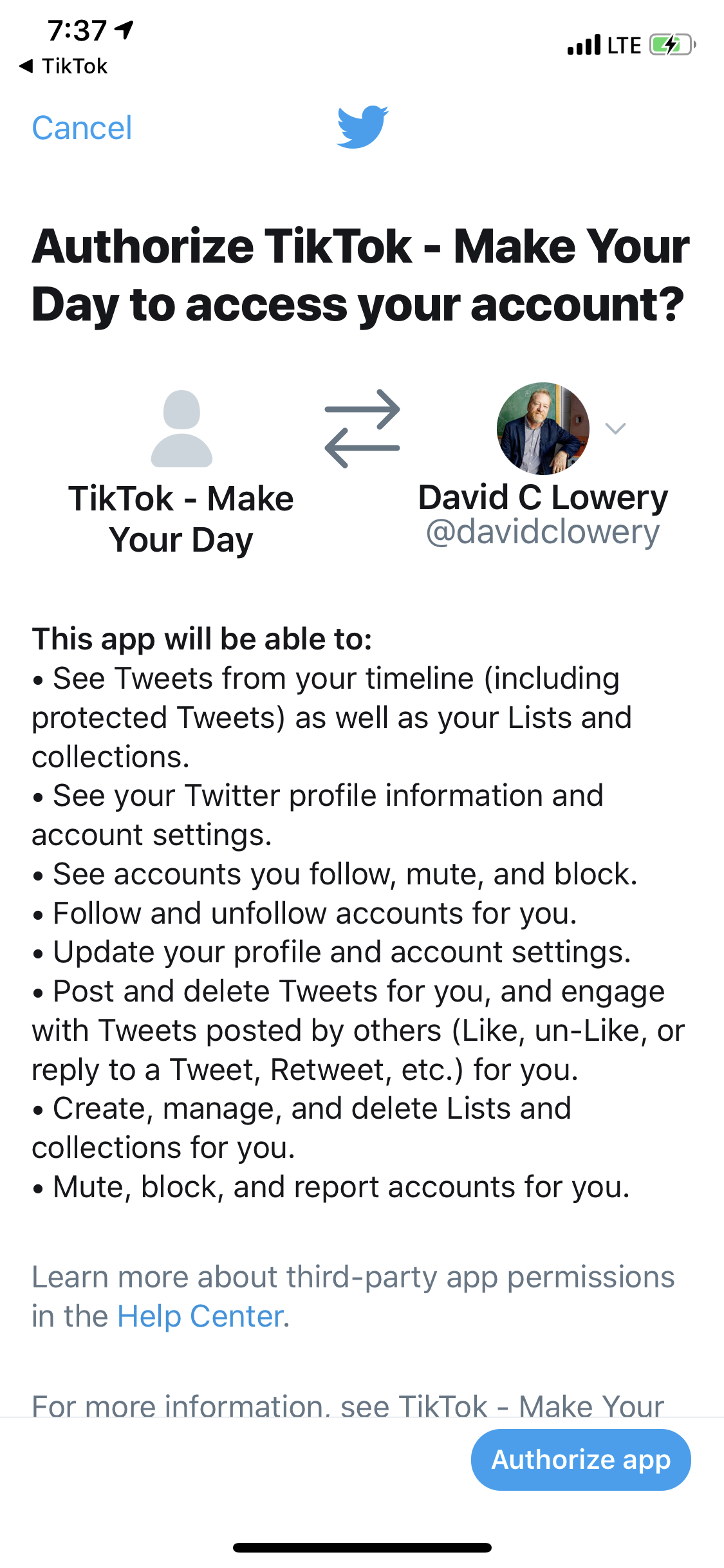
No, this is not a joke. Try it yourself. Try to sign up for TikTok with your Twitter account. Twitter basically lets TikTok make your account part of a TikTok twitter botnet. Don’t be surprised if your twitter account starts reporting tweets that mention Winnie the Pooh. It is stunning the permissions that Twitter grants to the social media company, as evidence grows the company is being used as an influence machine for the Chinese state. Maybe it is just because Twitter feels a special kinship to TikTok They both refuse to license music.
As Foreign Policy magazine noted a year ago:
“ByteDance has already been repeatedly forced to bend the knee to party authority at home. Most punishingly, in April 2018 the government compelled ByteDance to shut down its popular “Neihan Duanzi” (“inside jokes”) app for good due to its “vulgar” content. In response, Zhang issued a letter of self-criticism where he said, “Our product took the wrong path, and content appeared that was incommensurate with socialist core values.” He also promised that the firm would in the future “Further deepen cooperation with authoritative [official party] media, elevating distribution of authoritative media content, ensuring that authoritative [official party] media voices are broadcast to strength.”
“After getting rapped over the knuckles for promoting what authorities called “vulgar content” on its popular video and news apps in April, ByteDance announced it would hire 2,000 more people to review content. The job ads noted that party members and candidates with “strong political sensitivity” would be preferred.”
“TikTok, the popular Chinese-owned social network, instructs its moderators to censor videos that mention Tiananmen Square, Tibetan independence, or the banned religious group Falun Gong, according to leaked documents detailing the site’s moderation guidelines.”
What’s going on here? I don’t know about you, but maybe congress should give Jack Dorsey an invitation to come in and explain why he’s turning over US citizen’s twitter accounts to a Chinese company with deep ties to the Chinese government. First question: How many Twitter accounts has TikTok been given access to?
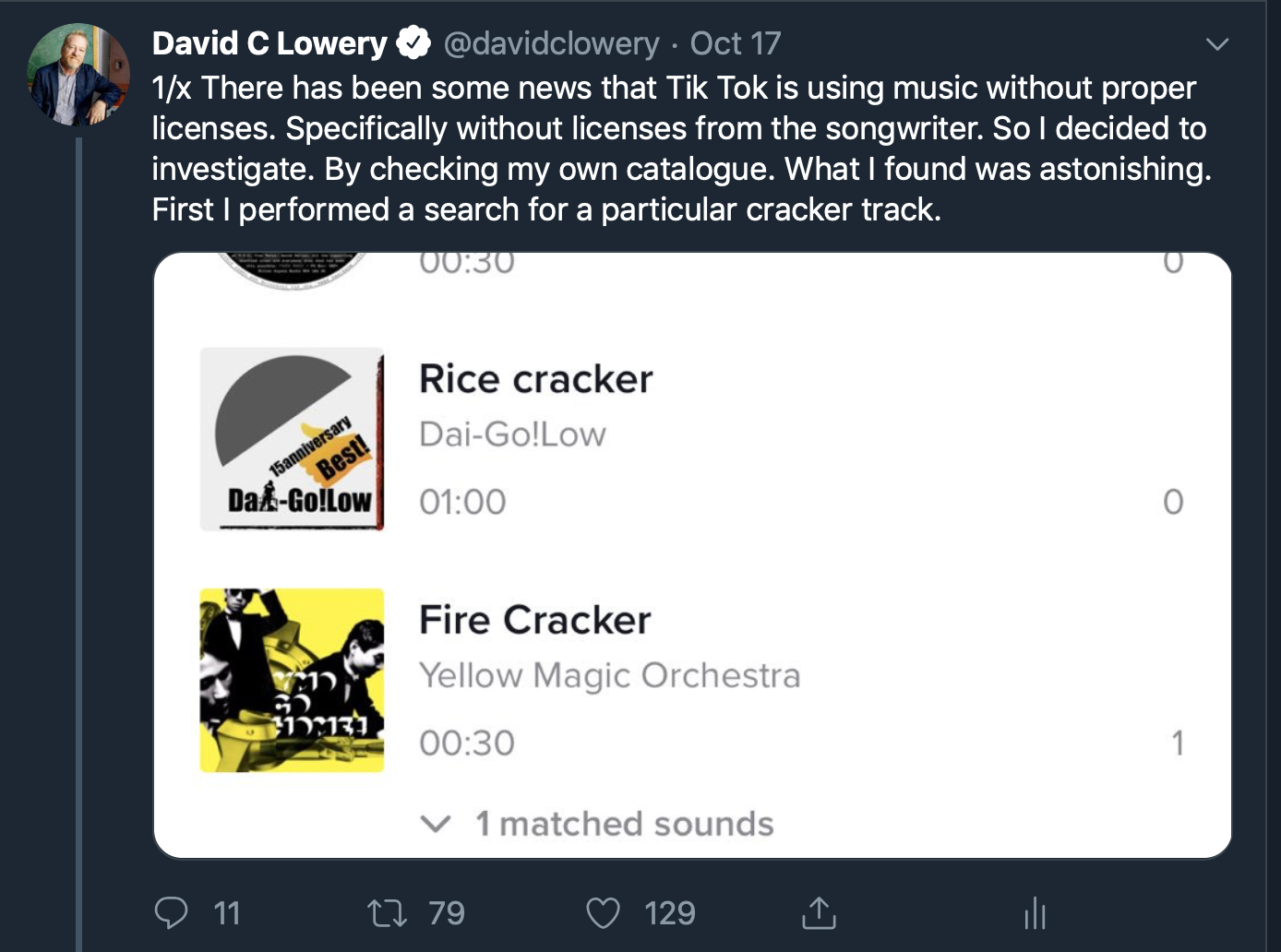
Readers of this blog know that we have been focusing on the mass infringing music video site TikTok. This company and employees have utter contempt for artists, yet their service is absolutely useless without our music. What assholes right? What is less well known is that TikTok’s parent ByteDance is a $73 billion Shanghai-based company staffed and moderated by thousands of Chinese Communist Party members. So essentially this is an arm of the Chinese state propaganda machine. And these fucks can’t afford to license music?
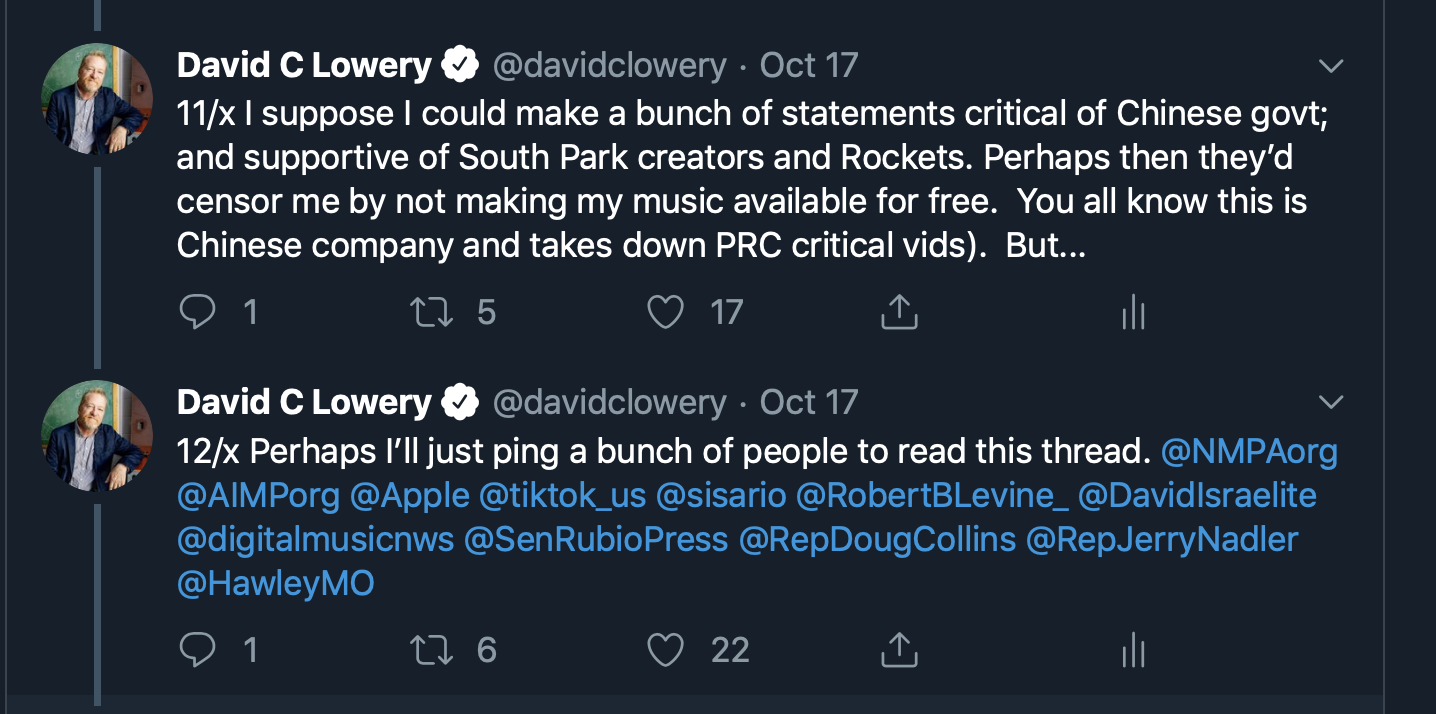
So it was with some gratification that I saw reports that The Committee on Foreign Investment in the United States (CFIUS) has opened an investigation into the purchase of Musica.ly (original name of TikTok) by Byte Dance. Apparently, a number of congressmen became concerned about TiKTok and asked CFIUS to open an investigation. I’d like to think that all of you that retweeted my thread on TikTok a couple weeks ago had something to do with it.
Just another quick reminder. The Rhapsody(now rebranded Napster) class-action settlement claim portal is open. Songwriters that registered their works with the copyright office and had their work streamed at least once on the service (during the covered period) will receive $35* per work (pro-rated by ownership share). This is many multiples of what the Spotify class action pays out per work.
Further, the Rhapsody class-action settlement, unlike Spotify settlement, also pays on unregistered works. If your unregistered works were streamed at least 10 times during the covered period the self-published songwriter can claim $1* per work.
I’ve looked at catalogues of a number of small indie publishers and songwriters that will likely receive several thousand dollars. This is real money. The settlement closes 12-31-2019.
A “Theodore Kaczynski” from Lincoln Montana signs a Google-funded astroturf petition over and over again.
Google-funded and affiliated astroturfs have mounted a spambot campaign targeting Senators to vote against the CASE Act. The CASE Act (voluntary small claims copyright court) passed the house 410-6. Google and their allies are worried because independent artists and creators might now have a decent shot at enforcing their copyright. Corporate backed astroturfs first mounted a wild disinformation campaign against the CASE Act. See this blog here.
When that didn’t work they launched a series of easily automated web forms designed to deluge Senators with emails, tweets, facebook posts, phone calls, and messages on the senator’s websites. As we saw with the FCC Net Neutrality battle, these forms leave us with tons of fake comments. According to Pew Research, 94% of the 22 million comments to FCC on Net Neutrality were identical to hundreds, thousands, even millions of other emails. Spambots are screwing with our democracy. How can our representatives hear what their constituents really think if they are deluged with spam?
As has always been the case, best we can do is call our Senators (and don’t use a script.)
However, in the meantime anytime you find one of these forms below? Maybe replace the canned message with a message that lets the Senator’s office know it’s simply a Spambot from one of these Astroturfs. You don’t have to lie about anything. Use your real name. Tell em it’s spam. Make the Spambots the issue. Eventually, maybe these astroturf will stop using these forms if every Senator knows they are spam, and we can go back to our old only partially dysfunctional democracy.
Every web form I’ve found are curiously defective in the same way: you can usually refresh the page and sign, email, tweet, call with the same message over and over again. At top of this blog, I take one of these bullshit petitions and have Ted Kaczynski sign it over and over again leaving the exact same comment each time. Hope you enjoy.
Scientists have concluded the Senator’s official photo likely violates the Myspace Rule: profile photos may not be older than (Current Age/10) – 1 year.
We are reprinting this article because once again Wyden is siding with Silicon Valley rather than his own Oregon constituents. #PrimaryWyden2022
The longtime democratic Senator loves to boast about his progressive bona fides but when you look at his legislative record a different story is told. Sure he’s progressive on social issues but on everything else? He appears to be in the pocket of monied Silicon Valley interests, broadcasters and hedge funds. For our readers, the key issue is Wyden reliably supports legislation and policies that enrich anti-union right-wing billionaires and impoverishes union performers and songwriters.
Examples
IRFA or (the Orwellian named) Internet Radio Fairness Act. This was his bill. It would have slashed digital radio royalties to (largely union) performers as much as 70 percent. The beneficiaries? The Silicon Valley VCs backing all these digital broadcasters. Fortunately, the bill was withdrawn. What kind of “progressive” tries to pass a law that slashes wages to workers while enriching a cartel of mostly right-wing billionaires? Disgusting right?
Not convinced? How bout the recently passed Music Modernization Act? Parts of the bill were controversial, but not title II the so-called “Classics Act.” The Classics Act restored digital royalties to pre-1972 performers. Wyden was the lone senator who opposed the Classics Act.
A little background. In 2012 digital broadcasters in apparent coordination (Hello FTC? Is this thing on?) stopped paying royalties to performers who had the misfortune of recording before 1972. The justification the digital broadcasters used was a tortured interpretation of how the 1976 copyright act and a 1995 amendment interacted. In short an unintended highly questionable loophole.
However, the loophole provided a significant break to digital broadcasters. Some estimate the broadcasters got a 15% reduction in what they would have paid out to artists.
Why on earth would a “progressive” Senator support what is essentially a vast transfer of wealth from largely union performers to mostly right-wing billionaires?
(Update 10/30/2019): Now Wyden is opposing the CASE Act. A small claims copyright court that would allow small creators (i.e. Portland indie musicians, photographers and filmmakers) to do something about massive copyright infringement by major platforms. Without the CASE Act, the only option for small creators is to go into federal court. Not many of them have the $100,000 it takes to even mount a case. This has made it so only the biggest media companies can successfully enforce copyrights. The clear consequence is this is anti-competitive and has been driving the consolidation in the music business. Maybe that’s why Wyden opposes the Case Act. He never met a megacorp he didn’t like.
In this age of fake everything, Wyden is the fakest of all progressives.
Now consider Wyden represents the City of Portland and your head may begin to spin.
Portland has come to rival Nashville and Austin for its music economy. Portland produces groundbreaking new bands each year and is also home to many musical innovators from earlier generations. It’s also home to many labels and CD Baby the commercial heart of the DIY music industry. There are likely tens of thousands of folks employed by Portland’s music economic cluster.
On the other hand Silicon Valley has a cluster of Silicon Valley server farms out in the remote Eastern Oregon high desert. Oregon taxpayers subsidize these low employee operations (500 jobs statewide?) through tax subsidies and perhaps most importantly low-cost hydroelectric power from the Columbia River.
Every subsidized low-cost megawatt the Silicon Valley lampreys suck-up is a megawatt that Oregon taxpayers have to source from higher cost higher carbon sources. Does that sound like the kind of policy that benefits Wyden’s constituents or Silicon Valley billionaires?
Oregonians deserve better than the false progressive Senator Wyden.
It’s not too early to think about primarying the Silicon Valley apparatchik. 2022 is not far away. And who knows it could be even sooner…No one has ever really delved into the curious story that Wyden’s son started a “hedge fund” in his father’s Washington DC basement. Who gave junior the startup money? He started the fund immediately after leaving a financial firm owned by one of Wyden’s most prominent donors. Hmm. That smell like pay to play to you? It’s strange enough it deserves some real scrutiny.
Congratulations to Sen Ron Wyden: 2019 Artist Enemy #3
We just learned this morning that Ron Wyden has put a hold on the CASE Act. It passed the house 410-6 but one Senator, a fairly sleazy one at that is gonna block a bill that would level playing field between silicon valley and small and independent musicians. the Senator with all those Portland ratepayer-subsidized Google server farms out in the high desert is gonna screw over all those Portland musicians again. Imagine that? Essentially making musicians subsidize Google not once but twice. Maybe that’s the way the anti-worker “Nike progressive” rolls but Oregon deserves better. Symbolic lip service to progressive causes but when it comes to the little guy? He’s firmly on the side of big business. Wyden has voted 100% with Google on internet policy. He is so pro-Silicon Valley he was the only Senator to vote against the FOSTA the anti-internet sex trafficking bill. Who the hell is doesn’t want to stop internet sex trafficking? Wyden. The guy is a bum. We are going re-run articles all this week detailing his sleazy corporate connections. Let’s start with who would make a better senator to represent Oregon.
6 Oregon Musicians That Would Make a Better Senator than Ron Wyden (And never had hedge fund in the basement).
Reprint 7 22 2018
Senator Ron Wyden doesn’t seem to understand that he represents a state with a very dynamic music scene. Over the last two decades Portland, the state’s largest city has become arguably the most dynamic music scene in the entire country. Yet Wyden has twice now thrown songwriters and performers under the bus, in order to protect a few tech billionaires from California. Yes these billionaires happen to have server farms out in eastern Oregon but these server farms at most employ a few hundred folks. Portland OR alone has thousands of professional musicians.
But it’s not just that Wyden doesn’t understand this, or has forgotten about those musicians in his state. He is actively hostile to their interests. Check it.
First in 2013 Wyden introduced the Orwellian “Internet Radio Fairness Act.” This bill would have created “fairness” for internet radio by slashing performer and songwriter pay as much as 70%. It also placed extraordinary restraints on speech of songwriters and performers, threatening prosecution for any group of songwriters or performers that discussed digital licenses and rates with their colleagues. The language of the bill was so broad and regressive it would have punished members of a single band that collectively blogged negatively about bad digital licensing deals. We are not making this up. The congressional research office eventually stepped in because the bill was so bad. Under withering criticism Wyden abandoned the bill.
But now Wyden has taken it up a notch. According to rules of the US Senate a single senator can put a hold on a bill. Despite the fact the House of Representatives passed the Music Modernization Act 415-0 Wyden intends to put a hold on a consensus bill. What an egomaniac. To put this into perspective the Dec 8th 1941 declaration of war on Japan and Germany was not unanimous. The Music Modernization Act enjoys more consensus than WWII! But Wyden intends to stand in the way.
But it’s even worse. When you drill down into Wyden objects to what is perhaps the least controversial part of the bill. The part of the bill that extends digital royalties to performers that recorded before 1972. This “pre-1972 loophole” in digital royalties is pretty much a copyright law typo. Surely the authors of the 1995 act that formalized digital public performance royalties did not intend to exclude pre-1972 performers. Indeed until 2013 most digital services paid royalties to pre-1972 performers. It wasn’t until Wyden’s first bill was shot down that Pandora, Sirius and other digital services began to aggressively exploit the loophole. Coincidence? Maybe. But I think not.
This is skullduggery of the highest order. Now consider who is one of the biggest beneficiaries of this loophole: Google/YouTube.
As previously noted Google along with all the other Silicon Valley firms have large server farms out in Eastern Oregon. And Wyden is eyeball deep in Silicon Valley politics.
As a recent commenter on this blog put it:
Ron Wyden, got his political start as a fairly conservative Democrat, which was necessary for his initial success because outside the Portland metropolitan area (and Eugene of course), the other two-thirds of Oregon’s population is very conservative.
Oregon has always had a boom or bust economy based on agriculture or dwindling natural resources, and pretty much every politician of every skunk stripe collectively bent over and grabbed ankles when the tech sector unbelted and began plowing the “Silicon Forest” with their plastic thingies and their ones and zeros. As you might expect, Google now owns Oregon. QED.
Pretty much all you need to know about Wyden is that he is on the Intelligence Committee. You don’t even approach that gig unless you have been drinking the Kool-Aid for donkey’s years. – Ron or Donna
And indeed our reader is spot on. Oregon politicians have been especially pliant when it comes to Google. The Oregonian estimates that Oregon politicians have given Google tax breaks for a single data center in The Dalles worth $100 million dollars. The data center has less than 200 employees. That works out to $500,000 a job. On top of that the data centers suck down most of the cheap hydro power that should arguably go to rate payers in Oregon. Seems pretty weird, right? Oregon enriching a bunch of California based companies for a handful of jobs? Someone somewhere must be making a lot of money on the deal.
Also consider this. Who do you think has oversight over those federal hydropower rates? The rates the operators of those data centers pay? If you guessed The Senate Committee on Energy and Natural Resources you would be correct. And who might be on that committee? Ron Wyden.
The presence of these large data centers is a net negative to the citizens of Oregon. So why does Ron Wyden feel obliged to do the bidding of Google on a music bill? Whether it’s ignorance or greed the result is the same. Ron Wyden sucks at representing citizens of Oregon. Sure he pleases many Oregon residents when he goes after the trump administration, but surely there are plenty of other progressive democratic politicians in Oregon that would do the same without icky pro-Google Silicon Valley shillery.
Then there is also the matter of the senators adult son, Andrew Wyden, and his “hedge fund” ADW Capital. The one man hedge fund was started it in the Senators Washington DC townhouse in 2011. Andrew Wyden had just graduated from college and someone gave him 3 million dollars to start a basement hedge fund. If the initial 3 million in funds came from campaign donors (specifically longtime Wyden supporter D. E. Shaw) or other investors with business before the senate you could be looking at an FBI investigation.
Even if the senator is clean, the optics are horrible. And it’s extremely poor judgement on the part of the senator. If there turns out to be anything to this story it’s entirely possible that Oregon may be looking for a new Senator before his term is up.
So it’s not a joke to start considering who might replace Wyden in the Senate. Given the growing importance of music to the Oregon economy (surely music is responsible for 100 times the number of jobs that Google data centers created) I humbly suggest Oregon voters look at some smart entrepreneurial musicians to replace Wyden. I believe there are probably a number of Oregon musicians that would do a much better job of representing Oregon in the US Senate.
I asked this question on twitter and here are some of the suggestions:
Well the entire band can’t be Senator, but I suppose Chris like most people is thinking of Carrie Brownstein for her role in Portlandia. Face and name recognition. We have to assume the campaign videos would be funny. Does she still live in Portland? Well regardless state residency didn’t stop Cheney from running for Vice President. Regardless I wouldn’t discount Drummer Janet Weiss (also of Quasi). Secret weapon. Corin Tucker also a solid choice.
Again not sure he’s in Portland proper. I believe he still lives just across the state line in Washington. I always see him in shows in Portland so he’s certainly close. Again Cheney demonstrated it’s easy enough to move. And Krist does have a keen interest in politics. In 2004 considered a run for Lt Governor of Washington. He is also the author of Of Grunge and Government: Let’s Fix This Broken Democracy.
— Camper Van Beethoven (@CamperBeethoven) July 22, 2018
Larry Crane, musician, engineer, producer, music entrepreneur and Tape Op magazine editor. This is my personal vote. Anyone that has had any experience in the studio knows that producing and engineering requires great diplomatic skills. Producing and engineering of a record requires forging grand compromises between many strong personalities and interest groups: labels, managers, and the performers themselves who are often internally conflicted. It’s a tough job Larry but your state needs you!
I always forget Patterson Hood lives in Portland now. Hood hails from the deep red state of Alabama. Yet he is a strong democrat. Patterson and his band Drive-by Truckers have deftly managed to embrace progressive causes (r.g. Black Lives Matter) w/o alienating the portion of their audience that identifies with conservatives. Who else to better bridge the divide between Portland’s urban population and deep red rural parts of the state. Also he is an extremely humble guy and would never even consider a senate run. All the more reason to send Mr. Hood to Washington.
Yes indeed. If Mr Matthews simply remained in his cabin in the woods making recordings and never went to DC for a single day, Oregon residents would surely be better off than sending Wyden back to DC.
Please suggest more Oregon Musicians in comments and we will add them to the poll.
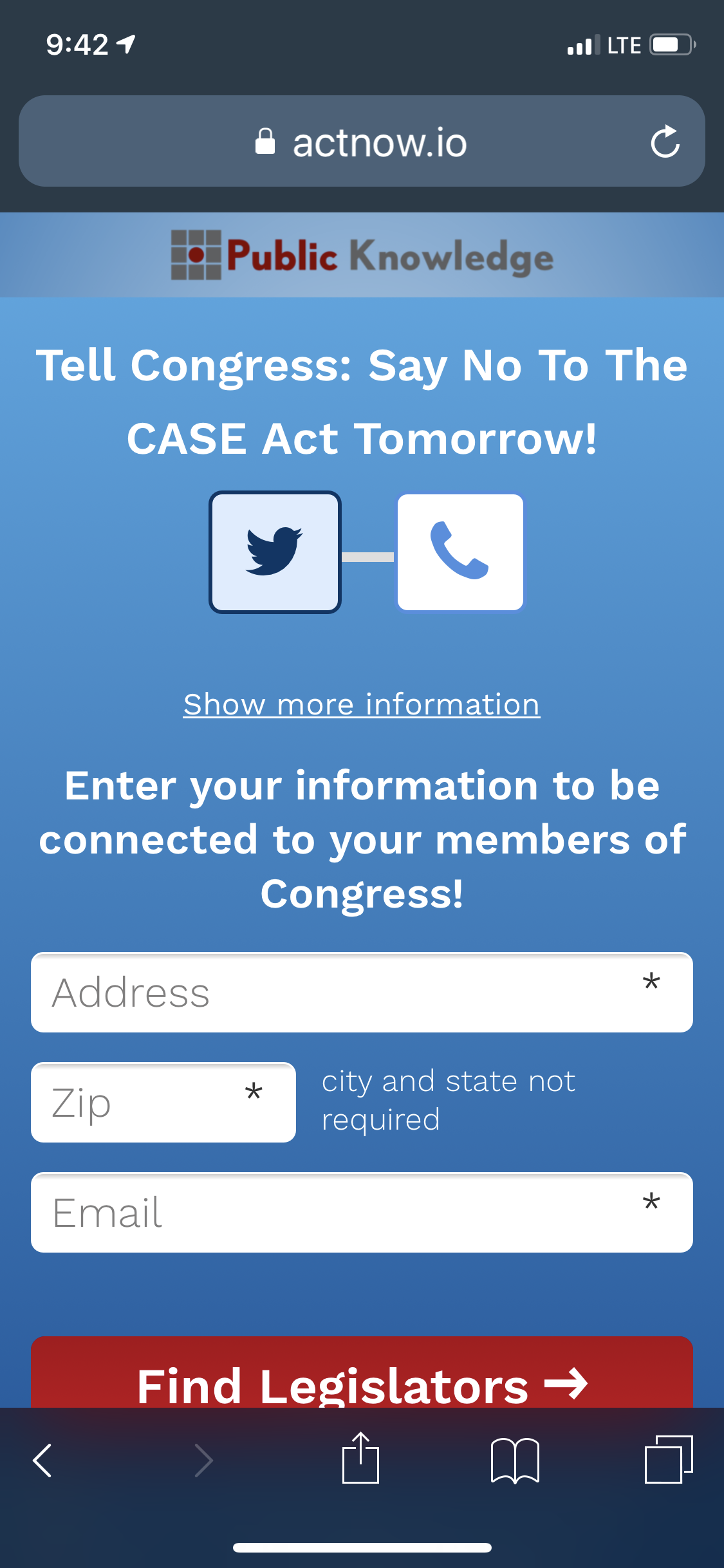
We’ve been covering all week two Google-funded astroturfs, Public Knowledge and EFF, and their efforts to spam The Senate with automated tweets, emails, comments, and phone calls in hopes of blocking the CASE Act (voluntary small claims court for copyright).
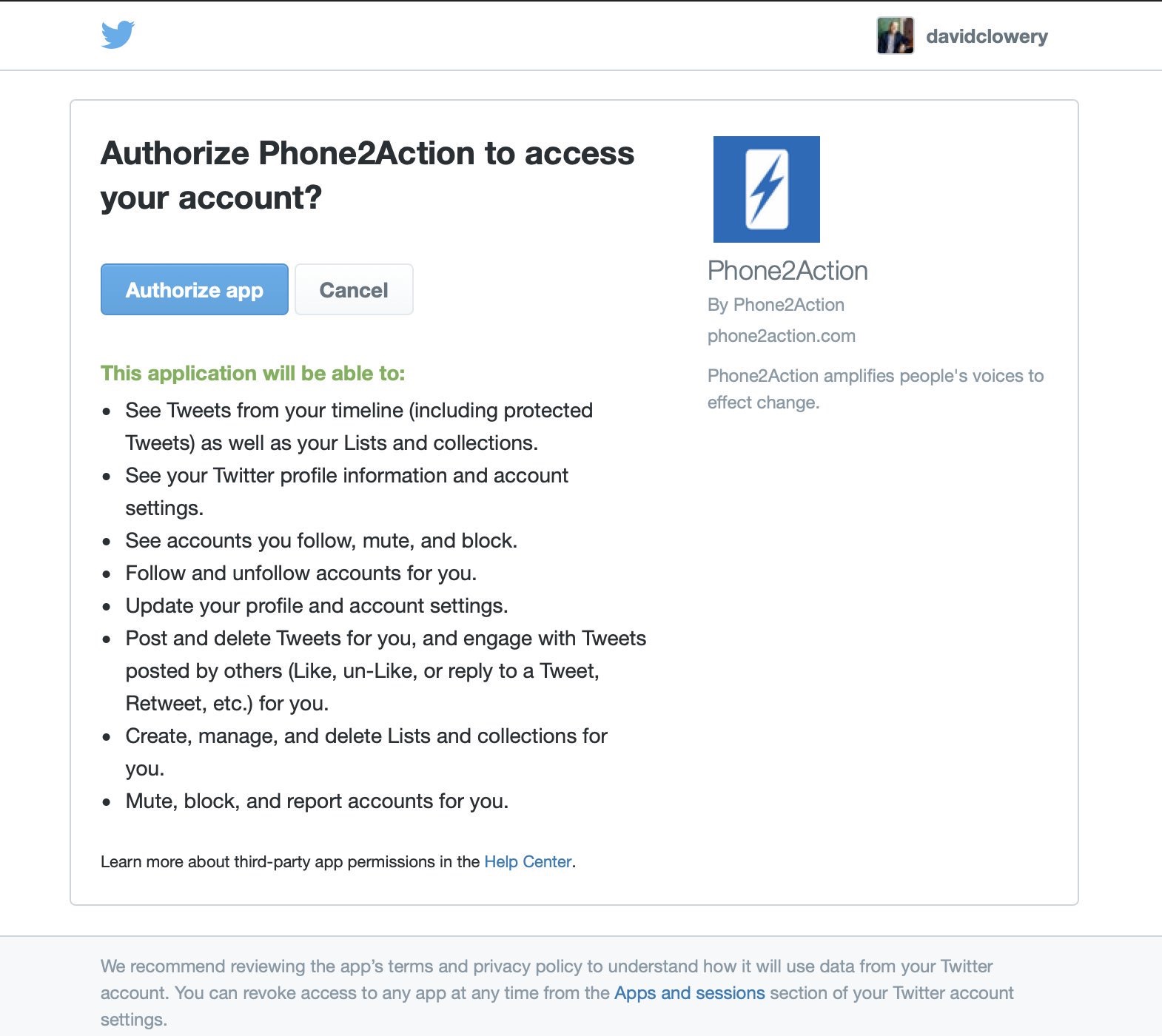
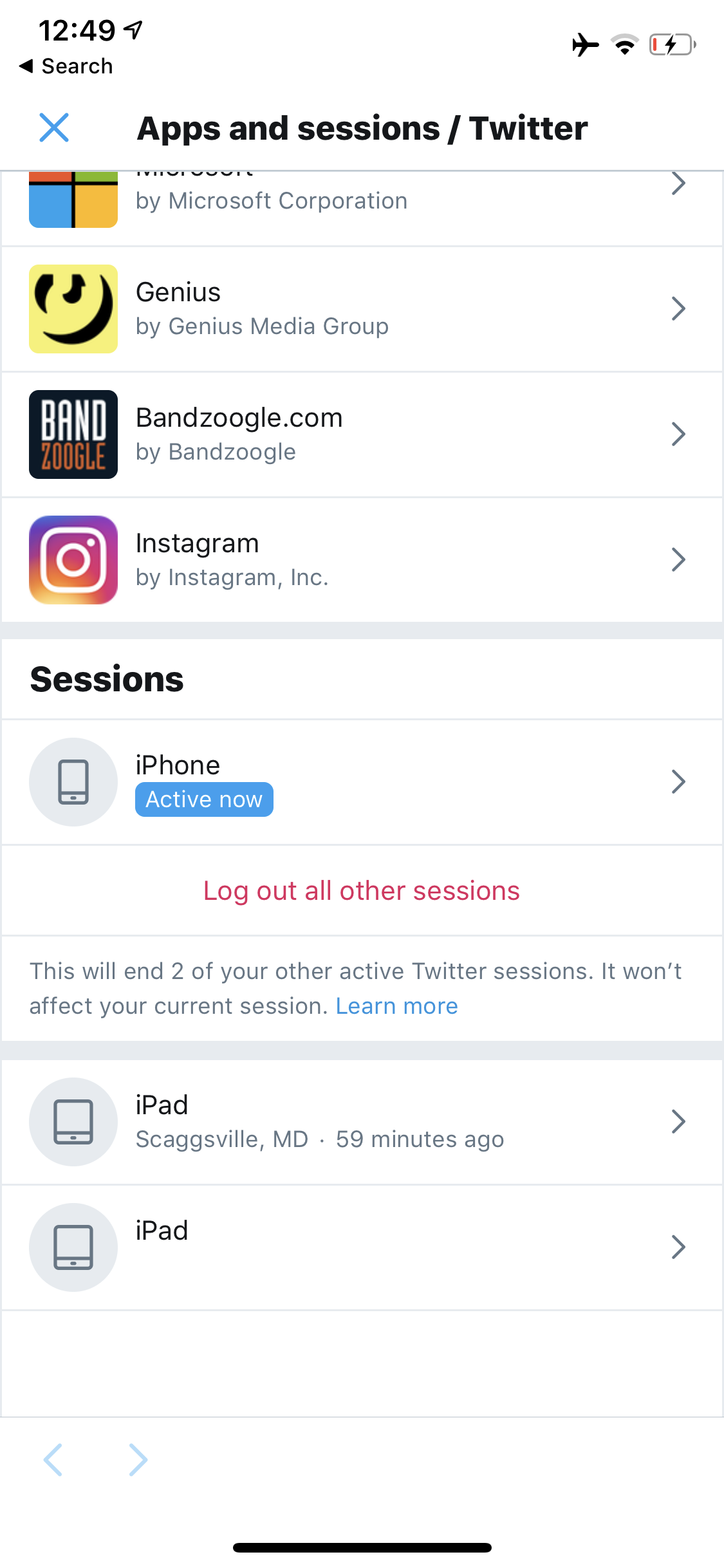
As we dug into this, we started focusing on Public Knowledge and their tweetbot. While experimenting with the tweetbot, I discovered it took total control of my twitter account. Like completely. It basically makes your twitter account part of a botnet that is controlled by Public Knowledge or their agent Phone2Action. Look at the permissions it asks for:
But even stranger (or maybe not), shortly after authorizing permissions, I noticed unfamiliar devices logging into my account.
See screengrab above. I was nowhere near Scaggsville MD. I don’t know that it was Phone2Action, but I’ve never seen this sort of activity on my accounts. I’m pretty security conscious.
Particularly funny (or outrageous) since besides being copyright skeptics Public Knowledge claim to be privacy advocates. That is obviously bullshit.
Phone2Action is the maker of the above tweetbot. Phone2Action website says:
“In the United States, everyone’s voice counts. The opportunity for civil discourse is what makes our country a model for democracies everywhere. When we have problems, we don’t look the other way—we try to solve them. We built Phone2Action to empower the problem-solver and advocate that lives in everyone. Our tools amplify the voices of movements through technology in order to effect change.” (emphasis added)
Alright, that sounds neat. I mean amplify sounds like a little more than one vote per person, but otherwise it seems cool. Phone2 Action was founded by two democrats. One married to a former Obama administration official. The third founder seems to be independent but was in the US Digital Service an Obama initiative. So Phone2Action seems generally progressive outfit. And if you look at their webpage front and center they have some non-profits, corporate responsibility efforts, and commercial campaigns by vaguely virtuous companies like Patagonia and Ben and Jerry’s.
But if you dig a little deeper, into the case studies, it’s not long before you find Satan’s cobbler-er, oops I mean the Internet Association. There is also mention of a Net Neutrality campaign, although that seems to be downplayed. Probably because the net neutrality campaign devolved into the mother of all bot-fueled fake public comment disasters. 22 million comments, with reports of half of them being fake. From an NPR article:
The Pew Research Center took a close look at the comments. Associate Director Aaron Smith said several things popped out. Maybe the biggest, 94 percent of the comments “were submitted multiple times, and in some cases those comments were submitted many hundreds of thousands of times.”
The Net Neutrality fake comment scandal has even become the focus of a US Senate investigations. See here.
Is this starting sound like the massive spamming of the EU Parliament that happened with the EU Copyright Directive (N-Square, SaveYourInternet.eu, EDRi, Open Media and New/Mode)? Yes, and we will come back to that probably later this week. Something else caught my eye. This article by the Consumer Technology Association (aka CEA) Chairman Gary Shapiro.
Whoa. Shapiro is basically bragging about the CEA and Phone2Action together breaking a union work slowdown by the longshoremen. Have you ever met a longshoreman? While the CEA is your usual anti-worker corporate trade group, it seems pretty weird that Phone2Action with its progressive Obama credentials would get involved in strikebreaking.
Now check this out:
“CEA, with support from over 200,000 Innovation Movement members who help us advocate for smart tech policies and several key industry stakeholders, effectively shared the urgency of the West Coast ports crisis via social media, asking Congress and the White House to help keep our ports open for business,” CEA CEO and President, Gary Shapiro, said.
This is a picture of Gary Shapiro. You think this dude leads an auxiliary of a boring-ass trade group that has 200,000 active members? This guy is clearly not a whirling dervish of raw charisma. 200,000 members? Yeah right. And the Innovation Movement? I didn’t believe it so I looked it up. Well there once was a website for the Innovation movement.
But as far as I can tell by 2015, at the time of the longshoreman slowdown, the website hadn’t been active for two years. By 2017 the site redirected to a domain reseller. I know a thing or two about grassroots organizing, and if you have 200,000 active members helping you lobby Congress you don’t let the website domain around which you organize expire. That is seriously valuable real estate. Keep your members. Keep them engaged.
So clearly I don’t think they ever had 200,000 members. My hunch is that they had a few thousand members and then a bunch of fake email addresses and sock puppet social media accounts. I could be wrong. I’m not saying CEA or Shapiro had any idea they were fake… well maybe I am saying that, otherwise, why would he let the domain expire? Aw shit, I don’t know. Politics plus the internet is such a shitshow. Anything seems possible now. But there is no way there were 200,000 real members.
Just let me say this. I hope I’m wrong. Cause otherwise Shapiro and Phone2Action ran a spam op and tricked The President of The United States into intervening in a labor dispute. I hope I’m wrong. I don’t want to believe the worst about our democracy. Cause if I’m right we are screwed.
Public Knowledge’s canned message Tweetbot completely takes over your twitter account. How is this any different than a botnet?
Many of you are familiar with Public Knowledge for their general hostility towards copyright and the rights of authors. In particular, they are currently opposing the CASE Act which would finally give artists a small claims alternative to federal court. Most independent artists do not have the $100,000+ it takes to pursue a case in federal court. The court is voluntary, both parties have to agree to use the small claims copyright court. No one is forced into this system. It’s good for the claimant and the party accused of infringement. By all measures, this is a simple commonsense solution. And an overwhelming bipartisan consensus agrees in congress agrees. The Case Act recently passed in the house 410-6. Stunning!
The bill now goes to the Senate for consideration. Of course, Public Knowledge (Google-funded) doesn’t want the CASE Act to pass. So they have attempted to mount a “cyberturf” campaign directed at Senators using some sketchy social media and phone bots. This tweet bot distributes canned messages that are factually incorrect. Hostile foreign governments need not mount disinformation campaigns against our democratic institutions as we’ve already got Google astroturfs on the job!
In particular, Public Knowledge is distributing a tool that combines a “tweetbot” and “patch through calling.” The tweetbot is easy to understand. The patch through calling requires a little digging to understand how it could be (is intended to be?) abused. It doesn’t really provide any extra convenience to an individual activist. Any activist can look up their Senator’s office on iPhone and click on the telephone number. Whereas, for instance, if you have a boiler room full of paid activists, a third party could easily direct a firehose of phone calls at a wavering Senator, and the calls would be untraceable, the Senatorial staff would not realize it was the same group of paid activists calling over and over. It is my strong suspicion this is the point of these “patch through” phone bots. This is not far-fetched as something similar seems to have played out last summer in the EU parliament.
So I spent the last few days playing around with the “tools” provided by Public Knowledge (and EFF tools). The Public Knowledge tools were the most interesting. Perhaps horrifying is a better description. I came to three extraordinary conclusions:
First. In order to use Public Knowledges tweetbot, you have give total control of your twitter account to Public Knowledge’s contracted agent a company called Phone2Action. The permissions literally let the Public Knowledge and Phone2Action do anything with your account. It is as if you have joined a botnet. (See screenshot at top of article)
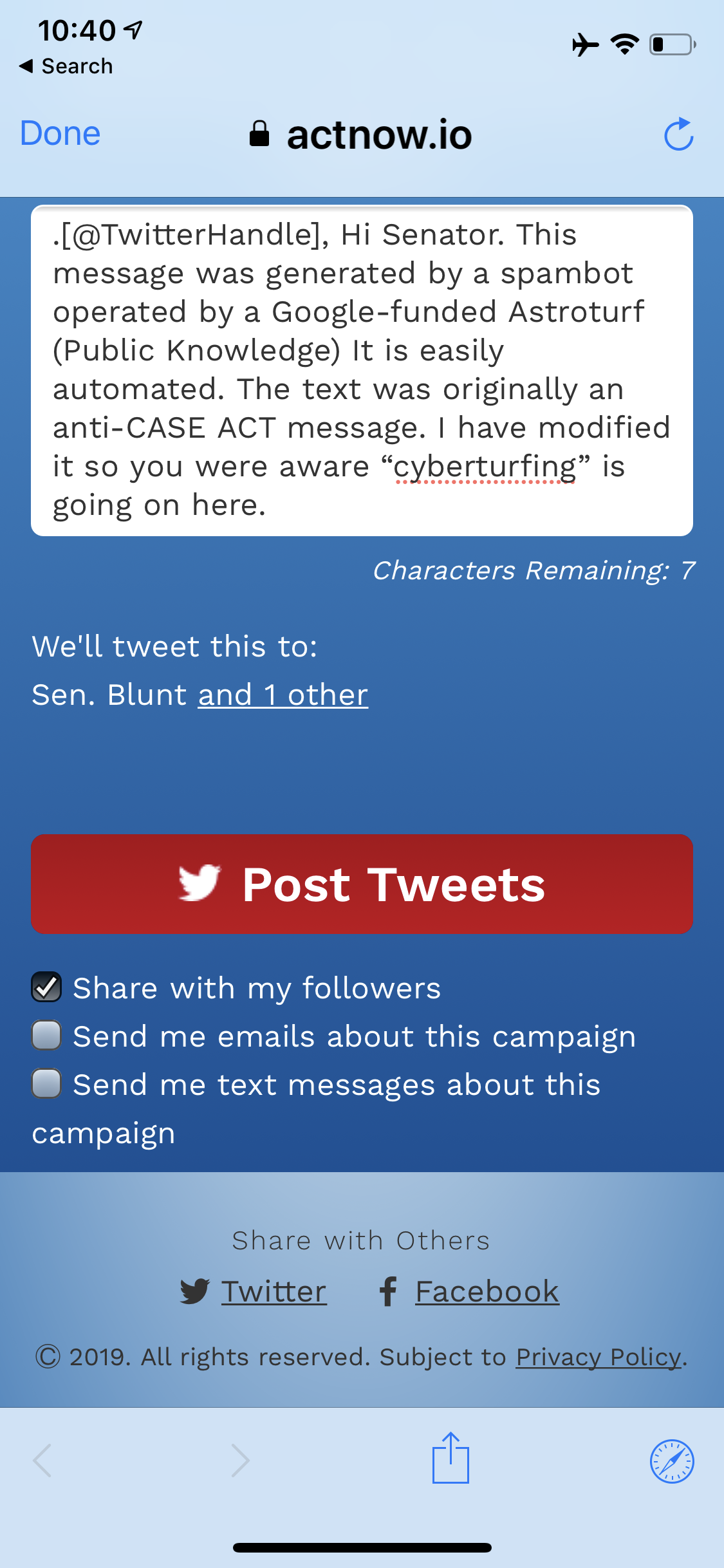
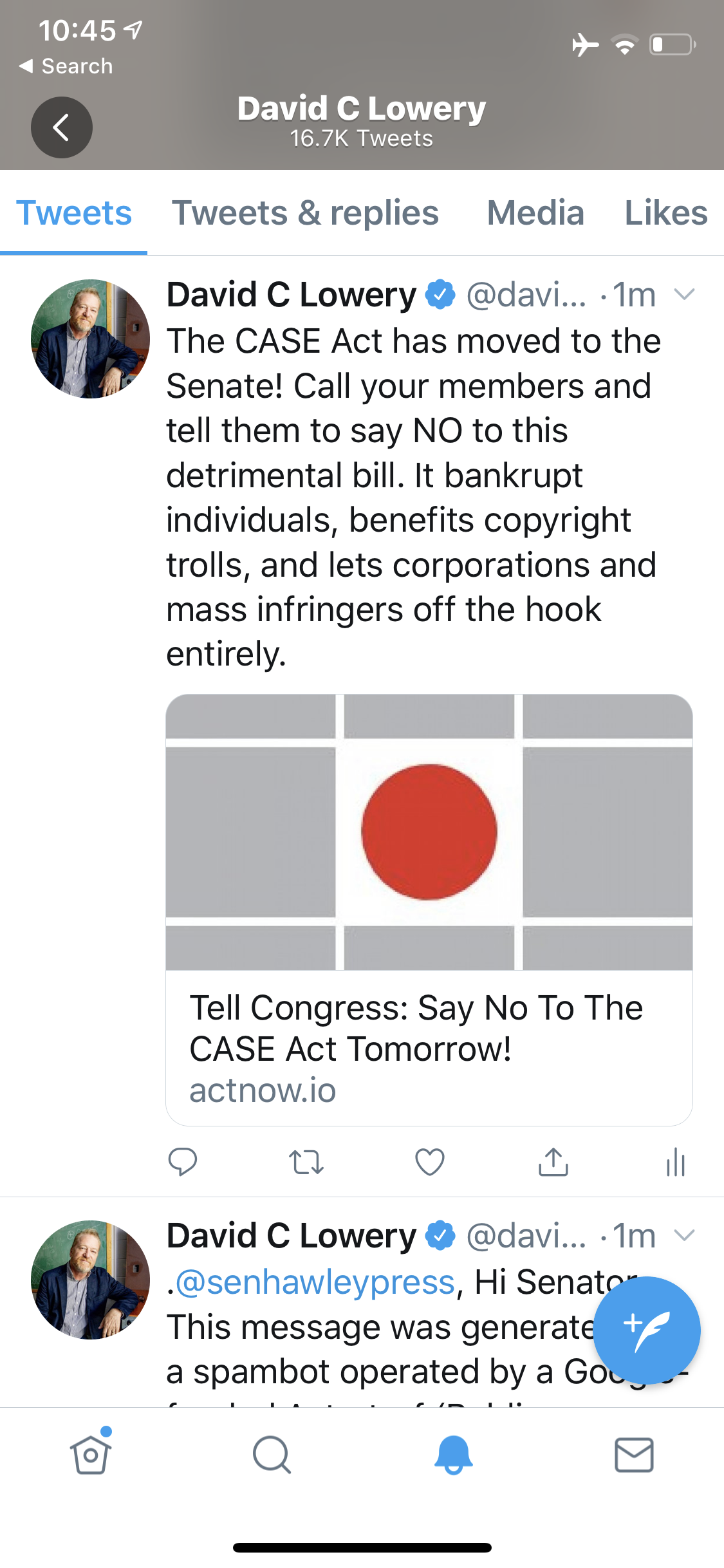
Second. Public Knowledge Tweetbot allows you to customize your message to Senators (above). But it also will tweet their canned message back to your followers (Below) WTF? This has got to be illegal. It’s forcing me to make speech that I would never make. It’s an unauthorized appropriation of my pubic persona to involuntarily endorse something I don’t want to endorse. What else is this bot doing in my name?
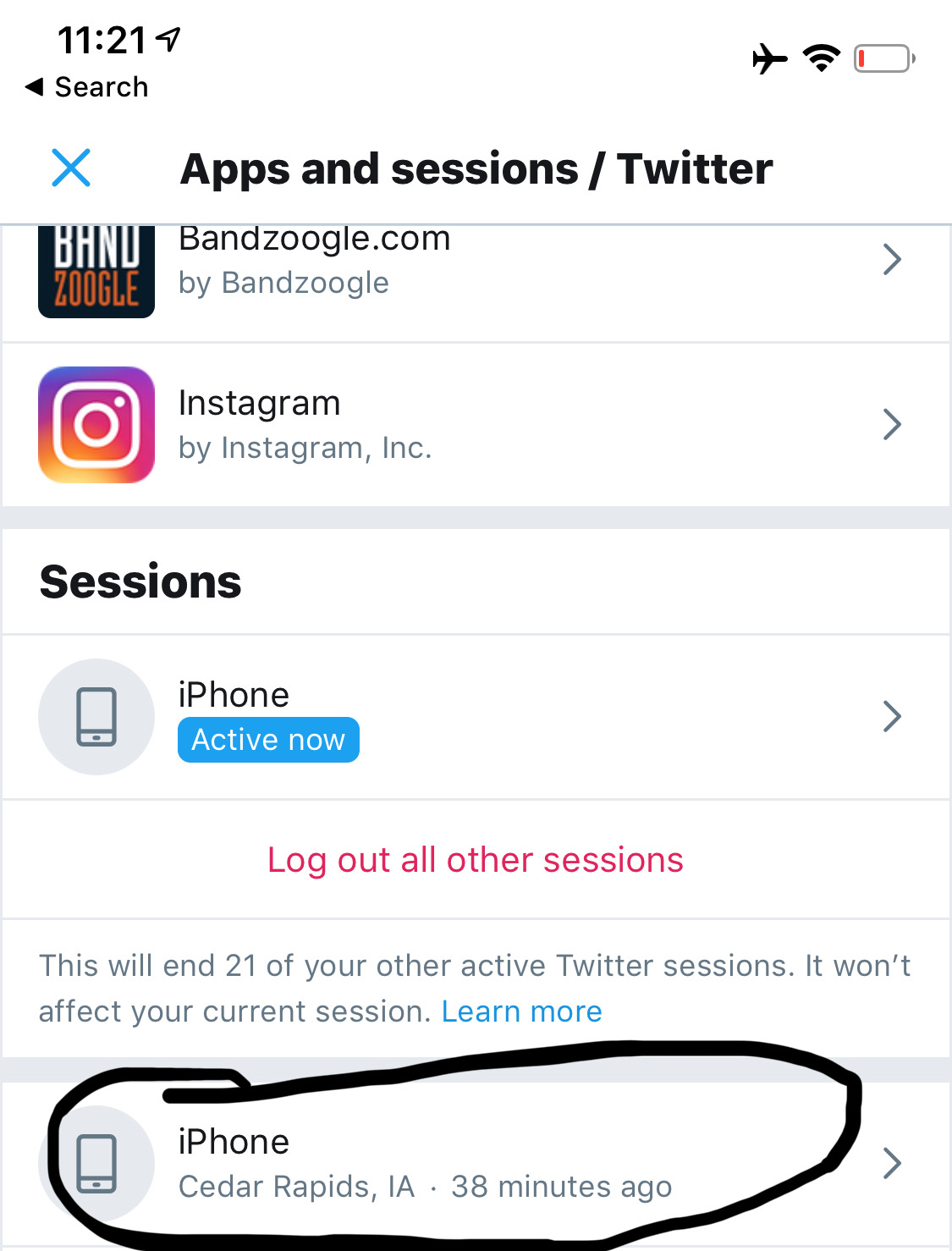
Third. After observing the tweetbot in action for a while, I went to revoke the Twitter permissions I had granted to Public Knowledge (Phone2Action). I noticed something unusual. Under twitter’s “apps and permissions” I saw an iPhone I did not recognize using my twitter account. See screenshot below.
Twitter was identifying this phone as being in Cedar Rapids IA. This seemed very strange. It was not my iPhone. Was not on airport Wifi and my phone IP address indicated my true location. (Not Cedar Rapids). I was not using a VPN. Bizarre. I logged this iPhone out of my twitter account as well as every other device using omy twitter account.* In the confusion, I forgot to disable the PublicKnowlege/Phone2Action permissions.
About an hour later I remembered I hadn’t revoked permissions. I checked my account and I saw that there were two new Ipads logged into my twitter account. WTF? One reported its location as Scaggsville MD, which is just outside the beltway in Maryland. I was hundreds of miles from that location. I have since disabled the permissions I gave to Public Knowledge/Phone2Action.
There have since been no unusual logins on my twitter account. I have no idea if this tweetbot had anything to do with these mysterious logins. But I have never seen anything like it before. On this third issue, I’m not placing the blame on Public Knowledge. But I’m having a hard time coming up with an explanation here.
*21 twitter sessions? Yes, I have a lot of computers. And many of them are running programs that monitor twitter and other social media for certain patterns and keywords. It’s part of other research I hope to publish one day.
Don’t believe the headlines–just because there’s no money for artists from the PledgeMusic bankruptcy does not mean that the story is over. It just means that justice is going to take longer. If you were paying attention, it should have been obvious from the beginning that PledgeMusic was a financial roach motel–the money goes in but doesn’t come out.
In the least suspenseful story of the decade if not longer, it appears that PledgeMusic’s officers and directors ran the company straight into the ground. It’s unclear from the Official Receiver’s report (which is available here) whether Pledge had any cash on hand when it filed for liquidation. The Official Receiver appears to value the company’s intellectual property at £20,000 as its only asset. Pledge had £7.4 million in “debt” so nothing for the artists or anyone else.
However, the really important part of the Official ReceiverReceiver’s report relates to the officers and directors.
So unpacking that paragraph, the directors seek to avoid liability by saying they weren’t involved with the “day to day running of the company”. Well, no kidding. That’s why they are directors. But they are answering a question that isn’t relevant. The question is not whether they were involved with the day to day, the question is what did they know about the company’s insolvency and when did they know it? A related question is whether they were willfully blind about the financial condition of the company?
It is difficult to understand how they couldn’t have known about the company’s financial condition. This is not something you find out from interviewing Benji Rogers. This is something you find out by examining board minutes, financial statements, internal accounting, and of course internal emails.
It must be said, of course, that stating that “the company continued to operate as previously” begs the question “previously” to what date? And of course, if it continued to operate as an insolvent, that doesn’t really help them. At all.
Let’s not forget that to a large degree, once the board becomes aware that their company is insolvent, their fiduciary duty shifts from the shareholders to the creditors, especially if the board fails to disclose the insolvency to creditors and fails to seek bankruptcy protection (which goes by different names in the UK, administration or liquidation).
And that last sentence is also telling. Why did the board seek legal advice about whether the pledge monies were or were not trust monies? Again, answering a question that wasn’t asked exactly. Who gave them this advice, what prompted the board to ask for it, when did they ask for it and what happened after they got the advice? Did the lawyer also tell the board that they could tell the public they were soliciting funds for one purpose and then use the money for an entirely different purpose for their or the company’s own benefit?
You see, it doesn’t really matter whether the monies were held in trust if the entire process was a fraud. But I’d still like to hear from that lawyer as to exactly what he or she told them–I seriously doubt that it’s quite as broad as all that.
But here is the punchline of the Official Receiver’s report:
It does not sound to me like the Official Receiver (the liquidator) views her work as completed. What it appears remains to be determined now is whether the cause of the insolvency (or bankruptcy) requires further action, including a referral by the Official Receiver to Scotland Yard and/or the Crown Prosecution Service (which is essentially the prosecution arm of the Home Office–the people with the white wigs for the BBC watchers).
Artists should feel free to call the Official Receiver at the number they gave or I believe you can still email to LondonB.OR@insolvency.gov.uk using the matter LQD5671373 in the subject.







 The Trichordist
You must be logged in to post a comment.