Dan Ariely
– How to Stop Illegal Downloads “Before it was my book being illegally downloaded, I was more on the “Information wants to be free” end of the spectrum. The sudden, though predictable, shift in my feelings when I found my own work being downloaded for free was a jarring experience.”
Digital Trends:
– Sorry, Internet, SOPA had zero effect on election day results “Of the 24 House Members up for reelection who co-sponsored or otherwise supported the highly contentious anti-piracy legislation, all but three won reelection on Tuesday. This includes Republican Rep. Lamar Smith, of Texas, SOPA’s author and chief co-sponsor who became the Internet’s Enemy No. 1”
Music Producer Tunnidge via Facebook
– Tunnidge Facebook Post “I am going to try and be as obvious as possible. Without being able to make money from our music it effects greatly our ability to make the music, more often it stops us.”
Zoe Keating
– Towards a manifesto “We can’t just hope that the interests of music and technology companies will always magically align with ours. We have to participate in the process. Otherwise, we just have to accept that anachronistic legislation, policies and deals will continue to be written without our input. We need public policy that reflects us. We need fair royalty schemes. We need companies to build our interests into their business models.”
Copyright Alliance
– AN INVITATION TO FREE INTERNET ADVOCATES TO JOIN US “Without free speech, copyright protection is meaningless. The two rights are critical to artists and combined have proven to be a powerful force for social justice around the world. That is why we consistently and openly advocate for a fair and open internet that champions free speech as well as respect for authorship.”
Beck’s new album, you provide the labor!
Beck is a genius in choosing to release his new album as sheet music only. The implications of this gesture touch upon many of the current issues that musicians face from respect for their labor to addressing the illegal exploitation of their work and internet piracy. Critics of the story in Forbes by Will Burns don’t get it. Yes, Beck did not invent sheet music. And, we all know that sheet music can be pirated as easily as the music itself, if not more so. But the implications here are greater in the commentary of the act itself. If you want to hear the music from Beck’s new album you can either 1) invest your own labor and play/record it yourself and/or 2) you can buy a ticket to see him on tour. The irony of this gesture is lost on most. We often hear from critics that musicians pine for a return to the 90’s, an age of the past prior to the internet when things were different. What is truly astounding is that those same critics want to return artists and musicians to the 90s themselves… the 1890s. Beck’s unique and thoughtful commentary on our times is an acknowledgement of the current reality for musicians. You can pre-order his new album [here].
Google Pro-Artist Policy Changes Challenge Allegations of “Net Censorship”
In the latest in a series of practices Google removes “Pirate Bay” from auto complete. There is a saying that the journey of a thousand miles begins with but one step, and Google has begun to take that journey. These moves should be celebrated by artists, musicians and creators – however we’d suggest some cautious optimism given Google’s history of appearances over actual meaningful change. None the less, this recent move can’t be seen as anything less than positive.
The most important thing to take away from all of this is that these policies reinforce what we have always said, reducing online piracy is a question of will not capability. As Google implements more of these policies the shallow talking points of the freehadists become more diminished. Online piracy is about free beer, not free speech and we applaud Google for these early and hopefully meaningful baby steps towards an Ethical and Sustainable Internet for all citizens. And uhm, no Torrent Freak, it’s not censorship… let the screaming begin…
The other side of “Disruptive Technology” and “Permissionless Innovation”
Perhaps we’d be indulging in a little to much of wearing a tin foil hat as to suggest that the YouTube glitch effecting Michelle Obama’s DNC speech was somehow calculated, but you never know, right? We find it amusing that when “Disruptive Technology” and “Permissionless Innovation” are employeed to protect the rights of artists the amount of outrage there is to “control the machines.” But aren’t these the same machine and bots that we’ve been told repeatedly over the past decade can not be controlled by humans? That they are too complex to be managed? Well, funny how the shoe in on the other foot. The truth is pretty simple, the YouTube Content Management System flags content that has been claimed by rights holders. No doubt someone between Google, The DNC and YouTube could have easily preemptively waived those claims prior to broadcast. As with all the alleged complexities of the technological age of the internet the simplest answer is usually the most accurate one, human error, not rouge machines.
But it’s only Bits? The carbon footprint of free…
Unfortunately all of that allegedly free music could have a larger carbon footprint than CDs. Although this article from Paid Content specifically comments on streaming content, there is a large carbon footprint across the entire digital ecosystem. Anyone who thinks that Media Piracy has almost no cost isn’t paying the electric bills or maintenance costs to keep a server farm up and running. These costs specifically illustrate how the exploitation economy works. The internet does not operate on fairy dust, it does in fact require capital. We’ve heard it said, denial is not just a river in Egypt. There’s even a carbon footprint to spam. So the next time someone mentions that the internet is a post-scarcity economy, they might want to rethink that… and review this piece from Harper’s on “Google’s Addiction to Cheap Electricity.”
New Blog VOXINDIE provides and excellent guide on how indie musicians and filmmakers can utilize YouTube’s Content ID System. Read more [here].
As always, fantastic new commentary and insight from The Cynical Musician. This time on Making Stuff and Making money, Read more [here].
Many in the free culture movement fail to recognize the good work done by artists who invest by giving back to the community. When artist become successful they often take up causes. Some obvious examples would be Sting for Rain Forrests, Bono for Human Rights and Amnesty International and Elton John for Aids Research. Let us also not forget USA For Africa and Live Aid as well. Demonizing “rich rock stars” is a shallow attempt to distract from the real issues of illegal artist exploitation online. We were glad to see Forbes report on Jon Bon Jovi’s philanthropy work.
Music Tech Policy offers spot on response to the ongoing nonsense that the artists number one problem is obscurity. It’s not. The artists number one problem is the same as it is for everyone, getting paid for your work. Everyone has bills to pay.
Support for the Pirate Party in Germany appears to be diminishing. Amongst the problems facing the fledging party (of which there are many) a primary one appears to be “the novelty is wearing off.” SPIEGEL online reports [here].
This is how we got Al Capone… Pirate Bay Founder Arrest Related To Tax Hack, Not Piracy. Although isn’t a Tax Hack just money piracy? Torrent Freak Reports [here].
Another artists speaks out against Spotify payments and practices. This time it’s Grizzly Bear, as reported by Digital Music News [here].
The Illusion of More : Dissecting the Digital Utopia
– A fantastic new blog and audio podcast launched this week which explores the good, the bad and the ugly of Internet culture, “Now that we’re just about 20 years into the digital age, and the babies born to the sound of dial-up modems are young adults who’ve never known life without the Web, it seems like a good time to explore some of the best and the worst of what we’re making of this technology.”Check out The Illusion of More [here].
Copyhype’s Friday Endnotes 08/31/12
– In addition to the weekly recap here, we strongly recommend the weekly reading of Friday’s Endnotes from Terry Hart’s fantastic blog, Copyhype. Terry often delivers thoughtful and insightful analysis of recent copyright cases, legal developments and news stories that are important to artists and creators.
Artists Exploitation is a Mass Scale, Enterprise Level, Infringing Business
– We are pleased to see several other blogs picking up on this story and asking the same questions we have been. Who is responsible for the funding of illegal artists exploitation on sites dedicated to infringement? Adland picked up the ball this week on our Neil Young post and commented from the perspective from within the Advertising Industry. Several other blogs also have been picking up on the story including Bill Rosenblatt’s Copyright and Technology, Terry Hart’s Copyhype, and Bruce Warlia at Music Think Tank.
Apple V Samsung, $1 Billion Dollar Victory for Apple leaves Anti-IP/Freedhadists with panties all bunched up…
– This is a major win for all artists and creators of Intellectual Property. Even though this case is about patents and not copyrights it clearly illustrates (again) that when presented to a jury (Tenenbaum/Thomas), people understand right from wrong and that copying without permission, is in fact stealing someone else’s hard work for profit. It’s important to note, this jury is comprised of regular folks being presented the actual facts in a court of law. All of the free culture nonsense that reverberates through the echo chamber of tech blogosphere has little impact in the bright light of reality. We are encouraged by the common sense and fairness that this jury displayed, Ars Technica reports;
The jury “wanted to send a message to the industry at large that patent infringing is not the right thing to do, not just Samsung,” Hogan told the newspaper. “We felt like we were 100 percent fair, but we wanted something more than a slap on the wrist.”
Comscore released a white paper this week on the Economics of Online Advertising.
– You can download the white paper [here]. Readers of this blog will note that we are somewhat skeptical of the economics of online advertising as they seem to be largely dependent upon “exploitation economics” to remain profitable. This could be the use of unpaid bloggers for corporate gain, or the use of unlicensed content to aggregate an audience large enough to monetize with advertising. One only need look at the post IPO performance of Facebook to see this in action. Given the above, we found this statement particularly interesting,
“Bottom line, despite all the ingenuity of market participants, the current market situation is untenable.”
Cult of Mac Writer John Bownlee on “Why I Stopped Pirating Music”
– It’s a bitter sweet essay not unlike the one written by NPR’s infamous intern Emily White. We’re encouraged by the notion that as people mature from their 20s into their 30 recognize the value (not the cost) of music in their lives. Not only do they recognize this value, but they recognize the value in actually paying the creators of that work for enriching their own lives. As Brownlee writes, “As a thirty-three year old man, I’m ashamed of the piracy of my twenties” which is encouraging. However it’s the second part of the sentence, the rationalization for a decade plus of denying artists their rightful compensation that still remains as the bitter part, “but I’d be lying if I didn’t admit that it gradually helped transform me from a person who didn’t care about music into a music lover, an individual with a true passion for sound, and a fervent believer in buying music.” The takeaway may be that one in their twenties will not pay for music if they don’t have to, but we should be grateful to them if they should grow a conscience and awareness in their thirties? We hope that people like John will stop with the rationalizations, and just admit to themselves and others that the artists that provide enrichment of their lives are deserving of compensation for the consumption of their work and for their contributions to the listeners life.
Streaming and Sustainability, Maybe it Just Doesn’t Work?
– This isn’t just about Spotify as Pandora also faces challenges with scaling it’s business. Maybe the truth is that internet advertising dependent businesses for content just don’t work once one factors in the actual fixed costs to produce and license the content itself? It’s no mystery to us why the illegally operating infringing sites monetizing content seem to be the only ones making money. They’re not actually paying for the content they are monetizing against. This is not a failure of the content industries, it is a failure of the internet community to figure out how to build models that can actually pay for the content they are using to attract the audience they need in which to sell advertising. Not surprisingly, Pandora has hired K-Street lobbyists in an attempt to deny artists of royalties and to line their own pockets. This may also be why Spotify is betting on a subscription model and not advertising, as Digital Music News reports.
Pirates meltdown as they realize that Copyright Law is not going to be abolished anytime soon.
– It is endlessly fascinating to us that the entirety of the free culture movement is defined by the same talking points as a petulant two year old, “I want it, I want it, I want it.” The constant whining and crying is really troublesome as they could be actually working on cooperative and innovative solutions for all stakeholders. Although Rick Falkvinge at Torrent Freak fears having these conversations for the next forty years, we’re a little more optimistic that only those who like walking into walls instead of walking through doorways will insist on continuing the pointless discussion about the unprincipled practice of exploiting the labor of others. We suspect in forty years people will look back at this moment in time and realize the truth that the exploitative robber baron’s of internet industry got a nearly two decade free ride as education and the law reconciled core societal values that have been present for centuries. Copyright is an individual right.
FilesTube Facebook Page Hacked
– Fascinating as it is entertaining. This week the Facebook page of FilesTube was hacked and an endless streaming of taunting and humorous pictures were posted. Not sure why, or who would be motivated to do this but it does indicate that not all hackers are aligned with the free culture movement. Wouldn’t a true “Robin Hood” movement actually transfer wealth from corporations to artists and creators as opposed to the other way around? One again, Torrent Freak reports.
Google, YouTube, Porn, Infringement, Copyright Policy and Consequences.
– We pretty much adhere to the time tested idea that eventually, the truth will out. We’ve said for a long time that managing copyright online is a question of will and not capability. This stunning story on Buzzfeed from a Google/YouTube temp worker confirmed what we’ve always believed. If there are consequences for bad behavior (such as porn and other nasty stuff getting onto YouTube) then there are ways to figure out how to manage it. This simply illustrates the obvious, consequences lead responsibility. Or in other words, necessity if the mother of innovation,
“One of the most shocking parts of my job was working on porn issues. Child porn is the biggest thing for internet companies. By law you have to take it down in 24 hours upon notice and report it to federal authorities.”
The Illegal Exploitation of Creators Work is not limited to Musicians.
– Javier Bardem, the Academy Award Winning star of “No Country For Old Men” explains how piracy removes opportunities from actors and other creative artisans.
Be sure to check out the CNBC, Crime Inc. Broadcast of Hollywood Robbery
– Airing Sunday, September 2nd, 11:00 PM EST/PST.
A Shill by Any Other Name…
– Google released it’s Supplemental Disclosures, you can read here at scribd.com featuring all the usual suspects and your favorite cast of characters. Listed and described in the document are Public Knowledge, The Electronic Frontier Foundation, Floor 64 CEO Mike Masnick (also of Tech Dirt, but who questions why he was included by Google under the reference to the CCIA that he consults for) and others. The judge who ordered the disclosure rightfully understands that he who pays the piper names the tune. It’s funny how many of these same players appeared to have editorialized the SOPA debate to the benefit of Google’s business interests.
It’s the other guys fault, no really… Rapidshare plays pass the buck…
– Rapidshare pulls a page from the Google playbook in it’s filing to the Intellectual Property Enforcement Coordinator (IPEC) by passing the buck of responsibility for illegal file sharing onto the the search engines, advertisers, pirate sites and ad networks. While this open and honest admission is encouraging, Rapidshare unfortunately is still not taking responsibility for the overwhelming amount of infringing material it is hosting itself. So tell me more about how sophisticated these websites are and why more sophisticated legislation is not the solution? Does this sound familiar?
“Rather than enacting legislation that could stifle innovation in the cloud, the U.S. government should crack down on this critical part of the online piracy network.
The only way that content stored with RapidShare can be accessed by a third party is when a user makes his or her access credentials available to others by posting this information on websites. These very sophisticated websites, often featuring advertising, facilitate the mass indiscriminate distribution of copyrighted content on the Internet and should be the focus of US intellectual property enforcement efforts.”
USA TODAY details the true costs of “Free” Downloads
– We were very encouraged to see a well written report on the reality of illegally artist exploitation online by infringing and pirates sites By Ken Paulson in USA Today. The brief but lucid article details the historical origins of both free speech and copyright as complimentary, not competing principles. Ken writes,
“…this nation adopted two major, interlacing principles: Americans were free to write whatever they wanted and had every right to be compensated for their work. The First Amendment encouraged creativity, and the copyright clause guaranteed compensation.”
Musicians Stand to Lose Again in Battle over Radio Royalties
– It seems no matter where you look today musicians are under fire. Now internet streaming internet services like Pandora and others are hoping to make more money from musicians work, by paying them less royalties. Even major labels let artists collect 100% of their streaming royalties whether or not they’re recouped but Pandora wants to profit more by paying less. For all the talk of how the internet is liberating and empowering musicians, it seems the in reality the truth is actually very much the opposite. This looks like a pattern–every few years Pandora will try to move the goal posts in their direction by exercising their lobbying muscle. So much for a “middle class musician.” Musicians need to be informed about these issues and be vocal in their support of legislative and union representation. We’re very disappointed by the strong position taken by Pandora to not fairly pay artists. Read more in AFM President Ray Hair’s piece at The Hill.
Gearslutz pulls Spotify advertising after forum users complain
– The web forum Gearslutz caters to musical enthusiasts and hobbyists interested in studio gear. The highly successful site is probably the top meeting place online for this particular demographic of aspiring musicians. This week the site pulled it’s Spotify advertising banners after users on the forum complained that Spotify might well be the end of their professional aspirations. As the Spotify debate rages on, there still appear to be more questions than answers about the transparency of the companies practices and what it’s long term effects will be on the professional music community.
Google concerned over online Piracy?
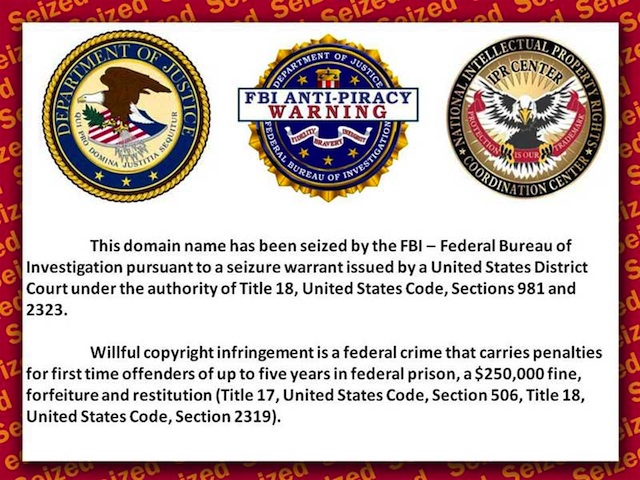
– We found this story on Ars Technica about the FBI (as opposed to U.S. Immigration and Customs Enforcement) seizing the domain names of sites that allegedly participate in Android app piracy. Sooner or later it appears Google will learn that a fair and honest internet is the best way to build a fair and honest businesses. Now if only this solution were available to remedy the sites infringing on musicians work like FilesTube, Rapidshare and others.
After a brief break the weekly news is back. We also encourage our readers to send us news and stories you discover that you’d like to share with other Trichordist readers. Send your submissions to: the trichordist (one word) at mail dot com. That’s mail dot com, no “g”.
Pussy Riot sentenced to Jail Time, where is the internet Protest and Black Out in response to Real Censorship?
– This is what real and true censorship and oppression looks like and the internet is oddly silent. As yet we’ve not seen the kind of outrage (and outage) sparked by both SOPA and ACTA, which protected artists rights against exploitation. It is sad and confusing that the internet freedom fighters such as Google, Wikipedia and others have not come to the aid of true oppression and censorship. But then again, Pussy Riot is experiencing their troubles in the real world, not online. This is a very important story and we urge all of our readers to educate themselves about it. Mark Levine writes for Al Jazeera, “There are hundreds of artists who perform under threat to their freedom and lives, who also deserve our solidarity.”
* Amnesty International http://amnestyusa.org/pussyriot
* Free Pussy Riot http://freepussyriot.org/
Google changes search ranking policy, internet and tech blogosphere have fetal meltdown:
– Google announced that it will start dropping the rankings of sites with a history of infringement in it’s search rankings. We and many others have been advocating this for a long time. It is both encouraging and frustrating that these seemingly impossible policies (like youtube content management and audio fingerprinting) just make it appear to us that Google is the boy who cried wolf. That said we applaud Google, for these policy changes that have the tech blogosphere whining like a baby without a bottle. Let’s be clear about this, these policies are, have been and will be about money and Google’s best interest. Eric Goldman’s piece in Forbes is representative of the kind of fetal meltdown the Google faithful are experiencing, including the EFF. Politico noted Google’s stat that of the 4.3 Million DMCA requests filed in one month, 97% we in fact infringing. We fully expect to see more inevitable policy changes along these lines in the future, let the screaming begin…
Related : Pirate Sites lose their cookies over Google’s policy change:
– Hmmm… it’s funny how when the pirates need to “adapt and evolve” how much whining we hear. Torrent Freak reports on how The Pirate Bay and Isohunt are in a defcon 4 panic because they know, like we do, once Google acknowledges that these sites are infringing we have started down the road to real progress for creators and artists.
Pirates eat their own in response to uTorrent’s announcement to include adware in the client:
– It never fails to amaze us how those infringing and exploiting artists feel they deserve to be paid for their labor, despite running a site that denies artists the ability to be compensated for their labor. We love this quote from one of the uTorrent developers reacting to the stream of criticisms, “µTorrent is an excellent application which comes for free, but you must understand that its development doesn’t. You just have no authority to sit in judgment over that.” Yes, please tell us more about the importance of being compensated for your labor…
Topspin’s Ian Rogers joins in letter arguing against the protection of Artists Rights:
– We like Ian Rogers alotl. Readers of The Trichordist will know that we frequently refer to Ian’s awesome post-sopa editorial on hypebot calling for non-legislative, cooperative solutions between the tech and content industries in the form of a content database and registry. It is with great disappointment that we saw Ian’s signature on a letter with many people who aggressively campaign against artists rights from the illegal exploitation of their work and fair compensation online. I’m not sure what artists are using Topspin these days, but it gives us pause when the CEO is so aligned with those who are seemingly so opposed to artists rights.
Controversial Tunecore CEO Jeff Price has exited the company:
– We can’t say that we’re surprised. We love Jeff for his passionate and unapologetic opinions about the record industry but often wondered about the accuracy of his perception. Jeff no doubt has done a lot of good on behalf of artists at Tunecore, but also was a bit too defensive and combative when called upon to engage in serious conversations about the reality of life for musicians in the piracy age. Jeff missed the mark and missed the point with an ill informed abusive rant aimed at the widely embraced “Letter To Emily” by David Lowery here on the Trichordist. We believe Tunecore offer a great service to many musicians, but the model would appear to have a glass ceiling. Only so many people are going to keep renewing fees for a service from which they can not recoup those fees, and/or the actual costs to make, market and promote an album. We always thought Jeff would have been better served understanding the real enemy of artists in the 21st Century is for profit piracy and not the major labels (which he oddly defends in the case of Spotify). We hope wherever Jeff lands he will have learned from this experience and continue to be a vocal advocate for artists rights.
AdLand reports on how major brand advertising appears on sites with infringing content exploiting artists:
– We highly recommend checking the AdLand website. A lot of very useful and informative info. We like their no holds barred attitude in addressing the inequities happening online.
Things we like to see, Fair Trade Music Seattle:
– We hope to see more organizations like this for musicians and artists rights. We been saying for a while that people are willing to pay more for fair trade coffee once they’ve been educated, so fair trade music should benefit from the same philosophy to benefit working musicians.
What do Aimee Mann, Neko Case, Talib Kweli all have in common? Tune in this week and find out…
– Starting this week, we’ll be exploring the real word effects of the exploitation economy as we look at how brands, agencies and ad networks appear to be benefiting from the infringing and illegal exploitation of not only artists work in their music, but also the artists name and brand itself.
Reader Comment of the Week:
– This week’s user comment is from Bill Rosenblatt in response to the post Who Speaks For The Internet? Do Artists have No Voice Online? in which we discuss the parties who claim to speak for everyone online. Bill’s comment, “As for Mike Masnick, he’s the Rush Limbaugh of the Internet – he and his Dirtoheads…”


 The Trichordist
You must be logged in to post a comment.