FCC Clears Way for Pandora to Buy Terrestrial Radio Station: Are Lower Rates Ahead For Artists?

Pandora’s actual business and technological innovations are behind them.  They seem to now be concentrating exclusively on “innovative” legal tricks, loopholes and gotchas.   The latest one is that Pandora is not only “non-interactive” it is now a “terrestrial” broadcaster.  Why? They have been more or less cleared by FCC to buy a single terrestrial radio station in Box Elder South Dakota (Population 9,083).

And <sigh> anything seems to go these days…

This will not end well.

http://www.allaccess.com/net-news/archive/story/141115/fcc-grants-pandora-declaratory-ruling-allowing-it-


Blake Morgan Takes the NAB to School: Why the McCoalition Should Say #irespectmusic

image

The U.S. Copyright Office recently released its comprehensive Music Licensing Study, a roadmap for potential revisions to the Copyright Act.  The Copyright Office hosted a series of invitation-only roundtables to hear testimony from a variety of stakeholders.  The New York roundtable was held on June 23, 2014 and included Paul Fakler representing the National Association of Broadcasters and Blake Morgan, an artist, songwriter and label owner involved with the #irespectmusic movement.

The National Association of Broadcasters (“NAB”) is the principle lobbying group representing largely the commercial radio stations in the United States.  Broadcasters are an extremely powerful lobbying group that has stopped artists  from being paid a broadcast royalty in the U.S. for nearly 100 years–even though artists are paid for broadcasting in every other democracy and major economy around the world except for countries like North Korea, Iran and Rwanda.

The Copyright Office released transcripts of these hearings that are readily available but the transcripts are like open secrets–read by those in the know, but most journalists don’t bother reading them.

The Artist Rights Watch team read them–of course–and remembered an exchange between Blake and the NAB representative which we excepted below.  Two events happened last week that make this particularly relevant.  First was Congressional testimony last week by the head of the Copyright Office, Register of Copyright Maria Pallante where she gave her unequivocal support to the Fair Play Fair Pay Act introduced in Congress by Rep. Jerry Nadler (D-NY).

The other was the formation of the “Mic Coalition” (or as a commenter said, the “McCoalition”) with it’s announced goal of making a happy meal of the Fair Play Fair Pay Act and artist pay for radio play.

What’s different about the McCoalition is that we now see who our enemies are.  Not only does the McCoalition include the NAB–an extraordinarily powerful special interest group long devoted to protecting crony capitalism and the broadcaster loophole–it also includes Google, Amazon, Pandora, the Digital Media Association (of which Google/YouTube, Amazon and Pandora are members), the Computer & Communications Industry Association (of which Google, Amazon, Pandora are members) Cox Media Group, iHeartMedia (formerly Clear Channel), Salem Media Group, the National Association of Broadcasters (of which Cox, iHeart, Salem and Pandora are members), the Music Licensing Committee (of which Cox and Clear Channel are members), the Consumer Electronics Association (of which Amazon, Google and Pandora are members), the National Restaurant Association (which fought the performance royalty for songwriters whose music is performed in restaurants), the American Hotel and Lodging Association (which also fought the performance royalty for songwriters).  And then there are the human shields at the Educational Media Foundation and, as David has pointed out, National Public Radio.

A combined market cap in excess of $2 trillion aligned against artists and songwriters.

And if that wasn’t enough, the whole group is organized by the Washington, DC shillery, Twin Logic Strategies–the brainpower behind the Internet Radio Fairness Act.  This is “astroturf” in every sense of the word–a manufactured alliance to taint the Congress no doubt with threats and intimidation for anyone who would dare consider supporting the Fair Play Fair Pay Act.  The Act accomplishes two main goals:  pay artists in line with the rest of the world and stop Pandora and SiriusXM from screwing legacy artists with the pre-72 loophole.  That’s what all these companies and their lobbyists stand for.

While the McCoalition has so far come up with platitudes and glittering generalities about their motives, make no mistake–these people are out to stop artist pay for radio play and probably go much, much farther to roll back other artist rights–or else why are the restaurants and hotels in the group?  Why is NPR in the group?

In other words–if you ever doubted before, the McCoalition should provide you with all the evidence you need.  Companies with trillions of dollars of market cap and hundreds of millions of lobbying power and political contributions are out to nail artists and songwriters to the wall.

And at the roundtables, the goals of this group were articulated by Mr. Fakler in this exchange with Blake, moderated by Jacqueline Charlesworth, General Counsel and Associate Register of Copyrights, U.S. Copyright Office.

MR. MORGAN: My name is Blake Morgan, I’m a recording artist, and a songwriter, and a label owner here in New York City––in fact––right up the block. And in January, I started something called “I Respect Music,” which began as a petition to Congress, urging Congress to support artists pay for radio play. And many, many thousands of signatures later, it’s grown into a grass roots movement with people holding up signs on Twitter, and Facebook, and Instagram, and covered by major national press, and all sorts of terrific things. It’s about a simple idea: that artists should be paid for their work. When it comes to radio air play, we are the only democratic country in the world that does not pay artists for radio play….

MR. FAKLER: Between the pre-existing service issue, and the radio issue––since I’m the one at the table with everybody’s arrows in my back––it may take me a little bit longer to respond to all of the various things. Let me start out with some general points here, because this has been a problem endemic to this discussion….

You know with respect to radio, and the promotional value of terrestrial radio, all I can say is that all of the studies still always showed radio as the number one discovery vehicle for sound recordings, and driver purchases. That hasn’t changed….

MR. MORGAN: With all due respect––and I can imagine how you feel here––but these aren’t arrows in your back, they are questions to your face. And the question for artists and musicians is: how is it possible that anyone can agree with a group of countries that don’t pay artists for radio play. A small group of countries that includes North Korea, Iran, and Rwanda. And to hear––you are actually the first person I have ever met face to face who I presume believes that we should not have this performance right in this country. And Kim Jong Un agrees with you, and it’s hard to believe. This —

MR. FAKLER: Really?

MR. MORGAN: Really, sir. There are many, many complicated issues here, but this part of it isn’t. This country is an idea. It is one that has lit the world for two centuries. And the idea is: we can do better. We’re here to form a more perfect union. We fix injustices, large and small. Sometimes it takes us a lot longer than it should, but we do it. And in the last century alone we’ve been able to split the atom. And put a man on the moon. And splice the gene. And I think artists and musicians are saying, “Can we please––can we pay Aretha Franklin when ‘Respect’ is on the radio?” That is the question.

MS. CHARLESWORTH: You have 30 seconds to respond and then we will continue, since there is a direct question.

MR. FAKLER: Well, I mean, I don’t know how one responds to these ad hominem. You know, the Kim Jong Un thing, it is––that is not, you know, an ad hominem is a great substitute for a policy argument. It is, sort of like the MPAA with the VCR and the Boston Strangler, and all of that. It makes for a good sound bite. But the point is, the promotional value is received. It’s something that has been a mutually beneficial arrangement for many years. It has been recognized by Congress. And to ignore that promotional value, and to minimize it, we just have a disagreement. But I don’t have to call you, you know, a name, or —

MR. MORGAN: I’m not calling you a name, sir. I’m simply reminding you that the rest of the democratic world sees value, and awareness, and promotion on the radio, and also says our work should be paid for. The only group of countries that does not agree with that is a “bad” group of countries. And it’s embarrassing I think––as the United States of America––when blues, and rock-n-roll, and hip hop, and Jazz, etcetera, are American innovations and American birthrights, and we don’t show the same amount of respect––pardon the overuse of the word––to those artists. So I’m not attacking you personally, or in any way. I’m really asking what is a very reasonable question to the music maker and music lover public. Which is: it is incomprehensible that we don’t have this right in this country when we are the ones, together, who came up with these art forms. And Belgium is able to do this, but we are not?

MR. FAKLER: And yet the American recorded music industry is the biggest, best, and envied throughout the world. And it has lived with this system for close to 100 years.

MR. MORGAN: We live with a lot of things for a long time–

MR. FAKLER: Not to mention the fact––

MR. MORGAN: — until we fix them.

MR. FAKLER: — that all of these other countries that you are discussing have very different legal regimes as relating to sound recordings in particular.

MS. CHARLESWORTH: Okay. I think both sides have made their points, and we are going to move on…I think Mr. Morgan is going to bring us home.

MR.MORGAN: Just very quickly. So this is-–you’re conducting a music licensing study about these issues, and in some of this stuff we do get lost in the tall weeds because it’s complicated. And, Mr. Fakler, you do have a tough gig here today, and I appreciate you coming here and being the standard bearer for that particular position. I guess as part of the study what did seem very simple to me––I didn’t hear anybody else and I’m just curious––is there anyone else at this roundtable that’s against a performance royalty at terrestrial radio?

[NO ONE RAISES THEIR HANDS]

So everyone here at this table except Mr. Fakler believes that there should be a performance royalty at terrestrial radio? Okay, thanks.

MR. FAKLER: Would anybody else’s clients actually have to pay the royalty?

[LAUGHTER]

MR. MORGAN: And actually, with a little comedy we can end with a little comedy. I appreciate that wherever I go, when I travel and I talk about this issue, I say that I understand the NAB’s position. It’s legitimate, and it’s one that we should pay attention to because it is serious, and it is valid. And the valid position is, “We don’t want it.” “We don’t want to pay for it.” And I get it. But, other than, “We don’t want to pay for it,” I have yet to hear an argument that is solid.

MS. CHARLESWORTH: Okay. Well, thank you, I’m glad we had a little bit of humor at the end….

The head of the Copyright Office echoed Blake’s feelings when she told Congress last week “it’s indefensible as a matter of law and frankly embarrassing as a matter of policy that the United States does not pay public performance royalties to the creators of music.  We are out of step with the rest of the world.”

And that’s a good place to leave it with the McCoalition:  They are frankly an embarrassment.

Blake will be taking the #irespectmusic message to Canadian Music Week in Toronto on Friday along with Zoë Keating.

NP AAAARGGHHHHH: @NPR CEO Jarl Mohn Funded Piracy Client Vuze and Vuze Sponsors Torrent Freak

We’ve been reporting for the last few days on NPR joining Pandora, Clear Channel, National Association of Broadcasters and Google in the MIC Coalition which seeks to lower rates paid to artists and to keep songwriters under DOJ supervision (because what these large corporate and state chartered near monopolies need is  “anti-competition” protection from songwriters?  WTF?).

This has puzzled us because NPR already enjoys a dramatically lower royalty rate than most other radio.  Further we artists often waive our rights and allow NPR use of our recordings royalty free  in perpetuity.  We willingly support NPR in this manner because we believe they provide a public service. We have been a solid ally of public and community radio. Why would they turn against us and join this dark side coalition?

Now we think we have the answer.

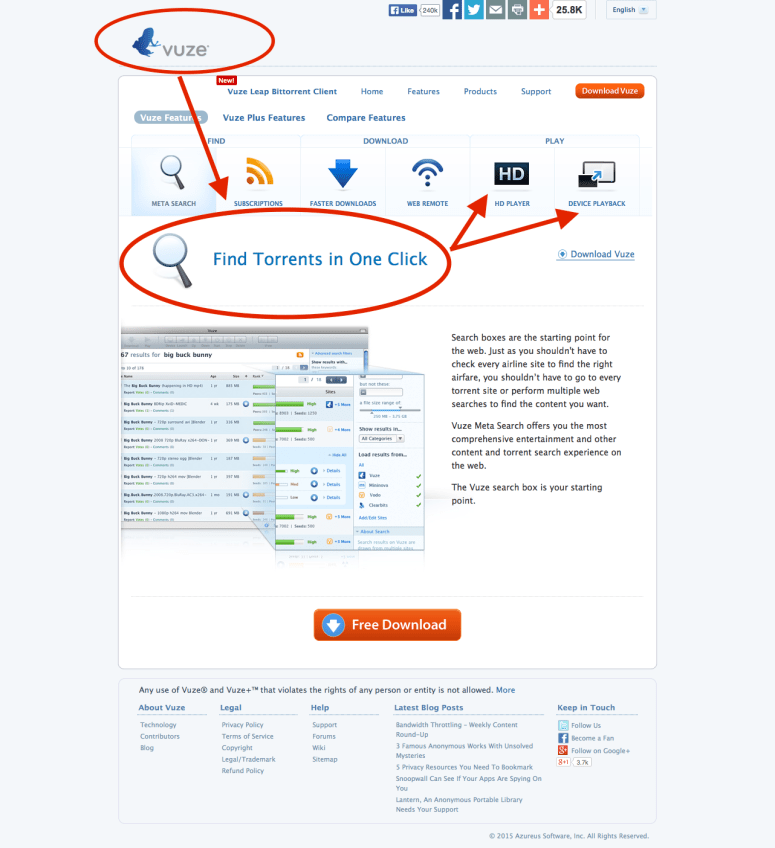
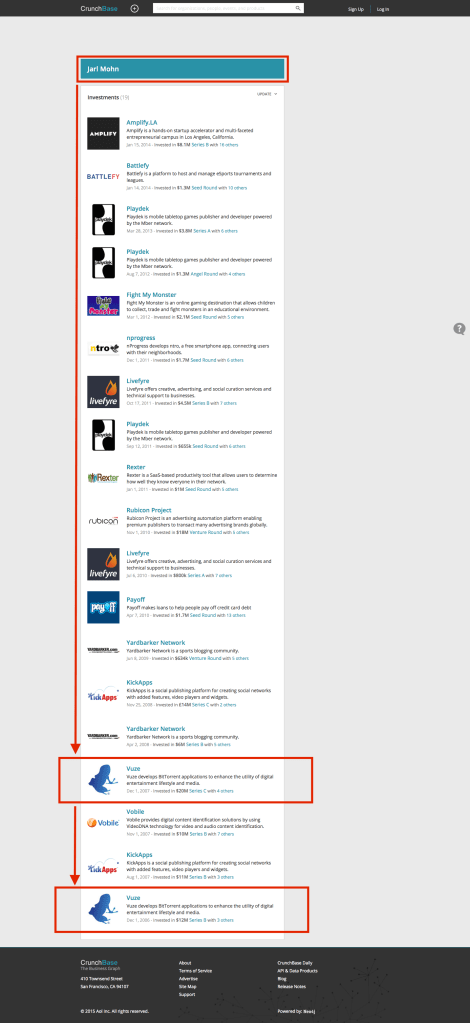
NPR CEO Jarl Mohn is a card carrying member of the dark side. He funded the  bittorrent piracy client Vuze not once but twice.  He was part of the B series round of $12 million and the C series round of $20 million.  And make no mistake Vuze is a key part of the piracy ecosystem.

Yeah yeah yeah, we heard it before:  “Vuze is just a tool and they don’t profit from piracy”  Bullshit.  Vuze profits directly from the illegal distribution of my material by knowingly serving advertising against it.

Allow me to demonstrate with the tracks from my latest album.
Screen Shot 2015-05-02 at 10.58.33 PM

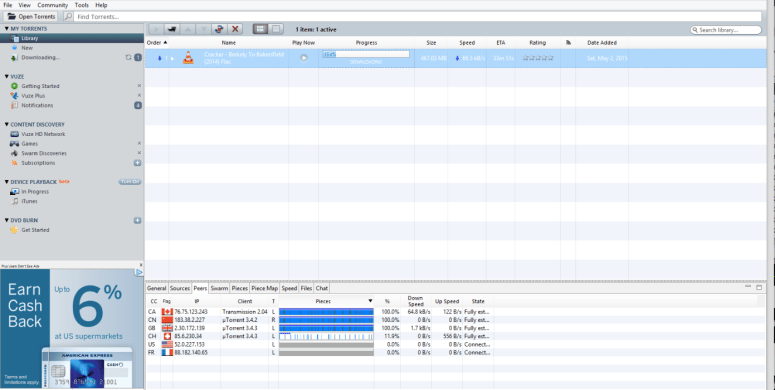
This is a screenshot of the Vuze client while downloading an unlicensed copy of my new album Berkeley to Bakersfield.  Down in the left hand corner there is an ad for American Express served by the publicly traded web advertising firm Quantcast. (Coincidentally a couple of years ago I privately defended Quantcast against similar charges, now I feel like a fucking idiot.)

To be clear this is not a webpage and ad exchange banner advertising. No one played some “tunneling” or DNS forwarding trick to make American Express and Quantcast think it wasn’t advertising on this site.  This advertising  is embedded into a piece of software that is used almost exclusively for downloading illegally distributed films music and pornography. How does American Express not know this? Quantcast? Or Jarl Mohn?

How did NPR come up with a CEO  with such questionable ethics?  This guy had to know what he was funding: A tool to infringe the rights of artists on global scale.  If not he’s really really dim.


Screen Shot 2015-05-02 at 7.34.39 PM


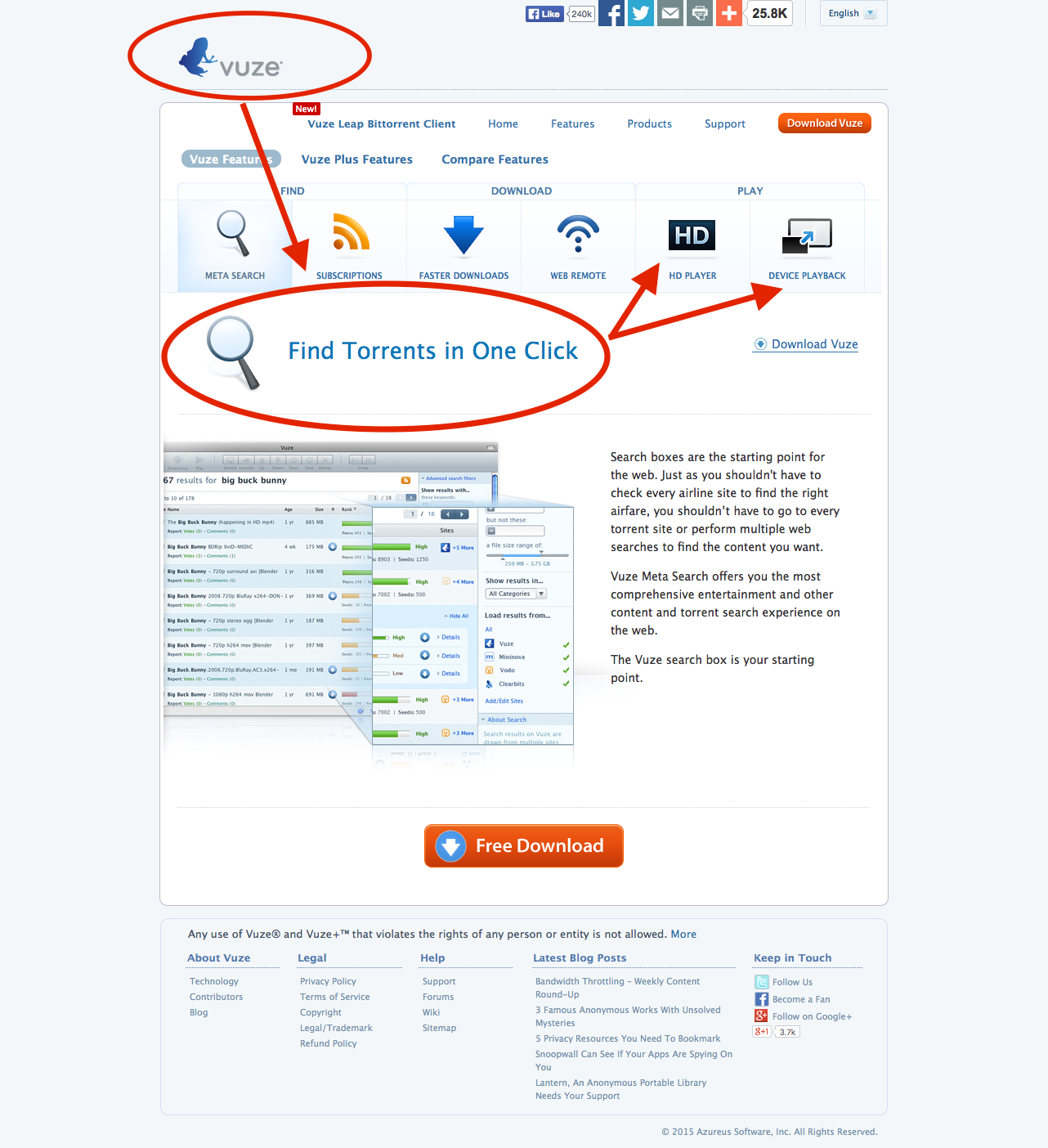
But it gets worse. The piracy advocating website Torrent Freak appears to be sponsored by the very same company: Vuze.   That’s right the piracy revolution will not be televised but it will be sponsored by amoral Silicon Valley Venture Capitalists.   You really thought Torrent Freak was an ideological true believer fighting for your rights to “share” against the man?  Nope looks they are the marketing department for the man who makes advertising money off of your sharing activity.  

Tool

Here’s a screenshot from the Torrent Freak website helpfully alerting it’s readers to availability of the leaked Game of Thrones Season 5 on Kick Ass Torrents and the Pirate Bay.   Look carefully at the code.  The ad for Vuze isn’t just randomly served by some online adexchange. It’s embedded into the site.  Someone had to go in and place that link and that JPG into the code.  Plus the visible text actually claims them a “sponsor.”

So you are really gonna tell me with a straight face that no money is changing hands here?  Vuze is not paying “Ernesto” the editor of Torrent Freak?  While Ernesto is pretty much inducing piracy and giving advice on how to avoid prosecution?

How is this not a conspiracy?  I mean conspiracy like  RICO Conspiracy (See details below).

And it all started with money from NPR CEO Jarl Mohn.

Fire this guy.

NPR affiliates, DJs, Journalists and independent public radio stations need to stand with artists against these assholes. Heres our olive branch.  Please join us.

Otherwise?

It’s Torches and Pitchforks time.  It’s not gonna be prett.y

+++++++++++++++++++++++++++++++++

STOP IF YOU DON’T WANT TO GO INTO A DEEP DIVE ON RACKETEERING AND CORRUPT ORGANIZATION (RICO) STATUTES.

+++++++++++++++++++++++++++++++++++++

I’m not a lawyer but the intent of the law seems pretty clear. To prevent groups of people-even if only informally organized-from engaging in coordinated criminal activity.  Specifically when it disrupts legitimate marketplaces like those for recorded music or online advertising.

“RICO is designed to attack organized criminal activity and preserve marketplace integrity by investigating, controlling, and prosecuting persons who participate or conspire to participate in racketeering.” Black’s Law Dictionary 1286 (8th ed. 2005).  

There are a host of organized “scams” that generally occur in the peer to peer advertising ecosystem including within the Vuze client. Maybe there are some prosecutors or litigators out there who can help me with this? Aren’t the following part of the RICO statute?

1)  Mass copyright infringement.

2) Advertisers publicly claim to not know where there ads are being served.  If this is true then there is fraud going on.  Someone along the way, advertising agencies, ad exchanges, and/or companies like Vuze are behaving improperly. Since it involves the online ad ecosystem wouldn’t this be Wire Fraud?

3) Uh… how do I say the obvious? P2P networks have a lot of pornography?  A lot!     I could be wrong, but I can’t imagine illegal pornography isn’t also being monetized with advertising as it’s transferred using the Vuze client.  How can you possible be allowed to make money off of illegal pornography and not be prosecuted?

4) Anyone visiting a site like The Pirate bay has probably noticed the relentless advertising for Russian or Asian Brides.  Human trafficking anyone?

5) These same sites often feature ads for third party websites that claim to enroll applicants into a  “US Green Card Lottery.”   The US has never used third parties for its “Diversity Visa” program and at the present time the US is not accepting applications for diversity visas.  All websites advertising for the 2017 lottery are highly suspect.  (An early version of this article made it seem as if the US never had a Diversity Visa or “Green Card Lottery” that was incorrect). 

Now check out the RICO definitions. My bold italics added.

18 U.S. Code § 1961 – Definitions:

As used in this chapter—
(1) “racketeering activity” means (A) any act or threat involving murder, kidnapping, gambling, arson, robbery, bribery, extortion, dealing in obscene matter, or dealing in a controlled substance or listed chemical (as defined in section 102 of the Controlled Substances Act), which is chargeable under State law and punishable by imprisonment for more than one year; (B) any act which is indictable under any of the following provisions of title 18, United States Code: Section 201 (relating to bribery), section 224 (relating to sports bribery), sections 471, 472, and 473 (relating to counterfeiting), section 659 (relating to theft from interstate shipment) if the act indictable under section 659 is felonious, section 664 (relating to embezzlement from pension and welfare funds), sections 891–894 (relating to extortionate credit transactions), section 1028 (relating to fraud and related activity in connection with identification documents), section 1029 (relating to fraud and related activity in connection with access devices), section 1084 (relating to the transmission of gambling information), section 1341 (relating to mail fraud), section 1343 (relating to wire fraud), section 1344 (relating to financial institution fraud), section 1351 (relating to fraud in foreign labor contracting), section 1425 (relating to the procurement of citizenship or nationalization unlawfully), section 1426 (relating to the reproduction of naturalization or citizenship papers), section 1427 (relating to the sale of naturalization or citizenship papers), sections 1461–1465 (relating to obscene matter), section 1503 (relating to obstruction of justice), section 1510 (relating to obstruction of criminal investigations), section 1511 (relating to the obstruction of State or local law enforcement), section 1512 (relating to tampering with a witness, victim, or an informant), section 1513 (relating to retaliating against a witness, victim, or an informant), section 1542 (relating to false statement in application and use of passport), section 1543 (relating to forgery or false use of passport), section 1544 (relating to misuse of passport), section 1546 (relating to fraud and misuse of visas, permits, and other documents), sections 1581–1592 (relating to peonage, slavery, and trafficking in persons)., [1] section 1951 (relating to interference with commerce, robbery, or extortion), section 1952 (relating to racketeering), section 1953 (relating to interstate transportation of wagering paraphernalia), section 1954 (relating to unlawful welfare fund payments), section 1955 (relating to the prohibition of illegal gambling businesses), section 1956 (relating to the laundering of monetary instruments), section 1957 (relating to engaging in monetary transactions in property derived from specified unlawful activity), section 1958 (relating to use of interstate commerce facilities in the commission of murder-for-hire), section 1960 (relating to illegal money transmitters), sections 2251, 2251A, 2252, and 2260 (relating to sexual exploitation of children), sections 2312 and 2313 (relating to interstate transportation of stolen motor vehicles), sections 2314 and 2315 (relating to interstate transportation of stolen property), section 2318 (relating to trafficking in counterfeit labels for phonorecords, computer programs or computer program documentation or packaging and copies of motion pictures or other audiovisual works), section 2319 (relating to criminal infringement of a copyright), section 2319A (relating to unauthorized fixation of and trafficking in sound recordings and music videos of live musical performances), section 2320 (relating to trafficking in goods or services bearing counterfeit marks), section 2321 (relating to trafficking in certain motor vehicles or motor vehicle parts), sections 2341–2346 (relating to trafficking in contraband cigarettes), sections 2421–24 (relating to white slave traffic), sections 175–178 (relating to biological weapons), sections 229–229F (relating to chemical weapons), section 831 (relating to nuclear materials), (C) any act which is indictable under title 29, United States Code, section 186 (dealing with restrictions on payments and loans to labor organizations) or section 501 (c) (relating to embezzlement from union funds), (D) any offense involving fraud connected with a case under title 11 (except a case under section 157 of this title), fraud in the sale of securities, or the felonious manufacture, importation, receiving, concealment, buying, selling, or otherwise dealing in a controlled substance or listed chemical (as defined in section 102 of the Controlled Substances Act), punishable under any law of the United States, (E) any act which is indictable under the Currency and Foreign Transactions Reporting Act, (F) any act which is indictable under the Immigration and Nationality Act, section 274 (relating to bringing in and harboring certain aliens), section 277 (relating to aiding or assisting certain aliens to enter the United States), or section 278 (relating to importation of alien for immoral purpose) if the act indictable under such section of such Act was committed for the purpose of financial gain, or (G) any act that is indictable under any provision listed in section 2332b (g)(5)(B);
(2) “State” means any State of the United States, the District of Columbia, the Commonwealth of Puerto Rico, any territory or possession of the United States, any political subdivision, or any department, agency, or instrumentality thereof;
(3) “person” includes any individual or entity capable of holding a legal or beneficial interest in property;
(4) “enterprise” includes any individual, partnership, corporation, association, or other legal entity, and any union or group of individuals associated in fact although not a legal entity;
screenshot-www vuze com 2015-05-03 18-48-20


screenshot-www crunchbase com 2015-05-03 18-46-16


Darth Vader not Available So NPR Hires Same Lawyer That Represents Pandora Against Songwriters

Screen Shot 2015-05-01 at 12.42.14 PM

How did we miss this before.  Just discovered this choice little gem on the Copyright Society website.  NPR has hired Ken Steinthal to represent them in the Copyright Royalty Board hearing (happening right now). As predicted looks like he is arguing for lower rates for NPR. (They already enjoy substantially lower rates than commercial radio). More on this later.   But this looks like a smoking gun to me.  NPR really has sold out artists.

Maybe @NPR Just Doesn’t Pay Vice President For Policy and Representation Enough

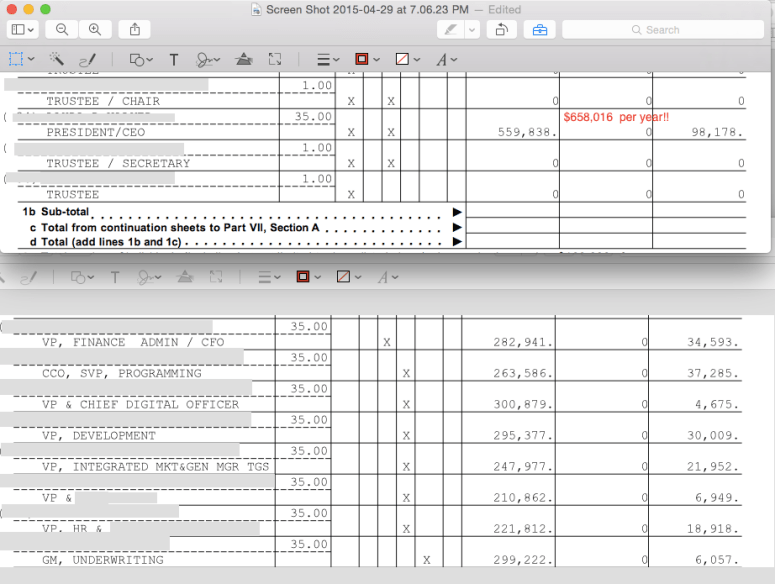
Screen Shot 2015-04-30 at 8.05.38 PMI have to say I was a little disappointed when I saw these figures.  This has to be the guy behind NPRs move to join the MIC-Coalition.org.   I mean even in the non-profit world of DC you’d think the Vice President for Policy and Representation would earn more than $211K a year.  I mean many of his colleagues are pulling down twice this amount.    Is it possible that NPR is in this mess because they just couldn’t afford to hire someone else?  I mean good Washington DC counsel doesn’t come cheap.   Maybe their move to join Pandora, Google, Clear Channel and the National Association of Broadcasters in urging congress to slash artists royalties is a sensible move after all!

Ah, it’s all fun and games until some local affiliate has a really shitty pledge drive.

Why NPR Should Stand With #irespectmusic

National Public Radio stations around the U.S. have long been great friends and allies of artists.  Artists have long been great friends and allies of National Public Radio stations.  The friendship has been based on a bona fide mutual admiration.  The stations are tastemakers and the artists give the stations something to make taste about.

Make no mistake–this is what makes NPR different from Clear Channel, Pandora and Google.  We know that there are real music people at NPR stations and we are willing to do things for NPR that we would never do for the others.  Including work for free as David has said.  Including fight with our labels to let us work for free because NPR stations actually play new music.  We cut NPR stations a tremendous amount of slack and they return the favor by playing new music.  They are cool people.

This is why it seems so idiotic for NPR to take a side against artist pay for radio play by agreeing to be a human shield for “Mic Coalition” featuring Amazon, Google, Pandora, Clear Channel (iHeartMedia) and the lobbying groups Computer & Communications Industry Association, Consumer Electronics Association, the National Association of Broadcasters and the Digital Media Association.  Yes, NPR is leading the way to stand with North Korea, Iran and Rwanda and continue to deny fair compensation to artists for radio airplay.

Clear Channel, Pandora, Amazon, Google, CEA, CCIA, DIMA–we know who these people  are.  While they may not overtly loathe us, we are just a commodity to them.  We could just as well be soap.  If Clear Channel could get away with never playing a new record they’d do it.  Amazon owes its start to authors and artists, and all they’ve done is try to screw us ever since.  Pandora’s shenanigans are well known–especially since they recruited songwriter enemy #1 Chris Harrison–and Google’s indifference to artists rights was appallingly crystalized with their mistreatment of Zoë Keating.  These are not and never will be cool people.  They stab us in the back all the time, so we’re used to that treatment from them.  And after all–Clear Channel’s biggest threat is to continue not playing our records.  NPR is different, though.

So you have to ask what is sadder than someone who used to be cool.  Maybe someone who wants to stand with North Korea.  Maybe someone who wants to make sure that artists don’t get paid for radio play now or ever.

We notice when these people stab us in the back.  We thought they were our friends.  That’s why they got the freebies.  Maybe if they’re going to act like Clear Channel they should get treated like Clear Channel?

But here’s the thing about it–we’re not quite ready to believe yet that these people who are so committed to music have thrown us under the bus.  Here’s what we know–unlike Tim Westergren, they’re not sitting around thinking about it in a 13 bathroom house.

We’re also not ready to believe that NPR’s reporters are ready to abandon their journalistic principles either.  Because make no mistake–they can’t hold their heads up and report on this story when they are part of the story.  They’re not objective.  They’ve been coopted and corporatized.  And we bet nobody in the NPR powers that be bothered to ask them.

No, what we have to believe has happened here is that some suits inside the NPR organization have decided to throw their entire music and news teams under the bus.  These dimwitted suits have been lured into this “coalition” by some of the richest companies in the history of commerce that have no cultural connection to NPR whatsoever.  And make no mistake about this, either–the currency they used to buy their way into this “coalition” is the goodwill of NPR’s music and news divisions.  That’s right–our friends in music and news have been commoditized every bit as much as Pandora & Co. want to commoditize us and they’ve been sold down the river, too.

We think that’s exactly what happened and that, dear readers, is some real inside the Beltway skullduggery.  That is some low down bullshit.

So we hold out a hand to our friends and say join us in this fight.  Join us tonight.  Our cause is just and the time is now.  We would be proud to stand with you if you would have us.

Huh? Federally Funded and Chartered Public Radio Monopoly Needs “Monopoly” Protection From Songwriters?

The federally funded NPR has joined with major broadcasters and tech behemoths to form the  MIC-Coalition.org   One of the stated purposes of the organization is to keep songwriter performing rights organizations under the “temporary” 1941 DOJ  anti-competitive consent decrees.   Here is what the MIC Coalition website says:

The U.S. Department of Justice is reviewing the antitrust consent decrees that govern the Performing Rights Organizations (PROs) ASCAP and BMI, the organizations that license songs and collect royalties on behalf of rights holders like songwriters and publishers. These consent decrees promote fair music licensing while protecting music users, venues where music is played and music distributors from the anticompetitive behavior inherent to the PROs.

Notice that they don’t mention anywhere that ASCAP and BMI are non-profit “unions” of songwriters (songwriters produce goods so it’s not technically a union but more like a farm cooperative). It would sound a little different if NPR’s DC lobbyists explained that one minor detail, right?  They don’t. This is pure demagoguery,  so much for NPR’s much lauded reputation for fair reporting.

And That is really too bad because this isn’t an idea brought to you by the rank and file NPR journalist .  This is something that the real smart folks in the DC corporate headquarters dreamed up. You know the folks who do the real work.

Tellingly another important detail goes unreported. There are four competitive  “unions” of songwriters.   None of which have more than a 50% market share.  Meanwhile Pandora has more than a 70% market share.  Google/Youtube IS the online video monopoly and the Corporation for Public Broadcasting… well it’s a government chartered and funded public broadcasting monopoly ($445 million dollars in 2015).

I don’t understand this. I guess you need to be real Washington DC smart to understand why it’s necessary for the DOJ to protect monopolies from organizations of songwriters.

This entire effort by NPR national corporate headquarters is completely puzzling. No good will come to the NPR affiliates from this effort.  It’s simply tarnishing the NPR brand.  And isn’t that gonna hurt when the next pledge drive comes?

1) Public broadcasting stations already pay royalty rates much lower than commercial broadcasters.

2) Artist’s routinely and willingly support NPR stations by giving them rights to recordings in perpetuity. See NPR performance Contract.

3) Most of NPR’s programming expenses are in it’s executive salaries and non-musical programming. Further reducing artists royalties would make little difference.

4) Most of the financial benefits of royalty reductions would go to NPR’s corporate competitors.

5) Taxpayers give over $445 million a year to support public broadcasting.

What gives NPR? Why the corporate sell-out?

@NPR ‘s Pledge Drive for the National Association of Broadcasters, Pandora, Google and Clear Channel

Screen Shot 2015-04-29 at 9.38.43 AM

NPR has joined with a host of broadcasting and tech behemoths to lobby congress for lower royalties for artists. Well they don’t quite come out and say that,  there is a wishy washy statement about “affordability” but  coalition partners Pandora, NAB, Google, Clear Channel have relentlessly  lobbied for lower rates for artists and songwriters. Remember these are the same companies that lobbied to slash performer rates with the Orwellian named “Internet Radio Fairness Act.”   The act would have created “fairness” by slashing performers royalties up to 85%.  It’s not our fault that Silicon Valley firms can’t make a profit giving our music away for free while sucking out 1/2 billion dollars in executive stock compensation!  (Try selling music like Apple they don’t seem to be having any profit problems).

But I digress…

We are puzzled as to why NPR joined this fight.

1) Public broadcasting stations already enjoy lower royalty rates.

2) Artist’s routinely and willingly support NPR stations by giving them rights to recordings in perpetuity.  See NPR performance Contract.

3) Most of NPR’s programming expenses are in it’s executive salaries and  non-musical programming.  Further reducing artists royalties would make little difference.

4) Most of the financial benefits of royalty reductions would go to NPR’s corporate competitors.

5) Taxpayers give over $400 million a year to support public broadcasting.

What gives NPR?  Why the corporate sell-out?

Breaking: Pandora’s IRFA Lobbyists Return for the Astroturf Reheat in NPR Alliance Against Artist Rights

More to follow: