#SXSW Fart Club : “The Artists’ Copyright Conundrum” Panel has No Artists Rights Representatives!

Remember the CES Fart Club “Pro-Artist Copyright Panel” that didn’t have a single artists rights representitive? Well, here’s the redux unilog at SXSW, “The Artists’ Copyright Conundrum” that also features no artists reps.

Here it is…

Thursday, March 14  : 3:30PM – 4:30PM

The Artists’ Copyright Conundrum

So if you happen to drop by that panel, and when they open for Q&A maybe ask them what artists they represent…

Derek Khanna & Co. Continue Attack on Artists Rights at SXSWi Panel

The recent SXSW Interactive panel titled “Copyright & Disruptive Technologies” was merely another single point of view attack on artists, musicians and creators as artists rights are copyrights. It’s interesting that this panel offered no differing perspective from the view point of the artists and creators whose work is actually being exploited, without permission (or compensation).

On the panel were those who are advocating for “Permissionless Innovation” including Andrew Bridges, partner at Fenwick & West LLP, Ben Huh, CEO of the Cheezburger Network as well as a trio from Yale Law School’s Information Society Project including Wendy Seltzer, Margot Kaminski and Derek Khanna.

Glen Peoples at Billboard reported on the ongoing unilog of the copyleft attack on artists rights. The panel presented the usual anti-artist, anti-creator maximalist talking points which don’t believe in the artists right to grant consent for the exploitation of their work (and in many cases don’t believe in granting the creator compensation as well).

We’ve previously pointed out in some detail that Derek Khanna is wrong while highlighting all of the obvious fallacies and self created myths in his disavowed RSC “memo” on copyright. Now it appears that Derek himself is confused over the who may have even requested the memo. As our reader Jonathan Bailey (@plagiarismtoday) noted,

“Right now, we know who wrote the paper, but not who requested it, what supervision it was under and who, if anyone, approved its publication. This is not an acceptable way to interject a work into the public discourse.”

The persistent use of the meme “permissionless innovation” might just as well be called what they want it to really be, “permission to steal, and profit with immunity.” There is nothing innovative about stealing from or exploiting artists. In fact it’s a very, very old narrative sadly.

Panelist, Ben Huh complained that it might actually cost him money to track down rights holders whose work he is profiting from, how unfair right? Ben says…

“The cost of tracking down the rights owner is a minimum of $300 to $500 [per image]– if you’re successful.

Of course Mr. Huh went on to illustrate his problem in not paying creators in greater detail stating,

I have 23 million images, and I’m one of the smaller [online businesses] out there.

Yeah, what a drag to actually compensate the creators! So in simple math 23 Million multiplied by $500 equals $11.5 trillion dollars. One might determine that perhaps this is not a well thought out business model that requires such vast capital to support it’s inventory, if the cost of that inventory actually requires payment to the creators. Here again we see another internet business supported by advertising that earns revenue on marginal costs, but refuses to pay the creators fair compensation for their labor.

Of course, the site does provide a DMCA link, but we have to wonder how many rights holders are actually using it.

cheezburgeDMCA

What is clear is that the war on artists and creators which is now over a decade old continues to rage on by those who are profiting. Let’s once again be clear that this discussion is about money. It is about mass scale, enterprise level, commercial businesses profiting from the illegal exploitation of works by artists, photographers, musicians, filmmakers, authors and other creators.

Just for fun, we went over to Mr.Huh’s website Cheezeburger dot com to see why he would be so invested in the battle against artists rights. Well, as it turns out the first two items we saw were the products of well known and beloved mainstream creators (you know, the companies the copyleft hates but can’t seem to live without).

In this first screenshot below we see images from Fox Tv’s “King Of The Hill” show. What we also see is that Toyota, one of the already identified 50 Brands Supporting Music Piracy paying the bills to Mr.Huh. Good work if you can get it, being able to monetize content of a major TV network without the pesky need to ask permission or to share in that advertising revenue.

chezburgerKingOfTheHillToyota

And, the second post we noticed were images from the Disney Pictures film “Up.” This time with advertising courtesy of Google and AT&T, also previously identified as two more of the 50 Brands Supporting Music Piracy.

cheezburgerDISNEYUP

And here’s the kicker from the man who doesn’t want to ask permission to monetize creators content for profit… hmmm… hypocrisy much?

http://corp.cheezburger.com/legal/api-terms-of-service/

(d) Pre-Approval Required. The license described in 1.1(a) above is contingent on you submitting all application-related materials that are requested by the Company and the Company subsequently approving your application. The Company may approve or reject your application in its sole discretion. The approval of your application by the Company shall not constitute an endorsement or legal review of your application.

But wait there’s more…

http://corp.cheezburger.com/legal/terms-of-service/

3. General Use of the Websites — Permissions and Restrictions
Cheezburger hereby grants you a revocable, non-transferable, and non-exclusive permission to access and use the Websites as set forth in these Terms of Service, provided that:
A. You agree not to distribute in any medium any part of the Websites, including but not limited to Content and User Submissions (each as defined below), without Cheezburger’s prior written authorization.
B. You agree not to alter or modify any part of the Websites, including but not limited to Cheezburger’s technologies.
C. You agree not to access User Submissions (defined below) or Content through any technology or means other than any as authorized by this Terms of Service or a written agreement between you and Cheezburger.
D. You agree not to use the Websites for any commercial use without the prior written authorization of Cheezburger. Prohibited commercial uses include, but are not limited to, any of the following actions taken without Cheezburger’s express approval:
1. Sale of access to the Websites, Content or services via another website or medium (such as a mobile application);
2. Use of the Websites, Content or services for the purpose of gaining advertising or subscription revenue;
3. The sale of advertising, on the Websites or any third-party website, targeted to the content of specific User Submissions or the Content;
4. Any use of the Websites, Content, User Submissions or services that Cheezburger finds, in its sole discretion, has the effect of competing with or displacing the market for the Websites, Content or User Submissions.

And it continues to go on from there into another set of rights, and restrictions. Wow. Ok then… well, so much for permissionless innovation afterall…

Perfect timing for SXSW!

Music Technology Policy

In case you were wondering what ever happened to the so-called Internet Radio “Fairness Act”, here’s another little taste of what Big Tech has in store for artists–particularly “legacy” artists, meaning artists with strong catalog from the past.  Let’s say from before 1972.

What’s magic about 1972?  That was the year that the US Congress recognized a copyright in sound recordings (February 15, 1972 to be precise).  “Pre-72 masters” as the recordings are known were protected by state law before that.  So it is not that these older recordings are not protected–such as those by Ella Fitzgerald, Count Basie, Bob Wills, Duke Ellington, Louis Armstrong, Buddy Holly, Glenn Miller or Robert Johnson–it’s just that they are not protected by federal law.

True to form, Big Tech and their pals at the National Association of Broadcasters are busily trying to screw artists on pre-72 masters out of public performance royalties on…

View original post 662 more words

Whose Idea was the RSC Memo on Copyright? Don’t ask Derek Khanna

Derek Khanna has been on a media blitz lately following the White House’s endorsement of a “We the People” petition to “make cell phone unlocking legal”. Khanna — who considers himself a “copyright reform” advocate (but in our opinion could more accurately be called a “Derek Khanna” advocate) — created a moral panic over cell phone unlocking as the first step in a sustained “war” against artists and creators, the goal of which is to strip them of their already weak legal protections.

Khanna, you may recall, first stepped into the spotlight last November after he authored a memo for the Republican Study Committee that called for severe and regressive changes to copyright law. The memo was filled with historical and factual errors (as well as numerous typos) but was considered one of the most eloquent writings to come from the copyleft; it was quickly withdrawn from the RSC’s website.

Earlier, we had noted that Khanna himself has publicly admitted of the memo, “No one requested it. I just thought it was a good idea.”

khannareddit

Interesting. Because just a few days ago, Khanna spoke about the memo to Ezra Klein at the Washington Post. His story was a little bit different this time. According to Klein:

It was November 2012 and Derek Khanna was working as a staffer in the Republican Study Committee, which acts as a kind of think tank for the conservative wing of the House Republican Conference. Khanna, whose job was to follow issues pertaining to technology, homeland security and government oversight, was asked to draw up a short brief on copyright law — something the group could hand out to House Republicans in the hopes of getting some legislation moving. “The memo wasn’t my idea,” he says.

(Tip to Derek Khanna: if you want to get into politics, you have to make your flip-flops a little less obvious.)

David Lowery at South By Southwest Austin TX

I am fortunate enough to attend SXSW this year as fan, artist and as a panelist.  So much good stuff to see.  But here are some highlights.

March 13th. 12:30pm I’m gonna start my day at the Anatomy of Amanda F-ing Palmer.  While I sometimes disagree with Ms. Palmer about things  (crowd funding helps incumbent artists like myself but not necessarily unknown artists)  there is no denying that she has set a bold example for how independent artists can operate in this day and age.  Before her Kickstarter success the conversation was about whether artists should be paid to record at all.  You know,  sell T-shirts and such.   Thanks to Ms. Palmer, the conversation is now about how artists should be paid to record.

March 13th  4:00 pm.   Camper Van Beethoven at the Brooklyn Vegan Party.

http://www.brooklynvegan.com/archives/2013/03/brooklynvegan_f_5.html

March 13th 7:00 pm  Camper Van Beethoven at the Make Your Mark Party.

March 14th  2:00pm   David Lowery panelist at the “Big Data: New Oil or Snake Oil”

http://schedule.sxsw.com/2013/events/event_MP4094

Right after that I’m gonna race over and see:

March 14th 3:30pm  East Bay Ray of the Dead Kennedys at “Infamous Band Disputes & How to Avoid Them.”

http://blog.legalzoom.com/intellectual-property/hang-out-with-joe-escalante-and-east-bay-ray-at-sxsw/

March 15th 5:00 pm  David Lowery panelist at “Who’s ripping you off now.”

http://schedule.sxsw.com/2013/events/event_MP3736

Hope to see you there!

Trichordist Picks #SXSW Panels Of Interest @ SXSW South by Southwest 2013

Here’s a quick look at what may be panels of interest during music… some because we agree with them, some because we really, really don’t… but we’d like to think we remain open minded, teachable and in search of common solutions and goals to benefit artists rights in the digital age… and, you never know what kind of BS will be peddled and spilled…

### TUESDAY MARCH 12 ###

Tuesday March 12 – 11:00AM -12:00PM

Constructive Disruption for the Music Biz

After the record industry and the live music industry, it’s time for innovation and constructively disrupting how the music industry operates. It’s time to open up the shop and see what outside influences can bring to th…

Brooke Parrott, Finian Murphy, Jim Carroll

###

Tuesday March 12 – 11:00AM -12:00PM

Downloaded: The Digital Revolution

This session presented by SXSW Film and is open to all badge types. Join a round table discussion of the Digital Revolution; how we got here, how the world has changed and what are the best ways forward in these content…

Alex Winter, Chuck D, Eugene Hernandez, John Perry Barlow, Sean Parker, Shawn Fanning

###

Tuesday March 12 -5:00PM – 6:00PM

Fair Play: Music Tech Startups and Artists

It’s a complicated new music world for both tech entrepreneurs and artists, one fraught with anachronistic copyright, byzantine royalty structures, and perhaps most importantly, a cultural divide between the two business…

Doug Freeman (Austin Chronicle), Daniel Senyard (Vivogig), Jean Cook (Musician/Future of Music Coalition) and Brian Zisk (SF MusicTech)

###

### WEDNESDAY MARCH 13 ###

Wednesday March 13 -12:30PM – 1:30PM

The Anatomy of Amanda Fucking Palmer: An Inside Look

Look at the inner workings of a multi-million dollar global recording, touring and merchandise business that is 100% artist controlled. Amanda Palmer raised a record-breaking $1,192,793 on Kickstarter from 24,883 fans —

Kendel Ratley, Kevin Wortis, Martin Goldschmidt, Nicole St Jean, Vickie Starr, Amanda Palmer

###

Wednesday March 13 – 2:00PM – 3:00PM

Artists Staying Afloat in the Digital Revenue Stream

As new business models of digital music consumption grow and new services keep launching where does the artist fit in? The headlines all scream about what the artist makes on this service or that. But does the artist hav…

Eric Garland, Jeff Price, Trevor Skeet, Scott Reilly

###

Wednesday March 13 -2:00PM – 3:00PM

Music Subscription & Artist Revenue

Heated discussions in the music business surround the topic of subscription music, and the effect on the bottom line of the rights holder, artist and songwriter. One side of the aisle claim that on-demand streaming serv…
Adam Rabinovitz, Brian Slagel, Christina Calio, Dan Kruchkow, Steve Savoca, Antony Bruno

###

Wednesday March 13 -5:00PM – 6:00PM

The Fight for Fair Fees in the Music Industry

Once upon a time, terrestrial radio was the only game in town and they do not pay performance royalties. With the advent of online and satellite services, we’ve amassed a patchwork of legacy policies that create a compl…

Chris Harrison, Julia Betley, Patrick Reynolds, Patrick Laird, Erin Griffith

###

### THURSDAY MARCH 14 ###

Thursday March 14 -12:30PM – 1:30PM

Music Curation in 2013

As was predicted from the earliest days of the internet, curation is becoming a bigger factor in the music marketplace both on and off line. Explore the process in which specific associations and gatekeeper on the landsc…

Daniel Seligman, Johanna Rees, Ryan Schreiber, Steve Blatter, Mark Kates

###

Thursday March 14 -12:30PM – 1:30PM

Silicon Valley Isn’t the Enemy Anymore

Beyond Spotify and Pandora, a new group of digital music companies are emerging. These companies are bringing together artists, content carriers and labels to create new user experiences, business models and opportunitie…

Michael Cerda, Paul Resnikoff, Phil Lang, Tyler Lenane, Mike McGuire

###

Thursday March 14 -12:00PM – 3:00PM

Big Data: The New Oil or the New Snake Oil?

Mobile technologies have enabled music executives to understand as never before how people are consuming music. What people are listening to is just the tip of the iceberg – now, labels can see where they are and even wh…

David Lowery, Alex White, Jon Vanhala, Marie-Alicia Chang, Will Mills

###

Thursday March 14 -3:30PM – 4:30PM

Infamous Band Disputes and How To Avoid Them

Hear about the trials, tribulations and aftermath of band warfare from defendants and plaintiffs willing to share behind-the-scenes details of their high profile legal battles with former band mates. Discover the ramific…

Anita Rivas Gisborne, Esq, East Bay Ray, Joe Escalante, Neville Johnson, Matthew Belloni

###

Thursday March 14 -3:30PM – 4:30PM

The Artists’ Copyright Conundrum

Artists make difficult choices in deciding where they fall in the copyright debates. They must strike their own balance between seeing copyright as a way to make money and not wanting to alienate their fans. What measure…

Andrew Bridges, Karen Thorland, Kristelia Garcia, Wendy Seltzer, Margot Kaminski

###

Thursday March 14 -5:00PM – 6:00PM

Downloaded: The Music Industry in the Digital Age

In 1998 Shawn Fanning, a teenage hacker and programmer, created the code that would become the basis for all peer-to-peer file sharing. Shortly after, Fanning and his business partner, fellow teenage hacker Sean Parker, …
Alex Winter, Bill Flanagan, Chuck D, Ian Rogers, J Keyes, Paul D Miller (aka DJ Spooky)

###

Thursday March 14 -5:00PM – 6:00PM

Songs and Recordings: How They Make Money Worldwide

Songwriters, recording artists, publishers, record companies, musicians and performers share in the billions of dollars being generated from music being performed and sold worldwide. Royalty and deal making experts take …

Jeffrey Brabec, John Simson, Todd Brabec

###

### FRIDAY MARCH 15 ###

Friday March 15 -11:00AM -12:00PM

Selling Albums in a Spotify World: Non-Traditional Strategies

Is the subscription music business model ultimately a positive or negative for music industry revenues, compared to the purchase model? Whichever side of the argument you land on, it’s agreed that maintaining a healthy b…
Amanda Palmer, Darius Zelkha, JT Myers, Thaddeus Rudd

###

Friday March 15 – 2:00PM – 3:00PM

Album Release Strategies for the 21st Century

With all of the tools that are available via the web, artists and labels are making more mistakes than ever in the planning of their release strategies. Find out about effective, yet affordable, marketing, sales, and dis…

Adam Pollock, Joe Esposito, Rey Roldan, Sarah Landy, Vinny Rich

###

Friday March 15 – 3:30PM – 4:30PM

CLE 4: Digital Distribution – Where the Future Money Is

The status of the law and business of the non-physical retail, commercial and licensing recording world.……

Bryan Calhoun, Christine Pepe, Cindy Charles, John Simson

###

Friday March 15 – 5:00PM – 6:00PM

Streaming Music: A River of Cash or Up the Creek

Many artists, managers and labels see streaming as stripping away the already beleaguered retail sales and leaving them with only fractions of pennies for their work. Meanwhile streaming services believe holdout artists …

Emily White, Jon Maples, Richard Jones, Simon Wheeler

###

Friday March 15 – 5:00PM – 6:00PM

Who’s Ripping Me Off Now?

In June 2012, a blog post by musician David Lowery set off a firestorm. Written to an intern at NPR who admitted to not having paid for the 11,000 tracks in her collection, the post generated more than a million views in…

David Lowery, East Bay Ray, Daryl Friedman

###

### SATURDAY MARCH 16 ###

Saturday March 16 -11:00AM -12:00PM

CLE 5: The Politics of Music, and Future Copyright Battles

A dissection of the political interests and energy regarding music policies and law.……

Barry Slotnick, Colin Rushing, Lee Knife, Jay Rosenthal

###

Saturday March 16 – 12:30PM – 1:30PM

So We Won SOPA: Turning a Moment into a Movement

The fight over SOPA/PIPA was a Washington watershed: 15 million Americans contacted Congress and stopped laws that would have harmed online culture and innovation. Learn how to transform this victory into a strong, self-…
Jayme White, Julie Samuels, Laurent Crenshaw, Michael Petricone

###

Saturday March 16 – 3:30PM – 4:30PM

CLE 8: The Crystal Ball: Divining The Future of Music Law

Experienced music lawyers ponder, predict and pontificate on the future of music and music law.……

Kenneth Anderson, Tim Mandelbaum, Ken Abdo

###

Artists Rights Watch – Monday March 11, 2013 #SXSW @SXSW South by Southwest Edition

FASTER LOUDER:
* The Freeloading Generation: Are we loving our music to death?

“I saw that freeloading was no victimless act, nor was it simply a matter of beating up on bloated corporate media entities.

It is a potent combination of laziness and selfishness, concealed under a thin superficial haze of digital idealism and anti-corporate bitterness.”

NPR / ON THE MEDIA :
* Meet the New Boss, Worse Than the Old Boss

David Lowery of bands Cracker and Camper Van Beethoven thought the internet would become a vibrant new marketplace for creators. Instead, he says, the internet era is worse for artists than the infamously unfair record company system. Brooke talks to Lowery about what’s wrong and how to fix it.

THE WALL STREET JOURNAL:
* As Pirates Run Rampant, TV Studios Dial Up Pursuit
* Movie Sales Increased With Shutdown of Piracy Sites

THE ILLUSION OF MORE:
* New Reports on Piracy
* Another Must Read
* Why is it either/or?

we are blessed to have a society that produces both the Amanda Palmers and the John Irvings; and I don’t understand why anyone thinks we need to choose a system that would favor one over the other. Believe it or not, the one unifying principle that supports these two artists, as well as all others, is copyright.

FOX NEWS:
* Washington must get serious about protecting intellectual property

The desire to see the Internet remain free and open does not mean, however, that we should countenance lawlessness. A balance must be struck between the needs of content creators and the advocates of a free and open Internet. The “rules of the road” are still to be written and, when they are, the need to protect U.S. generated intellectual property should be foremost in the minds of legislators.

The Internet and the world of e-commerce will not continue to grow and thrive either in an environment of overbearing regulation or in one which turns a blind eye to theft and other forms of lawlessness. Freedom and safety are complementary; the American people deserve both. The Internet must not become a haven for hackers and foreign criminals.

TRUST ME I’M A SCIENTIST:
* Input\Output Podcast: David Lowery and the Future of Artists’ Rights

MUSIC TECH POLICY:
* Joe Kennedy Departs Pandora
* The Google Whistle Speaks Its Mind–and it’s worse than you thought

FOX BUSINESS:
* Microsoft Establishes Cybercrime Center to Combat Piracy, Malware

The new center will consolidate Microsoft’s digital crimes and Internet piracy units into one advanced operations center on its Redmond, Wash., campus. It will give the company one center to coordinate investigations with governments and law enforcement agencies. A staff of 30 there will work with 70 other Microsoft investigators world-wide to focus on malicious software crime, technology-facilitated child exploitation and piracy.

THE VERGE:
* Radiohead, Nine Inch Nails, and other digital pioneers sour on ‘pay what you want’ music

Not long ago, many hoped the Internet would emerge as a music fan’s Shangri-la, a utopian world where any track, no matter how obscure, was available for free, record labels were extinct and artists made a good living because their fans chose to reward them. Acts like Radiohead and Nine Inch Nails championed this brave new world.

But that dream has turned into a nightmare…

COPYHYPE:
* Shutting Down Megaupload Did Impact Digital Movie Sales

This week, Brett Danaher and Michael Smith, working at the Initiative for Digital Entertainment Analytics (IDEA) at Carnegie-Mellon University, have released another study looking at this question. The study, Gone in 60 Seconds: The Impact of the Megaupload Shutdown on Movie Sales, found that digital movie revenues from online sales and rentals increased by 6-10% following the January 2012 shutdown of the popular cyberlocker site (Megaupload execs, including Kim Dotcom, are of course currently facing criminal charges in the U.S. for copyright infringement).

ALL THINGS D:
* YouTube’s Show-Me-the-Money Problem

The bigger question is whether YouTube will be able to generate enough ad money for content makers to support the “premium” programming it has been trying to attract so it can compete with traditional TV.

“It’s hard, given YouTube’s low [revenue-sharing] numbers and lack of marketing infrastructure to make the unit economics for premium programming work,” says Steve Raymond, who runs Big Frame, a YouTube network/programmer that says it has generated 3.2 billion views.

VANITY FAIR:
* You Say You Want a Devolution?

For most of the last century, America’s cultural landscape—its fashion, art, music, design, entertainment—changed dramatically every 20 years or so. But these days, even as technological and scientific leaps have continued to revolutionize life, popular style has been stuck on repeat, consuming the past instead of creating the new.

THE PHILADELPHIA INQUIRER:
* Internet piracy getting worse

Artists deserve to be compensated for their efforts, and so should the companies that take risks to promote and distribute their work. Stealing songs and movies to pass among friends or to sell in a black market robs the originators of their incomes.

THE NEW YORKER:
* Aaron Swartz was brilliant and beloved. But the people who knew him best saw a darker side.

BILLBOARD:
* Pandora Opens Up Audience Data to Media Buyers
* Facebook Announces Dedicated Music Tab in News Feed Redesign

THE ORION:
* Punk legend shares insight on file-sharing

INTERNATIONAL MUSIC SOFTWARE TRADE ASSOCIATION:
* What do the numbers say?

THE REASON:
* A Free-Market Fix for Music Copyrights

DIGITAL MUSIC NEWS:
* American Tax Dollars Are Now Assisting Pirate Sites…
* I Teach Guitar to Students Aged 10-24. And This Is How They Consume Music…
* iTunes is ‘Exclusively Streaming David Bowie’s The Next Day,’ Yet It’s Already On Grooveshark…

VOX INDIE:
* Takedown of Megaupload had Positive Result on Movie Sales
* 12 Stepping Through Piracy’s Takedown Maze of Madness
* Spinning Straw Movies Into Gold on YouTube

MUSIC ALLY:
* Can YouTube’s ad revenues support premium video content?

TORRENT FREAK:
* Megaupload Shutdown Boosted Digital Movie Revenues
* French Govt Reports Large Increase in Three Strikes Piracy Warnings

THE REGISTER UK:
* Congratulations, freetards: You are THE FIVE PER CENT

Conspiratorial thinking – such as imagining media barons in secret meetings, perhaps involving the “MAFIAA” – abounds. In America, activists have created a Batman-inspired cat signal, to be beamed to other paranoiacs in distress, whenever The Man is suspected of spoiling their fun. Persecution fantasies abound.

ARS TECHNICA:
* Blues Highway Blues: You can’t separate murder from music

The soundtrack for Blues Highway Blues isn’t meant to be played as you read; there are no in-text notes about tracks fading in or out. Instead, the soundtrack corresponds to events that unfold throughout an entire chapter, making listening a parallel experience, not a simultaneous one.

But this is only the first installment in the Crossroads series, with more on the way. The next installment, Rock Island Rock, will be out in June of this year. That novel will not have its own soundtrack but instead will include lyrics sheets in the appendix (how very Beck Song Reader of him, right?). For now Blues Highway Blues is available—for your eyes and ears.

MUSIC WEEK:
* Warner signs licensing deal for Google subscription streaming services – report
* Hadopi report turns anti-piracy attention to streaming

THE COPYRIGHT ALLIANCE:
* The Curious Case of Cell Phone Unblocking and Copyright
* Innovation and Piracy

I am sure the Wall Street Journal article will generate the predictable commentary about how the solution to online theft lies in developing new business models.  Wolfe Video did just that, and the results do not bear out the claims that piracy is all about failure of imagination.  Moreover, I have yet to hear anyone explain what is innovative or new about stealing the creative work of another and monetizing it through ad sales.

CNN:
* Apple and Google’s huge streaming music gamble

YAHOO:
* Warner Music owner, Bass, Packer finance Beats’ music service

BUSINESS INSIDER:
* Apple Just Met With A Spotify Rival That Has Raised $60 Million

Global Music Sales Up… Three Tenths of One Percent (0.3%)… Pop The Cork… Really?

Here we go… everything is better. Problems solved. Told ya so…

It’s pretty funny to see the level of excitement on what may be a statistical flat line of global music sales. Less than one third, of one percent of a gain from year to year and you’d think people are ready to party like it’s 1999!

Not that we aren’t encouraged by what may represent the ultimate bottoming out of the industry after a decade plus decline, but a healthy dose of reality is in order. Even a net positive gain of just 3% might be cause for some celebration, but we are cautiously optimistic about a gain of only three tenths of one percent.

Stay tuned…

www.ifpi.org/content/library/DMR2013.pdf

A Tale of Two Petitions: Is Someone Scamming the White House Petition Site?

We have heard quite a bit about how “100,000 people have signed a White House petition!” which prompts action from the White House on a particular issue.  The implication is that the White House petition was established by an American and the response to it is reflective of the will of the people.  Meaning the American people, because it’s the American President who is being called on.  Democracy in action, right?

This emphasis on “American” is not jingoism on our part–it’s the clear implication of the petition process and is the unstated assumption of everyone discussing these petitions, and particularly of the supporters of the issue being “voted on”.  For example, Mr. Derek Khanna says he started a White House petition to “unlock” cell phones–got to love those “moral panic” narratives–and then the White House says they will support US legislation and presto chango Senator Wyden (remember him from IRFA?) and Rep. Eshoo (from Palo Alto, home to…guess who) have introduced “unlocking” legislation to make it so.  Very symmetrical.  Very.  Almost like they planned it that way.

But how did this all start?  A White House petition that was signed by 100,000 “people”.  So you would have thought that there would be some controls at the White House petition site to make sure that all this activity didn’t get started based on a false assumption–that someone had checked to see if the signers of the petition were in fact the citizens over whom the legislation will prevail.

The UK Solution

We are not the only ones who have these “e-petitions”–the UK does, too–with a few differences explained on Her Majesty’s Government’s website:

What are e-petitions?

e-petitions are an easy, personal way for you to influence government and Parliament in the UK. You can create an e-petition about anything that the government is responsible for and if it gets at least 100,000 signatures, it will be considered for debate in the House of Commons. You can find more information about how the House of Commons deals with e-petitions on the Backbench Business Committee website This link opens in a new window

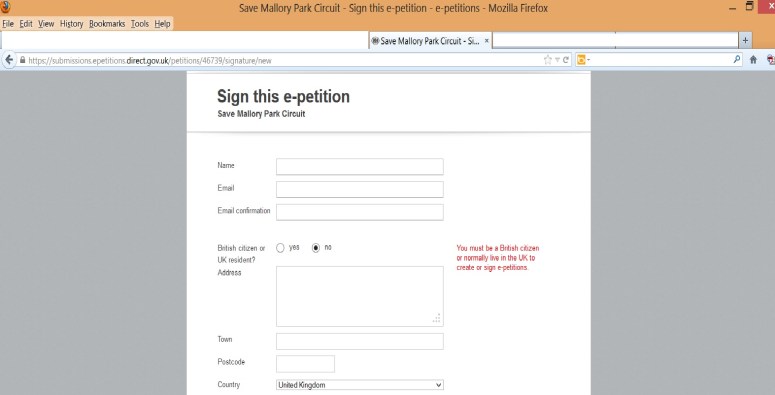
So you think, “Great, I’d like to get in on that!”  Maybe you can get the House of Commons to debate making July 4th a national holiday in the UK!  So you sign up to sign an ePetition to make the UK government do back flips on your command (and 100,000 of your favorite sock puppets).  Ah, not so fast.  The Brits did run an empire, after all.  You are confronted with this sign in:

UK Govt ePetitions

So you must be a British citizen or resident in order to sign the e-Petitions.

That actually makes sense, doesn’t it?  If a government is going to establish a petition method, shouldn’t it be limited to the people who are going to have to live under the laws it might be used to create?  We were also struck by the far, far lower vote tallies in the active UK petitions compared to the US.  Could there be a connection?

This all makes sense to us and also, more importantly, to the UK government.  If US residents or citizens want to express their views about something in the UK, there are plenty of casual polls they can game…sorry…vote in.  They don’t need access to the right to petition the UK government.  Seems like we fought a war about that once.

The White House Petition

So having established that the UK government sensibly blocks (or at least tries to block) non-residents and non-citizens from petitioning the UK government, we expected to find the same controls present in the White House petition site.  Not at all.

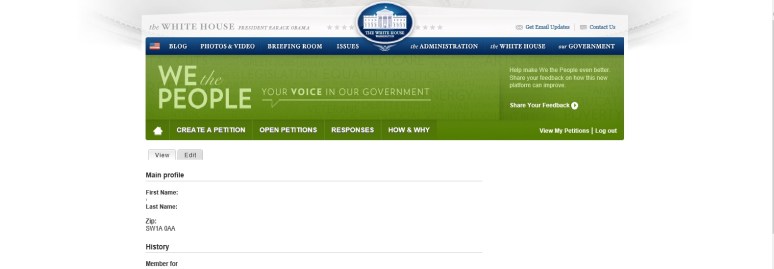
You do have to sign up for an account and give your email and name–a zip code is optional.  So just as a test, we signed up for an account and instead of giving a US zip code, gave the UK postal code for the Houses of Parliament in London.  That’ll surely get us rejected by the White House, right?  The UK uses letters and numbers, not related in any way to a zip code.

So here’s the petition we tried to sign up for: Designate May 20th as Macho Man Randy Savage Day

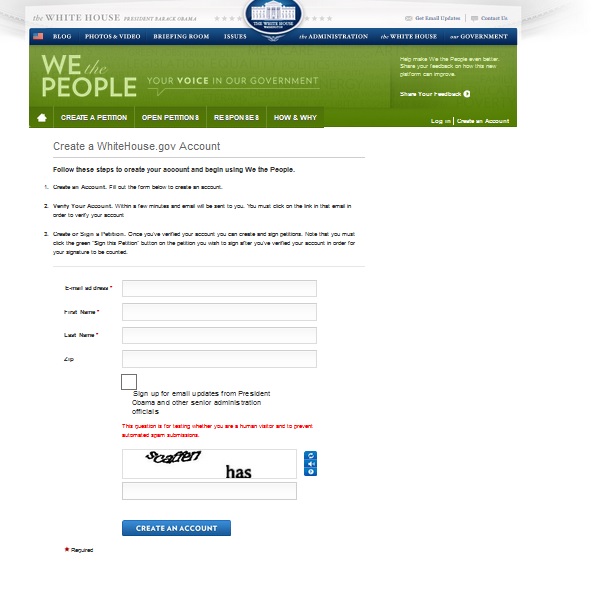
White House Petitions

So when you try to sign up, you are told to put in name and email and the optional zip code.

White House Petitions 2And here’s what happened when we signed up and got a White House petition account using the UK postal code:

White House Petitions Membership

We found this incredible, so asked friends in the UK and in Canada to try to sign up to vote for the Macho Man, fully expecting that their IP addresses would be geoblocked.  Nope–both were able to sign up and both were able to vote for Randy Savage and used UK and Canadian postal codes to do so.

So who signed Mr. Khanna’s petition?