Obama Official Violated Executive Order on Ethics Commitments

This is very troubling. DOJ official driving the 100% licensing rule change for songwriters has apparently violated lobbying rules.

Artist Rights Watch--News for the Artist Rights Advocacy Community

Remember the heady days when President Obama took office?  He promised the American people that he would have the most transparent administration in history.

In fact President Obama is quoted in Tech President as reiterating the same sentiment in 2013:

President Obama defended his government as “the most transparent administration in history” Thursday afternoon during a White House “fireside hangout” hosted online by Google.

That would be nice if it were true, but when it comes to one Obama appointee, nothing could be further from the truth.

hesserenata

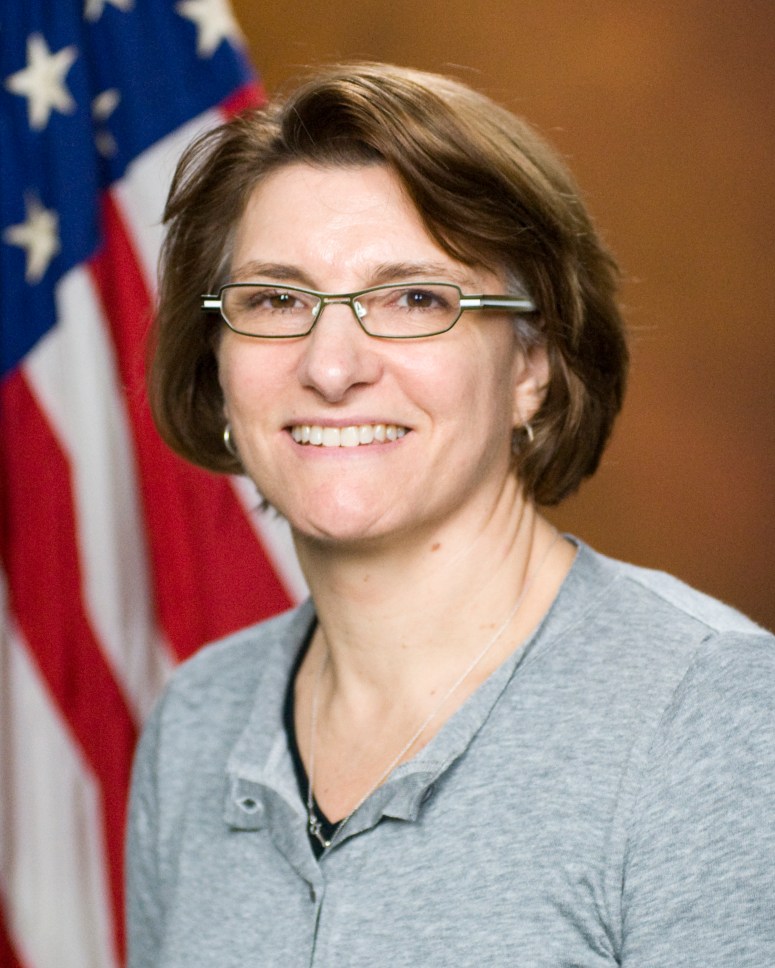
Aside from posting a misleading resume on a government website, Renata B. Hesse is violating Executive Order 13490 “Ethics Commitments by Executive Branch Personnel” by working on antitrust matters for the benefit of Google, her former client.  Here’s the clause:

THE WHITE HOUSE
Office of the Press Secretary
For Immediate Release                  January 21, 2009
EXECUTIVE ORDER
– – – – – – –

View original post 396 more words

How to Win: Don’t Help DOJ Get Out of Hole They Dug on 100% Licensing

DOJ’s Renata Hesse appears to have started with desirable political outcome (100% song licensing) and is now working backwards trying to make it fit the law. 

There is something very curious going on with the new 100% licensing rule.  I mean aside from lobbying violations apparent in the fact a DOJ staff lawyer Renata Hesse forced through 100% licensing rule that seems to benefit  her former client (Google/YouTube).

Ask yourself. Why hasn’t the DOJ released the text of the new rule? Why are they asking for more comments and questions from rights holders on how this rule will work?  This is the highest law enforcement agency in the land staffed with lawyers from Harvard and UC Berkeley and they want us to ask questions about a new rule before  the text of the rule is revealed? How exactly is that supposed to work?  Clearly the DOJ antitrust division is a clown car loaded with political appointee clowns that have no idea what they are doing.

Here’s what I think.  Certain DOJ staffers started with a concept  (100% licensing, effectively extending consent decrees to songwriters not covered by consent decrees)  and are trying to work backwards to make it work within the law, constitution and their own rules that govern the songwriter PROs.

If they were doing this based on real antitrust concerns and concepts based on the rule of law, the rule  would naturally flow from the law. Clearly they started with an outcome designed to benefit digital services.

Given Renata Hesse’s background working for Google should we be surprised the process is so googley:

“We need rights holders to tell us what content on our services belongs to them” = “We need rights holders to tell us how to create 100% licensing rules even though this is the job taxpayers pay us to do”

Here is how we win:  Don’t help them.   They dug this hole let them figure it out.  Save the challenges legal and otherwise until after they publish the rule.


Independent Music Publishers Forum Rejects DOJ 100% Licensing: “Nothing has been fixed but everything has been further broken”

This now becomes a WTO issue. Taxpayers will pay for this dispute while Google benefits.

Artist Rights Watch--News for the Artist Rights Advocacy Community

IMPG Logo

Statement of IMPF Board of Directors on the U.S. DoJ’s 100% licensing scheme

How is it possible that the U.S. Department of Justice made a decision to not only leave the outdated consent decrees as they are, despite all the meetings, entreaties and ideas of the last two years, but added to its’ interpretation of those decrees in a clearly punitive and devastating move for small and indie music publishers and their songwriters?

In what was described by IMPF, the independent music publishers forum, as ‘an unmitigated disaster’, the decision only looks at the 100% licensing concept, which goes against common practise in the music industry, forcing, as it will, the CMOs to adopt ‘100% licensing’ despite the fact that the CMO may not actually represent all the owners of the musical work.

“This decision will result in confusion and chaos for everyone, from music publishers, to collective rights managements…

View original post 230 more words

Smoking Gun: Google Funded Public Knowledge Praises Unconstitutional DOJ 100% Licensing Rule

raza

Public Knowledge Policy Counsel Panjwani.  Does Google tell you exactly what to say or do you get to improvise a little? Change a word here and there, come up with the occasional pithy slogan?

Music Business WorldWide has an excellent article today noting that the Google backed Public Knowledge is crowing about “their” victory over music publisher  (songwriters).

This group despises ‘bad behavior’ by music publishers. Guess who funds it?

That’s right Public Knowledge named as a “Google shill” in the Google v Oracle case, is crowing about the fact a former Google lawyer (Renata Hesse)  now in the DOJ rammed through a change to the unconstitutional and repressive consent decrees that clearly benefits Google.

These people have become an existential threat to the livelihood of songwriters.  This is not hyperbole, the existence of a professional class of songwriters is in question, simply because one company, Google seems to want more money and power.   Doesn’t Google already have enough power and money?  How much more money and power do these assholes need?

Fortunately they may have gone too far this time.  I believe this now clearly warrants a congressional investigation of  Renata Hesse at the Department of Justice and her connections to former clients and fake public interests groups like Public Knowledge that are funded by her former clients.

This is especially important because the DOJ antitrust division has completely gone off the rails. It is not just failing to do its job it is making matters worse.  DOJ officials  are apparently too stupid (or too corrupt) to realize (or care) that the overbearing and unconscionable consent decrees are not enhancing competition but are having the opposite effect:

  1.  Enriching and entrenching monopolies/monopsonies like Google.
  2. Devastating songwriters revenues, which in turn is driving massive consolidation in the music publishing business.

I suggest you write your congressional representatives.  In your own words, tell them you are concerned about the appearance of corruption in the Department of Justice antitrust division.  Note that a former Google lawyer now DOJ official Renata Hesse has pushed through a change to the rules that restricts the rights of songwriters while benefitting Google.

http://www.house.gov/representatives/find/


Apple Music Slams Spotify on Antitrust Lawfare

“We find it troubling that you are asking for exemptions to the rules we apply to all developers and are publicly resorting to rumors and half-truths about our service,”-Bruce Sewell General Counsel Apple Inc in letter to Spotify.

Since the launch of Apple Music Spotify has been on a not so secret “lawfare” campaign against Apple by trying get federal, state and EU authorities to investigate Apple for antitrust violations.

As performers and songwriters you should be concerned about this for two reasons:

  1. Apple Music as an all subscription service pays more than Spotify.
  2. But more importantly, antitrust rules and laws as interpreted by the Department of Justice are now being routinely used to further entrench dominant companies like Amazon and to force creators to accept ridiculously low payments for their works.

The faulty logic is anything that results in lower prices to consumers is good.  This is not good, as it simply turns a monopoly into a “monopsony.”  And monopsonies can produce the same lack of competition by putting suppliers/producers out of business.  Apparently most DOJ antitrust attorneys are planning on being in private practice when the chickens come home to roost on this.  The perfect example of the latter is the recent DOJ rule change which would force songwriters to accept 100% licensing of their songs.   This creates a race to the bottom which benefits monopolies like YouTube but essentially creates a “maximum” wage for songwriters.

If Apple can put a dent in the use of antitrust as “lawfare” we should cheer them on.

Read more here:

https://www.buzzfeed.com/johnpaczkowski/apple-fires-back-at-spotify-for-asking-for-preferential-trea?utm_term=.jl0jNyV3yJ#.cqadz0VK0g


Warner/Chappell CEO Amplifies Constitutional Concerns on DOJ 100% Licensing

This is an open letter to songwriters from Warner/Chappell CEO Big Jon Platt on the unconstitutional Google DOJ ruling and unfunded mandate from former Google lawyer and Department of Justice official Renata B. Hesse:

Dear Songwriters,

As you may be aware, for the last two years, ASCAP and BMI have been in discussions with U.S. DEPARTMENT OF JUSTICE (DOJ) regarding the decades-old consent decrees that govern ASCAP’s and BMI’s licensing practices. The objective was to have the consent decrees amended and updated in order to make them more responsive to today’s fast-moving, and increasingly digital, music business. However, in a hugely disappointing decision, the DOJ has declined to implement any of the changes requested by ASCAP and BMI.

But what’s more, the DOJ has determined that the consent decrees require ASCAP and BMI to license their repertoire on a 100% basis. This means that any licensee would be able to obtain a license for 100% of any song from ASCAP or from BMI, even if that society only controls a small portion of the song. This determination is completely inconsistent with the manner in which ASCAP and BMI have issued public performance licenses and threatens to undermine the very system by which songwriters have, for many years, been compensated for the public performance of their songs. It is especially alarming that the DOJ has come to this determination despite the overwhelming concerns expressed by ASCAP, BMI, NMPA, publishers, songwriters and even the U.S. COPYRIGHT OFFICE. In JANUARY, the COPYRIGHT OFFICE advised that: “Such an approach would seemingly vitiate important principles of copyright law, interfere with creative collaborations among songwriters, negate private contracts, and impermissibly expand the reach of the consent decrees.”

Our loyalty – first and foremost – is always to you, our songwriters. Our understanding is that, because there are so many unanswered questions and implementation challenges, the DOJ is providing a one-year grace period for the industry to adapt to the DOJ’s new interpretation of the consent decrees. We are and will be working on your behalf, independently and with ASCAP, BMI and NMPA, to explore all available strategies to preserve and grow your public performance revenue in the face of the DOJ’s unfortunate determination.

At WARNER/CHAPPELL, the DOJ’s actions have only strengthened our resolve to find new revenue opportunities for our songwriters. As we move forward, we will keep you informed and we may ask you to lend your support to our efforts.

Yours sincerely,

JON PLATT
Chairman/CEO, WARNER/CHAPPELL


How Do You Know Antitrust Law is Broken? RDIO Execs Facing Fraud Claims Use it Against Sony

We can neither confirm nor deny a pinky ring was airbrushed from this photo

Rdio execs personally facing fraud allegations from Sony over the “prepackaged” bankruptcy and sale to Pandora, have filed an antitrust claim against Sony.  While we take no position on the merit of their charges, it certainly looks like another streaming company trying to use antitrust law to avoid scrutiny of their bad business practices.  At issue are the so-called  MFN (“Most Favored Nations”) agreements that create equal royalties for artists across streaming platforms and labels. These are tricky agreements and in some cases could be abused, but we’d have more sympathy for Rdio if they didn’t owe performers and songwriters millions when they went bankrupt.

Read the full story here:

http://www.hollywoodreporter.com/thr-esq/sony-music-investigated-by-rdio-908771


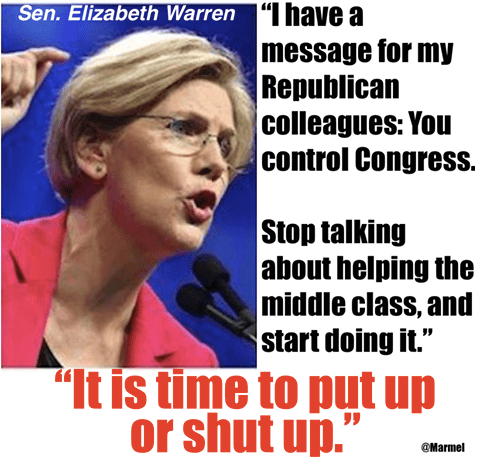
Elizabeth @SenWarren Sides With The Streaming Service Not Paying Songwriters Against Streaming Service That Does

Screen Shot 2016-07-02 at 8.07.07 PM

Kettle meet pot. Pot meet kettle.  Doesn’t Sen Warren know songwriters are the small businesses and middle class of the streaming world, not Spotify? Who’s given Warren the bad advice?

The current wave of “progressives” continue to demonstrate that they are not populist in any sense of the word, especially when it comes to protecting the rights of songwriters.  It seems rather than representing the people, they simply represent a different set of crony capitalists than the politicians they rail against.

As an example, “progressive” Sen Elizabeth Warren speaking last week at The New America Foundation (Chairman of board is the robber baron and Google CEO Eric Schmidt)  lashed out at Apple for perceived mistreatment of  Spotify in the IOS store.

Odd.

Shouldn’t a politician who has staked her entire career on the notion that she looks out for the little guy over Wall Street-backed crony capitalists shy away from Spotify? After all Spotify is backed by Goldman Sachs aka Satan AND they failed to pay songwriters.  Remember this speech?

If you were successful, somebody along the line gave you some help. There was a great teacher somewhere in your life. Somebody helped to create this unbelievable American system that we have that allowed you to thrive. Somebody invested in roads and bridges. If you’ve got a business – you didn’t build that.

Well–somebody invested in those songs.  Spotify didn’t write them.

Senator Warren criticizes Donald Trump for not paying contractors and working people.

Neither does Spotify.

Warren’s own website notes her interest in antitrust issues stems from the fact that market concentration harms small businesses and hurts the middle class.  Songwriting is the ultimate small businesses and songwriters are the middle class of the music business.  Spotify has over 50% of the worldwide streaming business according to its own economist, Will Page.  It has 7 times the users that it’s nearest competitor Apple Music has. That’s pretty concentrated.  If it weren’t for Apple Music, you might even say Spotify is a monopolist and it certainly acts like one.

The bitter irony of all of this is that while Apple isn’t perfect, it manages to pay songwriters and at a much higher royalty rate than Spotify.  Songwriters would have been much happier to see Warren lash out at Spotify.   I think the whole speech was more about posturing, burnishing pseudo populist credentials and playing favorites with potential Democratic Party leaning campaign donors.  IMHO Warren is to progressives what major label pop-punk is to punk rock.  The former house flipper turned anti-Wall Street politician is the campaign money generating sellout of a genuine populist movement. If you will, “the great rock and roll swindle.”

And right on cue after Warren’s speech,  Spotify’s head of global communications (and former Clinton speech writer) Jonathan Prince chimed in:

“Apple has long used its control of iOS to squash competition in music, driving up the prices of its competitors, inappropriately forbidding us from telling our customers about lower prices, and giving itself unfair advantages across its platform through everything from the lock screen to Siri. You know there’s something wrong when Apple makes more off a Spotify subscription than it does off an Apple Music subscription and doesn’t share any of that with the music industry. They want to have their cake and eat everyone else’s too.”

Let’s stop right here for a second. Actually dude,  while there may be some truth to what you are saying, you wanna know something that’s really, really, wrong?  Using millions of songwriters songs without licensing them or bothering to pay the writers.

Personally, I don’t really want to hear how poor little Spotify is being mistreated by big bad Apple.  In the pantheon of unlikeable movie characters, the least sympathetic is  “the bully that cries.”  Or perhaps a new archetype?  “The dominant service that runs to the FTC.”  (Which reminds me, thousands of songwriters not being paid, millions of unlicensed songs, mass copyright infringement, fraudulent NOIs being sent by US mail, shouldn’t the feds be investigating this?)

And maybe some of you have heard that name Jonathan Prince before?    Last year a Washington Post story listed Prince as one of a small group of Hillary Clinton’s State Department staffers that had been granted a special status that allowed them to “work” for other companies and foundations while working at the State Department.   As the Washington Post reported:

Aside from Abedin, Clinton political allies who were granted the special status included Maggie Williams, Clinton’s 2008 campaign manager; Jeremy Rosner, a former Clinton aide; Jonathan Prince, a speechwriter for Bill and Hillary Clinton…”

I think the technical term for all of this is “skeevy.”

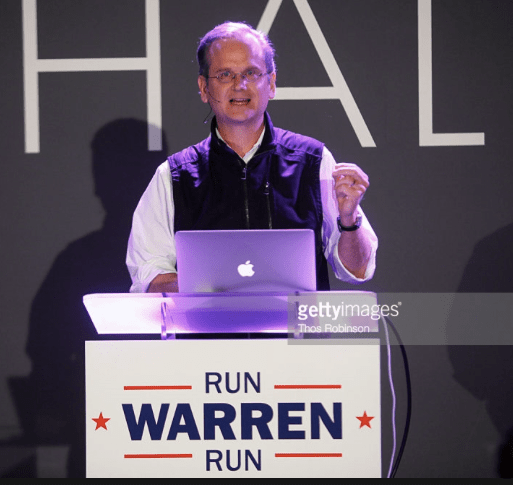
But back to Elizabeth Warren. Should we really be surprised that she ignores the  plight of songwriters?  Look who endorsed her: Lawrence “In Defense of Piracy” Lessig.
Screen Shot 2016-07-02 at 8.03.56 PM

Cost Recovery and the DOJ’s 100% Licensing Scheme

This is a must read analysis of everything wrong with the DOJ 100% licensing scheme.

“The rule also involves voluntary licensing by the co-owner. To my knowledge, it has never been applied to a government mandated license in copyright, real property or otherwise. (If the DOJ is confident in its position, then I for one would like to see this issue briefed.) I am also not familiar with cases where the license is issued over the objection of the co-owner.”

Music Tech Solutions

After a prolonged and expensive process of soliciting public comments on potential betterments in the ASCAP and BMI consent decrees, the Department of Justice has decided to ignore all of the ideas presented and focus on the one thing that is almost guaranteed to destroy the PRO system in the U.S.–adopt the punitive policy of “100% licensing”.

Simply put, 100% licensing refers to the ability of a co-owner of an undivided interest in real property to grant a nonexclusive license to allow a third party to use the whole parcel without the consent (and potentially over the objection) of the co-owners.  A co-owner relying on this rule also assumes the obligation of accounting to the co-owner and to not license at a rate that constitutes economic waste of the property.

The Department of Justice seeks to apply this theory to song copyrights through the consent decrees.  After all the hopeful aspirations that…

View original post 847 more words

DOJ Official Bullying Songwriters With Bogus Anti-Trust Concerns Defended Google Against Legitimate Anti-Trust Concerns

Go recuse yourself! Renata Hess worked for Google apparently defending them against DOJ antitrust scrutiny brought on by the proposed Google/Yahoo search advertising linkup. 

I’m not sure whether to laugh or cry.  The DOJ anti-trust  lawyer that we are told pushed the “100% licensing” rule on songwriters and their performance rights organizations (PRO), in private practice defended Google against anti-trust concerns in the Google/Yahoo search advertising linkup.  Sheer hypocrisy.

From an interview on Adrian Bye’s website meetinnovators Dec 18 2008

Renata Hesse: Typically when we do counseling, people come to us and say, “Hey, I really would like to do this. Is that okay?” and sometimes you get some pretty interesting questions that way. Usually, the business people are the ones who are thinking of the clever ways of making sure that their products succeed and not the lawyers.

Adrian Bye: Right.

There’re been obviously antitrust issues between Google and Yahoo! Are you able to comment on any of those?

Renata Hesse: I’m not, really, I’m afraid since I did a lot of work for Google on it.

Adrian Bye: Okay.

Step back.  So Ms. Hesse apparently defended Google against anti-trust concerns in a search advertising partnership that would have allowed Google to control 99% of the search advertising market. But she finds the fact that a tiny songwriter PRO like GMR (represents less than 1% of all songs by popularity) can refuse to license a song to a 1/2 a trillion dollar company like Google/YouTube a mortal threat to competition in the music licensing marketplace?  WTF?  Seriously, what would happen if YouTube or Clear Channel couldn’t license the song?   Would planes fall from the sky?   Would the economy collapse?  Would plague and pestilence sweep the land?

No.

YouTube or Clear Channel  etc would not be able to play the song.  That’s all.  At least until the two parties had come to a mutually beneficial agreement.  But that sounds an awful lot like free markets, capitalism and robust intellectual property rights.  We don’t want any of that in the US. Not if the DOJ can help it!

Meanwhile has the DOJ managed to do anything about real anti-competitive issues going on the broader economy?  Consolidation in the airline industry? Mobile phone market?  Search advertising?  You know issues that effect the people they are supposed to be protecting.

No? Didn’t think so.

Welcome to the new and improved pay-to-play DOJ!  Now using the antitrust laws to protect trusts!  Don’t tell Teddy Roosevelt!