Music Director at WJCU Breaks with National Association of Broadcasters in Letter to Congress Supporting Artist Pay for Radio Play

Music Technology Policy

[Editor Charlie sez: It’s the end of 2015 and it’s time to look over the good news that came during the year.  For those MTP readers who missed the interview with Karoline Kramer-Gould, the heroic Music Director at tastemaker college radio station WJCU, here’s the reprint from Chris’s blog on Huffington Post.  If you already saw it, it’s well worth a re-read to remind you that we do have friends–a lot of friends–in radio who support treating artists fairly and who have devoted their lives to music every bit as much as artists and musicians have.  What makes Karoline so special is that she was willing to stand up for what she believes in and speak truth to the MIC Coalition.]

The United States is the only democracy in the world that does not pay recording artists for radio airplay. Artists and record labels have been fighting a legislative battle…

View original post 2,521 more words

An Open Response to Peter Sunde | David Newhoff @ TIOM

The Pirate Bay’s Peter Sunde has recently stated he’s given up. His interview can be read here. David Newhoff at the Illusion Of More responds to Sunde in a brilliant open letter that is required reading.

This is what comes of evangelizing the idea that it’s okay to exploit other people’s investment of real labor and real capital in goods and services that would otherwise have regenerative value. And exploiting these types of investments is precisely what you and your colleagues did with The Pirate Bay.

At least part of the Internet you don’t like is what comes of preaching to a whole generation that they can have whatever they want, free of charge, as long as it’s just a mouse click away.  And indeed, we are lately seeing the wheels come off that naive (and frankly predatory) idea. As the leaders of Pandora and Spotify begin to see that “freemium” isn’t a business model; as Facebook’s video service “freeboots” the promised ad-share value out of the pockets of YouTube creators; and as the global network of pirate sites is revealed to be a malware-infested and sophisticated black market that preys on individual consumers, you seem to have missed the point, Peter. The “fight” you lost is not with the MPAA and the principles of real capitalism—but with the unfettered greed you helped foster on the Internet you asked for.

READ THE ENTIRE POST AT THE ILLUSION OF MORE:
http://illusionofmore.com/an-open-response-to-peter-sunde/

Pirate Bay Founder: ‘I Have Given Up’ | Motherboard.Vice

This interview is fascinating on so many levels and deserving of it’s own in depth post to explore Sunde’s comments.  Here is just a teaser…

What is it exactly that you have given up?

Well, I have given up the idea that we can win this fight for the internet.

The situation is not going to be any different, because apparently that is something people are not interested in fixing. Or we can’t get people to care enough. Maybe it’s a mixture, but this is kind of the situation we are in, so its useless to do anything about it.

We have become somehow the Black Knight from Monty Python’s Holy Grail. We have maybe half of our head left and we are still fighting, we still think we have a chance of winning this battle.

So what can people do to change this?

Nothing.

PLEASE READ THE FULL POST AT VICE-MOTHERBOARD:
http://motherboard.vice.com/read/pirate-bay-founder-peter-sunde-i-have-given-up

Karma Meets Irony. “Freebooted” YouTuber’s Feel The Sting Of Piracy…

Watch and learn… We can’t make this up. Seriously you have to watch this video.

If we had a nickle for every YouTuber or Tech Journalist that advised musicians that “YouTube” was the SOLUTION TO PIRACY we’d be rich. Really rich. I mean, really, really, really rich. We we’re told YouTube was “promotion” and “exposure” to make money other ways.

We were told how if you just “made stuff people wanted” and “connected with fans” then they would reward you with loyalty and support. Musicians were told they were “whining” about piracy and that they should “adapt and evolve” to the “new way” and just embrace all of this “awesome internet empowered promotion”.

Funny how it is when the shoe is on the other foot. See here’s the thing. All of these YouTuber’s make money from the advertising that runs on their YouTube videos. But when those videos are ripped from YouTube by fans and uploaded to Facebook guess who doesn’t get paid? Yup, you guessed it… the YouTuber’s are getting stiffed and they don’t like it.

Where is Larry Lessig to help these folks out? Remember kids, don’t break the internet! It’s “sharing economy” afterall. You do the work and silicon valley shares the profits.

Soooo… when a musician’s work is pirated on Napster, Grockster, Kazaa, Limewire, The Pirate Bay, oh and YouTube… Musicians should “get over it”. But when a YouTuber’s work, labor and creative output is devalued, or worse monetized by a third party (Facebook) who doesn’t pay them anything, well then, you know, that’s “bad”.

The issue gained national attention this year earning editorials and reports from the likes of Slate, “Facebook’s Piracy Problem” in July. Time followed with a story in August, “This Is Facebook’s Biggest Problem With Video Right Now.” And recently as November AdWeek chimed in, “Facebook’s ‘Freebooting’ Piracy Problem Just Cost Casey Neistat 20 Million Views“.

This quote from the AdWeek story above kind of says it all…

But then they ran into a problem known as “freebooting,” which entails republishing videos on social sites without the consent of the folks who made the clips. In essence, it’s a practice of intellectual-property theft that’s plagued Facebook more than other digital platforms—PR-wise, at least—in recent months thanks to a few whistle-blowers.

They go on…

“I spent roughly a week issuing take downs on Facebook—a convoluted process,” Neistat told Adweek. “I crowdsourced the process of finding the freebooters because there is no way to search Facebook. In all, I took down well over 50 different posts—[which was] not nearly all of them. I simply gave up after a while. I anecdotally kept track of the view counts—over 20 million views on the videos I took down.”

Here’s more to chew on from a post by Hank Green on Medium, “Theft, Lies and Facebook Video“.

According to a recent report from Ogilvy and Tubular Labs, of the 1000 most popular Facebook videos of Q1 2015, 725 were stolen re-uploads. Just these 725 “freebooted” videos were responsible for around 17 BILLION views last quarter. This is not insignificant, it’s the vast majority of Facebook’s high volume traffic. And no wonder, when embedding a YouTube video on your company’s Facebook page is a sure way to see it die a sudden death, we shouldn’t be surprised when they rip it off YouTube and upload it natively.

Facebook’s algorithms encourage this theft.

Hmmmmm… where have we heard this story before? Maybe it was Daily Finance back in 2010, “Viacom vs. YouTube/Google: A Piracy Case in Their Own Words“.

• On July 19, Chen wrote to Hurley and Karim: “Jawed, please stop putting stolen videos on the site. We’re going to have a tough time defending the fact that we’re not liable for the copyrighted material on the site because we didn’t put it up when one of the co-founders is blatantly stealing content from from other sites and trying to get everyone to see it.” Four days later, Karim sent a link to the other founders, and Hurley told him that if they rejected it, they needed to reject all copyrighted material. Karim’s reply: “I say we reject this one but not the others. This one is totally blatant.”

• A July 29 email conversation about competing video sites laid out the importance to YouTube of continuing to use the copyrighted material. “Steal it!” Chen said , and got a reply from Hurley, “hmmm, steal the movies?” Chen’s answer: “we have to keep in mind that we need to attract traffic. how much traffic will we get from personal videos? remember, the only reason our traffic surged was due to a video of this type.”

Yup, Karma meets irony… How very interwebs… Ok, Ok, Ok… Sorry, just one more…

Everyone’s creativity deserves to be protected. All creators should be united against the illegal, infringing and exploitative uses of their work (especially for profit) without consent or compensation.

Three Simple Steps To Fix The Record Business in 2016… Windows, Windows, Windows…

windows

This time last year we correctly predicted the restructuring of at least one major label group when we asked the question, “Who will be the First Fired Label Execs over Spotify Fiasco & Cannibalization?“. It didn’t take long for us to find out, “It’s Just Math : Digital Music Execs Exit, But will the Pivot to Paid Subs Be Enough To Save The Record Biz?” We’re still not sure that even paid subscription streaming actually works in the long term, but we know for sure that unlimited free streaming does not!

What a difference a year makes. What a difference Taylor Swift makes. What a difference Adele makes.

Going into the next year our prediction is that the power of windows can not be overstated as the leading solution to the problems faced by the record industry. Effective windowing has always been a part of the economic life cycle of every album release. The physical singles sales business (ya’ll remember 45 prm records, right?) – well, that was largely a loss leader to boost singles chart positioning that combined retail and radio reports.

In every record store there was the “hit wall” of discounted new releases to encourage higher volume sales. Every store stocked a robust variety of titles across different genres and price points comprised of front line titles, mid-line titles, budget line titles, and at the end there was the cut-out bin. Also, let us not forget the “11 records for a penny” record clubs advertised in magazines.

Those, my friends, are windows. Those who are advocating against windows are probably too young to know better or have been lead around by the nose by some digital snake oil salesman protecting their own interests.

This is not a philosophical discussion. This is financial reality. Respected stock analyst Robert Tullo who is the Director Of Research at Albert Fried & Company says this:

Longer term IP Radio and Spotify are good annuity revenue streams and great promotional tools. However, we believe the system works better for everyone when artists have the right to distribute their Intellectual property how they see fit.

Ultimately we think windows for content will form around titles that look much like the Movie Windows and that will be great for investors and the industry as soon as all these so called experts get out of the way and spot trading fashionable digital dimes for real growth and earnings.

Mr. Tullo is correct. Not only will artist (and rights holders) do better when they have the freedom of choice but so will the partner platforms. This is how it works in the film business. Every month the “virtual inventory” on Netflix is rotated. New titles come in, old titles go out. If you really, really, really want to see something right now, you have to rent it or buy it via a transactional stream or download. The record business will benefit from the same models and strategies. Windowing works. Period.

See here’s the thing… If these new digital platforms are so great for artists, why wouldn’t artists want to participate on them?  The benefits would be self evident? If the product that Spotify, Pandora, YouTube (and others) are offering is so good for artists, why are these companies so afraid of artists and rights holders opting out? Maybe, just maybe these platforms are not offering the type of value that their suppliers find meaningful?

It really speaks volumes when a business model is so bad that one of  the essential features for survival of the company is to deny its suppliers the option to fairly negotiate their participation or have the ability to opt out. In the old neighborhoods that was known as a protection racket, or extortion.

Silicon Valley didn’t invent the freemium, they’re just doing it wrong. Really wrong. Horribly wrong.

Let those who want to give away their work freely do so, but also allow those who would rather opt out the ability to do so. If artists find value in the freemium tier, and they may well as they always have, then let them chose how to best utilize that option. Musicians pioneered the freemium model often using street teams to canvas concerts by giving away cassettes to fans of similar music.

If digital platforms allowed artists to use their technologies creatively, everyone might be pleasantly surprised how much better (and more profitable) things would work out.

Watching Pandora lose $5 billion in value in a year becomes a punch line when they believe they are better suited to dictate to artists how to best communicate with their own fans. It is indeed interesting to see Pandora admit what we’ve been saying for years, unlimited, ad-supported free streaming unsustainable. No Kidding. Here it is from Brian Andrews, CEO of Pandora:

“This gray market is unsustainable. If consumers can legally listen to free on-demand music permanently without converting to paying models, the value of music will continue to spiral downward to the benefit of no one.”

Of course what makes this comment most interesting is that Pandora is entering the crowded field of on demand streaming with it’s purchase of the failed Rdio. Pandora now has to compete with Spotify’s very large free tier of unpaid and entrenched users. Migrating those users to a new on-demand streaming platform will be a challenge (ask Apple and Tidal), and even more so as artists and labels grow tired of subsidizing these horribly flawed business models.

Here’s three uses of freemium streaming most artists (and rights holders) would probably embrace if given the choice.

1: The Hit Single

– Using the freemium platform to launch a single to gain ubiquitous awareness of a new album release. This is what both Taylor Swift and Adele did and the results speak for themselves. More artists would probably embrace releasing one or two songs or singles from an album on freemium tiers. With the artists support this becomes far more valuable than extorting the them into releasing their entire album on a platform they feel devalues their work.

BONUS: What if Adele made an official playlist of her favorite songs, leading with her new single? How much added value does an artist of this caliber bring to a platform when they feel they are being respected and valued? Answer, ALOT.

2: The Focus Track

– Not everyone has a hit single, but most artists have a focus track from their album. Like the hit single, these artists would embrace the opportunity to be discoverable and to build an audience of new fans. Developing artists are the most eager to try new opportunities because the have the most to gain. If digital streaming platforms worked with artists in a meaningful and respectful way, the mutual benefits could be huge for everyone.

3: Rotating Inventory Management

– By adopting a Netflix like inventory management of monthly rotating titles on the freemium (or even paid subscription) tier more artists might feel compelled to be more engaged. Rotating inventory management is a smart way to keep users and fans engaged as old titles rotate out and new ones in. This simple trick restores a great deal of the consumer engagement that is a part of discovery, and promotion.

Of course, the goal of every freemium model is to lead to more paid revenues in higher value products. Working together with artists and rights holders the future of streaming distribution could be very bright. But to get there we need to let go of Stockholm Syndrome. the old neighborhood protection rackets, bullying extortion threats and just plain bad business models.

There is a lot that can be done in the world of streaming. Streaming is not bad, it’s just a technology. Free streaming and subscription streaming both have their place in the ecosystem. What is bad are the exploitative business models, lack of transparency and devaluation of the artists work. These are fixable issues that have nothing to do with technology, just a lack of common and business sense.


“Rumor Has It” That Spotify May Stop Censoring and Start Segmenting

Music Technology Policy

The Wall Street Journal reports that Spotify is considering allowing the market to work so that artists can decide window their music between the Spotify free music service and Spotify’s subscription service.  Naturally, this decision to liberate artists from the bureaucrats in the Spotify Ministry of Culture will be welcome news although it may be limited to superstar artists.

The Journal reports:

In private talks, Spotify has told music executives that it is considering allowing some artists to start releasing albums only to its 20 million-plus subscribers, who pay $10 a month, while withholding the music temporarily from the company’s 80 million free users.

Spotify, initially, will try the new approach as a test, according to a person familiar with the matter. It wants to investigate how such a “windowed” approach might affect usage and subscription sign-ups. It also hasn’t decided which artist will get to withhold music from the…

View original post 599 more words

How Many More Records Could You Be Selling This Holiday Season If Your Album Wasn’t FREE Streaming?

happyholidays

Adele, Taylor Swift, Beyonce’, Coldplay and more artists are fully understanding the value of not giving away their work for free right out of the gate. This is especially important during the biggest consumer spending season of the year. Why would anyone with a solid fan base and known demand for their work give it away for free during most profitable window of the year? This then begs the question how many more records would you be selling this holiday season if your record was not available on free streaming platforms?

Spotify and other free streaming services should be structured more like Netflix. The film industry understands the value of strategic pricing in the context of time based value propositions. Friday night block buster movies are not available on Netflix at the same time for a good reason.

There has been a lot of good work and innovation by the film industry to create “day and date” titles that are available both in theaters and as video on demand at the time of release. However none of these are made available free to consumer on an advertising supported platform. In fact, all the major film and tv streaming services require payment of some kind, be it subscription (HuluPlus, Netflix, Amazon Prime) or transactional fees for rental or permanent download (Itunes, Amazon, Vudu).

“Or Else They’ll Steal It!”

The only argument that is ever made against the use of windows is that tired old song that they like to sing in Silicon Valley called, “Or Else They’ll Steal It.” The problem is of course, they’re already stealing it, and will continue to steal it until there are real consequences to not do so. But the film and tv industries are not listening to the song of Stockholm Syndrome. Instead the film and tv industries continue to innovate and experiment with new windows, digital distribution models and competitive pricing based on the new value propositions.

Converting consumers from “pirate 2 paid” is dependent upon giving consumers more value and pricing options, not less. If the record industry doubts this for even a split second the proof is expressed in a single word, “vinyl.”

By contrast the record industry has given away valuable profits to tech companies like Spotify who give little in return for the high value products that are being licensed. The ubiquity of distribution on streaming platforms drives the price of all products to zero.

Windowing allows for price elasticity and rewards consumers who are willing to spend more for the premier product or experience. Of course, for windowing to work there has to be a fair and regulated marketplace where artists and rights holders actually can withhold their work from various platforms should they chose to do so.

If we’ve learned anything at all in 2015 it is that YouTube is probably the single greatest threat to the ability of artists and rights holders to have a long term sustainable business. There can be no windows if everything appears on YouTube via User Pirated Content anyway. 

The grand irony here is that in a well controlled and regulated distribution system, it is far more likely that all stakeholders would have the ability to generate greater profits within their sectors. We now have a decade and a half of data behind us while heading towards the second half, of the second decade, of the new millennium. It’s time to for the adults to put an end to play time.  It’s just math and common sense.

Windows work. Period.

Business decisions need to developed through common sense, innovation and time tested principles of basic economics. We’ll repeat our previous suggestion for an industry wide, consistent windowing platform strategy below.

Windowing works better when there is a reasonable amount of consistency. Our friends in the film business have been highly effective at windowing for decades and there’s no reason why it can’t work similarly well for the record business.

Every new release should have the option to determine the release windows when the record is being set up. For example the default could be 0,30,60,90 day option for transactional sales, followed by 0,30,60,90 day option for Subscription Streaming prior to being available for Free Streaming.

Windowing is not new for the record business. The industry has never had pricing ubiquity across all releases, genres and catalogs. There has always been strategic and flexible pricing strategies to differentiate developing artists, hits, mid-line catalog, and deep catalog. An industry wide initiative to re-allign time proven price elasticity is the key to growing the business and developing a broad based sustainable ecosystem for more artists.

  • Windowing allows for Free Streaming to exist as a strategic price point.
  • Windowing allows for Subscription Streaming to exist as a strategic price point.
  • Windowing allows for Transactional Downloads to exist as a strategic price point.
  • Windowing allows for artists and rights holders to determine the best and most mutually beneficial way to engage with their fans.

Windowing is the key (as it always has been) in rebuilding a sustainable and robust professional middle class that will inevitably lead to more artists ascending to the ranks of stars. Some will become superstars and legends capable of creating the types of sales and revenues currently achieved by Adele, Taylor Swift and Beyonce’. To get there however we need to abandon Stockholm Syndrome and embrace windowing that works for everyone.


FREE Streaming is the Digital Cut-Out Bin. Artists You Deserve Better.

Cutouts

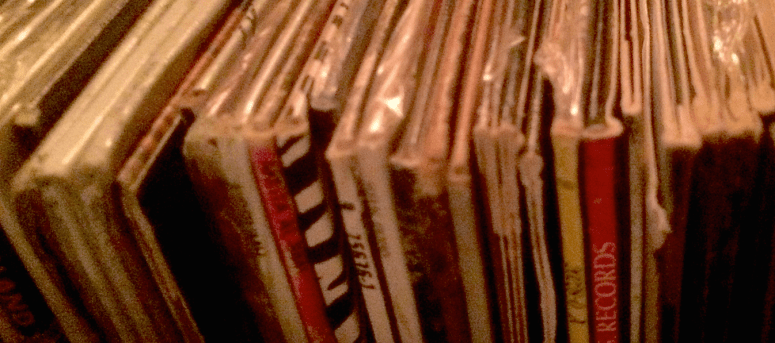
Today’s younger consumers who missed the glory days of the record store as a cultural hub will probably have little awareness of the cut-out bin. The cut-out bin was dreaded by artists and labels alike, but it served an important function in the ecosystem and economy of record sales. This was the rack in the record store where over manufactured titles made their last stop before the trash bin.

The cut-out bin was the last stop for an album, not the first stop. This is a very important consideration in today’s digital music economy. Artists, you deserve better service from your labels, management and partners.

Having your record appear in “the cut-outs” didn’t mean the album wasn’t successful, to the contrary, many of the records in cut-out bins were by well known name artists. Many of these records contained hit songs and singles. However, for whatever reason the quantities manufactured exceeded the markets ability to absorb those units into sales. At some point the decision was made to either monetize the overstock, or destroy the overstock.

The net result of the cut-out bin was that full length albums were often priced below the cost of a current 45 rpm single. However, this pricing distinction occurred at least a year or more after the initial release of the album. An album was “cut-out”after all of the front line sales, traditional discounts and higher margin retail channels had long been exhausted. Cut-out supplies were also limited and inconsistent. In other words, it was only the most patient and adventurous consumer who benefited from this deep discount.

Honestly, who would buy an album at full price if the same exact product (sans for the cut off top right corner) could be had for less than the price of current single?

So here we are a decade and a half into the new millennium and the best “new business model” for artists and rights holders in the 21st Century Digital Economy is to start at the last stop on the value chain?  You’re kidding us, right? We wish.

So how did we get here? Well, in three words “Ad Funded Piracy.” The lowest price for a product or service sets the price floor for all other comparable products. In the case of music that price has been set at about zero for over a decade and a half. But that’s not say there’s no money being made in the distribution of music online. No, there’s actually a lot of money being made by the Internet Advertising Networks supplying the advertising that fuels the corporate profits to over half a million infringing pirate sites.

It should also be noted that the CEO of the leading ad-funded, free to consumer streaming service was also the creator of the most successful ad-funded, bit-torrent client, u-torrent. Yup, that’s none other than Spotify’s Daniel Ek. Shocker, right?

Obviously, pirates and thieves are going to pirate and steal. These people should not be the first concern of business executives seeking to expand their profits on digital platforms. Enterprise level piracy requires the political will to enforce the law against egregious digital robber barons. Anti-Piracy is an “in addition to” action, not an “instead of” action. The future of the music business must be rooted in both innovation and advocacy.

Windows work. Period.

Business decisions need to developed through common sense, innovation and time tested principles of basic economics. We’ll repeat our previous suggestion for an industry wide, consistent windowing platform strategy below.

Windowing works better when there is a reasonable amount of consistency. Our friends in the film business have been highly effective at windowing for decades and there’s no reason why it can’t work similarly well for the record business.

Every new release should have the option to determine the release windows when the record is being set up. For example the default could be 0,30,60,90 day option for transactional sales, followed by 0,30,60,90 day option for Subscription Streaming prior to being available for Free Streaming.

Windowing is not new for the record business. The industry has never had pricing ubiquity across all releases, genres and catalogs. There has always been strategic and flexible pricing strategies to differentiate developing artists, hits, mid-line catalog, and deep catalog. An industry wide initiative to re-allign time proven price elasticity is the key to growing the business and developing a broad based sustainable ecosystem for more artists.

  • Windowing allows for Free Streaming to exist as a strategic price point.
  • Windowing allows for Subscription Streaming to exist as a strategic price point.
  • Windowing allows for Transactional Downloads to exist as a strategic price point.
  • Windowing allows for artists and rights holders to determine the best and most mutually beneficial way to engage with their fans.

Windowing is the key (as it always has been) in rebuilding a sustainable and robust professional middle class that will inevitably lead to more artists ascending to the ranks of stars. Some will become superstars and legends capable of creating the types of sales and revenues currently achieved by Adele, Taylor Swift and Beyonce’. To get there however we need to abandon Stockholm Syndrome and embrace windowing that works for everyone.

Coldplay Says #irespectmusic and Rejects Freemium: Mr. Ek, The Market Calling on Line One

Music Technology Policy

When the market shifts, it hardly ever happens all at once.  That’s because on a microeconomic level, a bunch of decision makers are making small decisions.  Successful entrepreneurs spot these small decisions before they become a trend, and react in a profit-centered way.  Observers notice that change.

It should surprise no one that Coldplay has rejected freemium on their new “Headful of Dreams” album release and Spotify’s pig headed response should also surprise no one, either.

Complete Music Update asks the question of why Spotify is painting itself into a corner:

Which brings us back to that old question: why doesn’t Spotify allow premiere league artists to window their new releases so that they become available to the service’s paying premium users first, subsequently arriving on freemium several weeks or months down the line? Because ‘A Head Full Of Dreams’, which is already available on premium-only streaming platforms like Apple…

View original post 546 more words

Quoted: Pandora CEO says free on-demand music streaming is bad | Silicon Beat

“This gray market is unsustainable. If consumers can legally listen to free on-demand music permanently without converting to paying models, the value of music will continue to spiral downward to the benefit of no one.”

Brian McAndrews, CEO of Pandora, in an op-ed published by Business Insider Tuesday.

Where have we heard this before? Now we wonder how long it may be until they acknowledge that Ad Funded Piracy Is Big Business?

READ THE FULL STORY AT SILICON BEAT:
http://www.siliconbeat.com/2015/12/02/quoted-461/


Streaming Is the Future, Spotify Is Not. Let’s talk Solutions.


Why Spotify is not Netflix (But Maybe It Should Be)


It’s Just Math : Digital Music Execs Exit, But will the Pivot to Paid Subs Be Enough To Save The Record Biz?