Spotify NMPA Settlement Finished: Let The Securities Fraud Begin!

Anonymous Spotify sources have been pitching the NMPA publisher settlement as a silver bullet that will “crush” the songwriter class action lawsuits. Here is the latest such headline…

How Spotify Crushed a $200 Million Songwriter Lawsuit…

In this Digital Music News article David Israelite from the National Music Publishers Association seems to go out of his way to come up with a highly qualified 96% figure.  That of course makes it seem like there are just a few songwriters left in the spotify class action lawsuit.

Wrong.

This doesn’t do anything to the class action. The class action is about UNLICENSED SONGS not UNMATCHED ROYALTIES. Further songs represented by NMPA publishers were never really the main issue here. Why? In most cases the NMPA publishers were licensed via modified compulsory by NMPA owned Harry Fox Agency.

The unlicensed songs most likely belong to publishers and songwriters outside the NMPA umbrella.

However if you are Spotify or Goldman Sachs and you need to convince investors that the problem is cleared up before an IPO?  This headline works! 

Let the securities fraud begin!

Time and time again the NMPA has helped Spotify by creating the false impression that the putative class has been gutted and that Spotify’s long term infringement problems have been fixed. This in no way helps the NMPA or its publishers. Further it tells digital services that NMPA will save their asses even if they stiff songwriters. 

With friends like these who needs enemies. 

 

Science Fiction: DOJ Antitrust Division Goes Back In Time To Change Consent Decrees

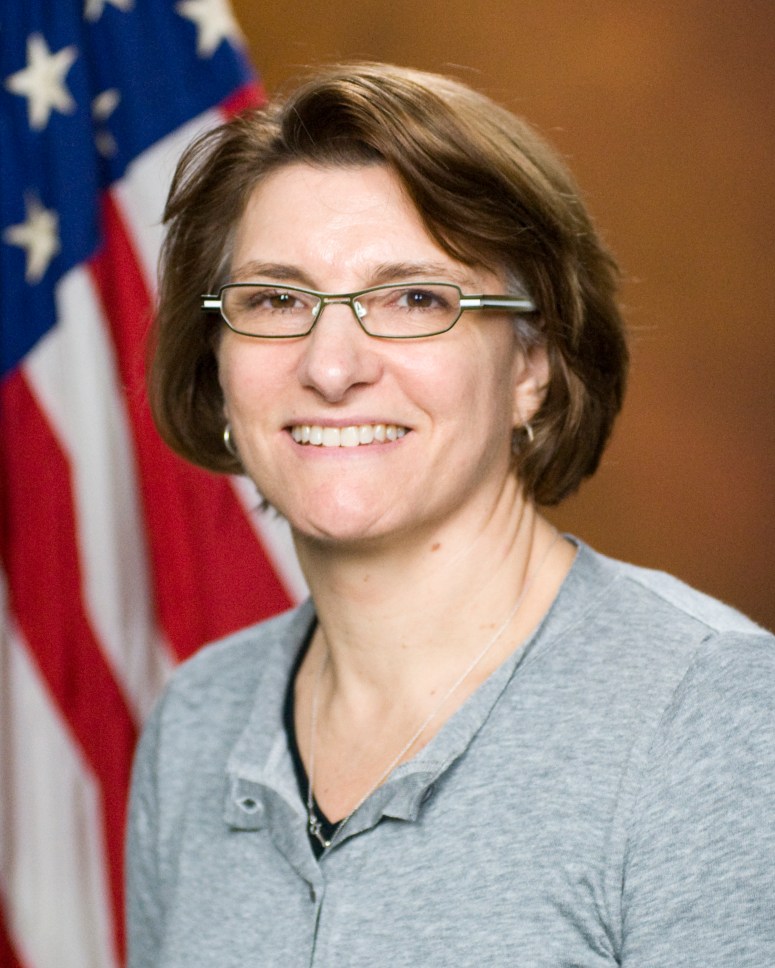
renata_hesse-headshot

DOJ antitrust division under former Google lawyer  Renata Hesse goes back in time and changes consent decrees to avoid constitutional challenge. 

You can’t make this shit up.

According to multiple sources David Kullly Chief of Litigation Section III in the Antitrust Division of the DOJ told songwriters on a conference call last week that the 100% licensing rule is not a rule change at all.  The rule was always there. He claims the DOJ analysis concludes it is “implied” in the original ASCAP consent decree.   Thus the DOJ is not changing a rule it is simply clarifying existing rule.

This makes no fucking sense:

  1. If 100% licensing already existed why did the DOJ spend the last year asking for comments from songwriters, publishers and music services on whether to make this change or not? What was the point of the consultation?
  2. If 100% licensing always existed how does the DOJ explain that no one has ever done this in the past?  Why did the DOJ wait until 1 year after the GMR/YouTube dispute erupted to tell everyone that 100% licensing is already a rule?

Bullshit. This is a completely new story that we are hearing from the DOJ antitrust division.  At no point in the last year of discussions did the DOJ ever indicate that this was their view.  Our hunch is that the DOJ has very recently come up with this novel interpretation once it appeared that a rule change (as opposed to a clarification) was likely to meet constitutional challenges from songwriters.  Kully admitted on the call that he did not come up with the analysis.  When pressed by one of the songwriter groups to divulge who did this analysis that supported this interpretation he refused to disclose.

So we’re gonna just go ahead and assume it came from his boss and former Google counsel Renata Hesse.

This is some tricky ass lawyering.   You see the Obama DOJ  has invented a time machine. One that conveniently supports one of the administrations favorite corporate sponsors.   They’ve effectively gone back in time and changed the original consent decrees.  For instance they can now claim GMR writers didn’t lose any rights and thus can’t make a constitutional claim.  Those rights were missing when they formed GMR.  And oh yeah all those private co-administration contracts were unlawful before they were signed.  Voila! No more ex postfacto.  

Fucking brilliant and oh so fucking Googley.

Remember if they can do this shit to songwriters the DOJ can (and will) do shit like this to you too. 


This Chart Makes Mockery of DOJ Lawyers’ Claim Consent Decrees Don’t Lower Songwriter Pay

does-consent-decree-depress-price
This week DOJ lawyers arranged conference calls and fielded questions from Songwriters over the 100% licensing rules.  Multiple sources are reporting that when songwriters complained about their pay under the consent decrees the staff lawyers claimed that the consent decrees had nothing to do with it.

I call bullshit.  And I’ve got the data to prove it.  In fact I explained this to the DOJ lawyers in a letter when they asked for comments earlier this year.

Generally when you hear a recording of a song on the radio, you are listening to separate and distinct copyrights.  There is a copyright for the recording and one for the underlying composition (or song).   Often times these two copyrights have different owners.

For instance when a film maker decides that they want to use a recording of a song in a film they must obtain  licenses.  A “master use” license for the recording.  And a “sync” license for the underlying composition.   There are no DOJ rules or federal compulsory licenses for this kind of use.  Each license is negotiated in the free market.  My long experience with my own catalogue shows that generally the fee for master use license (recording) is about the same as the fee for the sync license (underlying composition).   Sometimes the sync license is a little higher as it is always possible to re-record the song.  For my catalogue 2011-2014 it’s about  48% for recording and 52% for the composition.

Now contrast that to the non-interactive streaming (think Pandora not Spotify).  Here the consent decree governs the licensing process for the composition.   In this case the recordings get about 92% of the revenue and the composition receives about 8%.     The only difference is the consent decree!

The consent decrees amount to a federally mandated subsidy from songwriters to monopoly digital services.  They are further entrenching and enriching “trusts” at the expense of songwriters.  Does that sound like a properly functioning antitrust division?


Songwriters: If You Feel You Must Submit Comments to DOJ Share Them with Us

We have reports from songwriters who have been on the DOJ conference calls that they are still asking songwriters comments.  We don’t think anyone would should participate in this. But for some odd reason the DOJ is not going to publish them.   Why?   We urge anyone submitting comments to also publish them on their personal blogs and send us the links.  We will publicize.  If you don’t have a blog send them to us and we will publish them.

This is a democracy not a police state.   The DOJ is one of the most powerful departments in the executive branch, they shouldn’t be allowed to operate in secrecy on commercial issues like music licensing.

(and with all the security challenges facing the US explain to me why is the DOJ wasting time and money making it easier for 1/2 trillion dollar companies like Google, Apple and Amazon to license songs?)

David Lowery “Whiteboard” Comments on DOJ 100% PRO Licensing Proposal

I wrote this 8 months ago. It seems spot on now. But even more spot on was the first comment from a reader.

Screen Shot 2016-07-12 at 12.04.10 AM

The Trichordist

November 18, 2015

David C. Kully
Chief, Litigation III Section
Antitrust Division
U.S. Department of Justice
450 5th Street NW, Suite 4000
Washington, DC 20001

Re: Comments on PRO Licensing of Jointly Owned Works

Dear Mr. Kully:

I am a founder and principal songwriter of the bands Cracker and Camper van Beethoven. I appreciate the opportunity to participate in the public comments on modifications to the ASCAP and BMI consent decree regarding jointly owned works.

I have worked in the music business over 30 years. Both my bands are still together. We release records regularly and tour the world. During this time I have been signed as a songwriter to major publishing deals, self-administer and everything in between. I also write The Trichordist blog on artist rights and am in touch with many other songwriters in the U.S. and elsewhere.

In writing this letter it is not my intent to…

View original post 1,734 more words

Reader Poll: Where Will DOJ Official Behind 100% Licensing End Up After Obama Administration?


Readers Poll:  Where will Renata Hesse end up after DOJ?

Renata Hesse is the Obama administration official behind the 100% licensing rule that governs songwriters associations.  We are concerned that this rule change (or “re-interpretation”) is designed to benefit YouTube. The fact Renata Hesse  worked for Google in private practice and did not recuse herself only heightens our concern.  We also find it curious that this rule change was proposed despite the fact the US Copyright office essentially told the DOJ no one was asking for the change and it is a bad idea. 

So dear readers let’s have a little fun today.  Where do you think Renata Hesse will end up after the Obama Administration?

Obama Official Violated Executive Order on Ethics Commitments

This is very troubling. DOJ official driving the 100% licensing rule change for songwriters has apparently violated lobbying rules.

Artist Rights Watch--News for the Artist Rights Advocacy Community

Remember the heady days when President Obama took office?  He promised the American people that he would have the most transparent administration in history.

In fact President Obama is quoted in Tech President as reiterating the same sentiment in 2013:

President Obama defended his government as “the most transparent administration in history” Thursday afternoon during a White House “fireside hangout” hosted online by Google.

That would be nice if it were true, but when it comes to one Obama appointee, nothing could be further from the truth.

hesserenata

Aside from posting a misleading resume on a government website, Renata B. Hesse is violating Executive Order 13490 “Ethics Commitments by Executive Branch Personnel” by working on antitrust matters for the benefit of Google, her former client.  Here’s the clause:

THE WHITE HOUSE
Office of the Press Secretary
For Immediate Release                  January 21, 2009
EXECUTIVE ORDER
– – – – – – –

View original post 396 more words

How to Win: Don’t Help DOJ Get Out of Hole They Dug on 100% Licensing

DOJ’s Renata Hesse appears to have started with desirable political outcome (100% song licensing) and is now working backwards trying to make it fit the law. 

There is something very curious going on with the new 100% licensing rule.  I mean aside from lobbying violations apparent in the fact a DOJ staff lawyer Renata Hesse forced through 100% licensing rule that seems to benefit  her former client (Google/YouTube).

Ask yourself. Why hasn’t the DOJ released the text of the new rule? Why are they asking for more comments and questions from rights holders on how this rule will work?  This is the highest law enforcement agency in the land staffed with lawyers from Harvard and UC Berkeley and they want us to ask questions about a new rule before  the text of the rule is revealed? How exactly is that supposed to work?  Clearly the DOJ antitrust division is a clown car loaded with political appointee clowns that have no idea what they are doing.

Here’s what I think.  Certain DOJ staffers started with a concept  (100% licensing, effectively extending consent decrees to songwriters not covered by consent decrees)  and are trying to work backwards to make it work within the law, constitution and their own rules that govern the songwriter PROs.

If they were doing this based on real antitrust concerns and concepts based on the rule of law, the rule  would naturally flow from the law. Clearly they started with an outcome designed to benefit digital services.

Given Renata Hesse’s background working for Google should we be surprised the process is so googley:

“We need rights holders to tell us what content on our services belongs to them” = “We need rights holders to tell us how to create 100% licensing rules even though this is the job taxpayers pay us to do”

Here is how we win:  Don’t help them.   They dug this hole let them figure it out.  Save the challenges legal and otherwise until after they publish the rule.


Independent Music Publishers Forum Rejects DOJ 100% Licensing: “Nothing has been fixed but everything has been further broken”

This now becomes a WTO issue. Taxpayers will pay for this dispute while Google benefits.

Artist Rights Watch--News for the Artist Rights Advocacy Community

IMPG Logo

Statement of IMPF Board of Directors on the U.S. DoJ’s 100% licensing scheme

How is it possible that the U.S. Department of Justice made a decision to not only leave the outdated consent decrees as they are, despite all the meetings, entreaties and ideas of the last two years, but added to its’ interpretation of those decrees in a clearly punitive and devastating move for small and indie music publishers and their songwriters?

In what was described by IMPF, the independent music publishers forum, as ‘an unmitigated disaster’, the decision only looks at the 100% licensing concept, which goes against common practise in the music industry, forcing, as it will, the CMOs to adopt ‘100% licensing’ despite the fact that the CMO may not actually represent all the owners of the musical work.

“This decision will result in confusion and chaos for everyone, from music publishers, to collective rights managements…

View original post 230 more words