Return of the $50 Handshake: My FCC Comments on Proposed Payola Waiver and “Steering” Agreements PT 1

You think internet “fast lanes” were problematic? How about “payola lanes”  on terrestrial radio and webcasting? Payola is back! And it wants to go Legit this time.  That’s right, broadcasters are proposing a payola waiver from the FCC.  Here is the document they filed with the FCC.  Read it for yourself. It is freaking unbelievable.  PDF below or you can read it on the FCC website here.

 DA-15-325A2

As a member of the public you can make an “express” comment to FCC.  It doesn’t have to be as long and as detailed as my comment.   It can simply be a couple sentences.   Proceeding number is 15-52.  Deadline is tomorrow May 12.  Link here:

http://apps.fcc.gov/ecfs/upload/display


BEFORE THE FEDERAL COMMUNICATIONS COMMISSION
Washington, D.C. 20554

MB Docket No.15-52

Comments of David Lowery In the Matter of Media Bureau Seeks Comments on Petition for Class Waiver of the Commission’s Sponsorship Identification Requirements Filed by the Radio Broadcasters Coalition – March 20, 2015

My name is David Lowery. I am a founding member of the groups Cracker and Camper Van Beethoven and a lecturer at the Terry School of Business at the University of Georgia at Athens. I have written or co-written and recorded the songs performed by my bands for many years. I also write The Trichordist blog devoted to issues of importance to independent artists and songwriters. I am filing this comment on my own behalf from the perspective of an independent artist and songwriter.


I appreciate the opportunity to comment on the Radio Broadcaster Coalition payola waiver, and appreciate the FCC’s interest in hearing from the public on this critical matter of public interest. I respectfully oppose the Commission’s grant of the payola class waiver because I think at least iHeartMedia and Pandora have entered into many “steering agreements” that demonstrate a desire to find a loophole in the payola laws. I suggest that the Commission should make it no easier for these massive media companies to circumvent the law than it already is. I also respectfully suggest that granting the waiver will make steering agreements the 21st century version of the notorious “$50 handshake.”


Are Steering Agreements the New $50 Handshake?

While I concur with many of the comments that have been already filed objecting to the class payola waiver on public interest grounds, “steering agreements” are a problem with the waiver that I have not seen made by others. “Steering agreements” implicate the “other valuable consideration” and “indirect payment” prongs of the payola rules.[1]

I respectfully suggest that “steering agreements” are already creating a “payola lane” on both terrestrial and Internet radio to which the listener is none the wiser as it is. If the Commission grants the class waiver to the Radio Broadcasters Coalition, the Commission will make it even easier for a “payola lane” to form which I respectfully suggest is not in the public interest.

This payola lane is not only a creature of at least iHeartMedia’s “steering agreements” with record companies, it is also a factor in Pandora’s direct licenses. While Pandora is not part of the Radio Broadcast Coalition, the “class waiver” sought will benefit Pandora when the Commission approves Pandora’s acquisition of KXMZ, which appears to be imminent given the Commission’s recent ruling in Pandora’s favor on foreign ownership.[2]


Steering Agreement Background

The direct licenses between record companies and iHeartMedia and Pandora are reported to contain “steering agreements.” “Steering agreements” relate to situations where the broadcaster or webcaster pays a performance royalty and wishes to reduce the cost to the broadcaster or webcaster of those royalty payments. The broadcaster or webcaster negotiates a “steering agreement” directly with a record company (outside of any statutory license) pursuant to which the broadcaster or webcaster pays less if they play more of the record company’s catalog. This arrangement sounds counterintuitive because if the station plays more of the label’s music, one would expect that the station would pay a higher royalty—because more is…well, more.

However, “steering agreements” allow the broadcaster or webcaster to pay a lower royalty payment (the quid) if the broadcaster or webcaster plays more of the record company’s recordings (the pro quo). The broadcaster or webcaster then “steers” more of the record company’s recordings to the listener in order to qualify for the lower royalty payment. (I suspect that there is a contractual formula to give effect to the quid pro quo, but the specific contract terms of the iHeartMedia and Pandora deals are confidential.)

At this point, I can guess that the artists whose recordings were “steered” are paid less and the lower rate could apply on a catalog-wide basis even to artists whose recordings were owned by the record company concerned but were not “steered.” We just don’t know because the deals are secret.

The listener is none the wiser and neither are artists not “lucky” enough to be included in one of these agreements—absent the sponsorship identification required by the payola statute that the FCC is required to oversee. I can easily understand why the Radio Broadcaster Coalition would want a class waiver to further obfuscate this quid pro quo.

Is Less More?

This whole arrangement may seem counterintuitive because we are accustomed to payola being a cash payment or other valuable consideration paid to a broadcaster to incent them to do something they do not disclose to the public at all—a mistake that even Pandora’s CEO made in public[3]. The popular conception of payola predates the payment of public performance royalties for sound recordings in the U.S.[4]


I suggest that an undisclosed payment under a “steering agreement” is the identical transaction to more traditional payola, it just takes the “$50 handshake” into the digital age. The benefit still flows from the record company to the broadcaster or webcaster, it’s just in the form of paying less rather than palming a bill. Broadcasters did not want to disclose the $50 handshake, so perhaps it is not surprising that they are seeking a waiver to further obfuscate the benefits from their “steering agreements.”


If anything, these steering transactions are even more insidious than the $50 handshake as they are only detectable if you have access to the relevant contracts or the Commission requires that broadcasters disclose them under the payola statutes. iHeartMedia announced their deals but not much in the way of specifics. Pandora likewise disclosed some terms of their Merlin deal but became more circumspect with their Naxos agreement.

It is also important to point out that “steering agreements” ostensibly apply to entire catalogs of music and not just to the “Top 40” hits.

I initially thought that Pandora would not be subject to the payola laws as an Internet radio station, but I have become persuaded by a 2008 article[5] about the applicability of the payola laws to Internet radio written by Pandora’s well-known Washington, DC counsel, David Oxenford. I think this passage by Attorney Oxenford applies particularly well by analogy to Pandora’s steering agreements:

“The payola statute, 47 USC Section 508, applies to radio stations and their employees, so by its terms it does not apply to Internet radio (at least to the extent that Internet Radio is not transmitted by radio waves – we’ll ignore questions of whether Internet radio transmitted by wi-fi, WiMax or cellular technology might be considered a “radio” service for purposes of this statute).  But that does not end the inquiry.  Note that neither the prosecutions brought by Eliot Spitzer in New York state a few years ago nor the prosecution of legendary disc jockey Alan Fried in the 1950s were brought under the payola statute.  Instead, both were based on state law commercial bribery statutes on the theory that improper payments were being received for a commercial advantage.  Such statutes are in no way limited to radio, but can apply to any business.  Thus, Internet radio stations would need to be concerned.”


While Mr. Oxenford’s excellent and thorough analysis raises the question of whether Internet radio stations ought to be subject to commercial bribery rules regardless of whether the station is an FCC licensee, in Pandora’s case the Internet radio station will be an FCC licensee if the Commission approves the KXMZ transfer.[6] I have to believe this additional fact could change his analysis.

His point seems to be that the behavior is bad, even if Pandora can find a loophole to hide in for purposes of the payola statute.


Goose and Gander: The Payola Lane and Pandora’s Planned Acquisition of KXMZ

The payola lane and steering agreements are of particular concern to artists and songwriters in light of the pending application to assign FM broadcast station KXMZ(FM), Box Elder, South Dakota, from Connoisseur Media Licenses, LLC to Pandora Radio.[7] As the Commission’s recent ruling[8] suggests that the FCC may approve the assignment without regard for Pandora’s motivation, I respectfully believe that artists and songwriters will expect the FCC to address the payola implications of “steering agreements.”

I would assume that approving the assignment of the KXMZ license to Pandora will require the FCC to enforce the law against Pandora as it would any other licensed broadcaster. This presents the question: How should the FCC address payola in Pandora’s existing online business if Pandora becomes an FCC licensed broadcaster? Will the FCC treat Pandora differently in its existing webcasting business than its newly acquired broadcasting business? For that matter, will the FCC require iHeartMedia to comply with the payola statutes in its online business following the same logic?

Will all broadcasters subject to the statutory webcasting license be able to take what would otherwise be payola as Attorney Oxenford suggested in 2008? Will Pandora or other licensees not currently before the FCC be able to benefit from the requested payola waiver from the FCC?

Is what’s good for the goose also good for the gander? Is there a principled reason why there should be a “payola lane” on the Internet where the substance of the rules do not apply, even once Pandora becomes an FCC licensed broadcaster? If so, then why should Internet radio receive special treatment?

 As Pandora will be the only “pureplay” webcaster that is also an FCC licensee once the Commission approves the assignment of KXMZ, I respectfully suggest that it is incumbent on the FCC to clarify whether the payola rules apply to all aspects of Pandora’s business, including its webcasting business. That would certainly seem to be the public policy intent of the payola statutes as I follow Attorney Oxenford’s argument.

As Pandora will be the only “pureplay” webcaster that is also an FCC licensee once the Commission approves the assignment of KXMZ, I respectfully suggest that it is incumbent on the FCC to clarify whether the payola rules apply to all aspects of Pandora’s business, including its webcasting business. That would certainly seem to be the public policy intent of the payola statutes as I follow Attorney Oxenford’s argument.

Pandora’s motives for buying KXMZ are well known[9]—Pandora has no connection to South Dakota and has shown little interest in the public welfare of the citizens of Box Elder. Pandora is buying the station for one reason only—Pandora wants to align itself against songwriters for a commercial advantage in its webcasting business otherwise unrelated to its KXMZ broadcasting business.

As the FCC has made it clear to songwriters that Pandora’s motives for buying KXMZ are of no concern in approving the license assignment, I respectfully suggest that the FCC should also make it clear to songwriters, artists and indeed to the citizens of South Dakota, whether the quid pro quo in steering agreements are subject to the payola statutes and if the same rules will apply to Pandora.

CONTINUED IN PART II

 NOTES

[1] 47 C.F.R. § 73.1212(a): Sponsorship identification; list retention; related requirements.

(a) When a broadcast station transmits any matter for which money, service, or other valuable consideration is either directly or indirectly paid or promised to, or charged or accepted by such station, the station, at the time of the broadcast, shall announce:

(1) That such matter is sponsored, paid for, or furnished, either in whole or in part, and

(2) By whom or on whose behalf such consideration was supplied: Provided, however, That “service or other valuable consideration” shall not include any service or property furnished either without or at a nominal charge for use on, or in connection with, a broadcast unless it is so furnished in consideration for an identification of any person, product, service, trademark, or brand name beyond an identification reasonably related to the use of such service or property on the broadcast….
[2] In re Pandora Radio LLC, Petition for Declaratory Ruling Under Section 310(b)(4) of the Communications Act of 1934, as Amended (Adopted May 1, 2015).

[3] See NPR Article, note 9 below.

[4] See Digital Performance Right in Sound Recordings Act of 1995, Pub.L. No. 104-39, 109 Stat. 336, codified as 17 U.S.C. §106.

[5] David Oxenford, “Payola on Internet Radio – Legal?” (Sept. 10, 2008) available at http://www.broadcastlawblog.com/2008/09/articles/payola-on-internet-radio-legal/

[7] Id. and note 2 above.

[8] See note 2 above.

[9] See CNN report in note 15 below.
Bad Things Happen When Lawyers Stop Representing Clients, and Start Representing Causes – John Blaha Ordered to Pay Rightscorp Attorney’s Fees

This may be a little far down in the weeds for some of you. But this ruling is good. If this lawyer Pietz had won it would have totally gutted what’s left of the DMCA act. This would have made unworkable the only mechanism there is left to stop unrepentant pirates when the cable companies refuse to cooperate with rights holders. The Blaha suit always seemed to me that it was really about protecting the bad business practices of cable companies not defending John Blaha’s rights. Too bad John Blaha got stuck with the bill (well maybe not).

🅿🅷🅸🅻🅻🆈 🅻🅰🆆 🅱🅻🅾🅶

An interesting development in the world of copyright litigation, as rights holders secured a major victory in California on Friday. A court has ordered Morgan Pietz’s client in JohnBlaha v. Rightscorpto pay attorney’s fees due to a successful anti-SLAPP motion filed by the defendants. It raises ethical issues about using actual clients to try and further an anti-copyright law agenda, and drum up business.

A little bit of background…

Rightscorp is an anti-piracy corporation. It monitors BitTorrent usage, and then sends out notices to pirates who are stealing and distributing copyrighted content. From there, the company requests that pirates stop stealing the content, and pay the rights holder a reasonable fee of about $20. In this instance, Rightscorp was contacting people who stole and distributed films like The Shawshank Redemption and The Lord of The Rings: The Fellowship of the Ring, two of my favorite movies. Notably, Lord of…

View original post 1,590 more words

Congratulations to David Byrne for Appointment to Board of SoundExchange

This is truly good news for performers. David Byrne is not only a tireless and eloquent advocate for all artists, he is a classy guy. We could not be more pleased by this announcement.

http://www.hypebot.com/hypebot/2015/05/david-byrne-joins-soundexchange-board-of-directors.html

SoundExchange is the independent non-profit collective management organization representing the entire recorded music industry. The organization collects statutory royalties on behalf of over 100,000 recording artists and master rights owners for the use of their content on satellite radio, Internet radio, cable TV music channels and other services that stream sound recordings. The Copyright Royalty Board, created by Congress, has entrusted SoundExchange as the sole entity in the United States to collect and distribute statutory digital performance royalties from more than 2,500 services. SoundExchange has paid out more than $2 billion in royalties since its inception. For more information, visit http://www.SoundExchange.com or http://www.facebook.com/soundexchange.


FCC Clears Way for Pandora to Buy Terrestrial Radio Station: Are Lower Rates Ahead For Artists?

Pandora’s actual business and technological innovations are behind them.  They seem to now be concentrating exclusively on “innovative” legal tricks, loopholes and gotchas.   The latest one is that Pandora is not only “non-interactive” it is now a “terrestrial” broadcaster.  Why? They have been more or less cleared by FCC to buy a single terrestrial radio station in Box Elder South Dakota (Population 9,083).

And <sigh> anything seems to go these days…

This will not end well.

http://www.allaccess.com/net-news/archive/story/141115/fcc-grants-pandora-declaratory-ruling-allowing-it-


NP AAAARGGHHHHH: @NPR CEO Jarl Mohn Funded Piracy Client Vuze and Vuze Sponsors Torrent Freak

We’ve been reporting for the last few days on NPR joining Pandora, Clear Channel, National Association of Broadcasters and Google in the MIC Coalition which seeks to lower rates paid to artists and to keep songwriters under DOJ supervision (because what these large corporate and state chartered near monopolies need is  “anti-competition” protection from songwriters?  WTF?).

This has puzzled us because NPR already enjoys a dramatically lower royalty rate than most other radio.  Further we artists often waive our rights and allow NPR use of our recordings royalty free  in perpetuity.  We willingly support NPR in this manner because we believe they provide a public service. We have been a solid ally of public and community radio. Why would they turn against us and join this dark side coalition?

Now we think we have the answer.

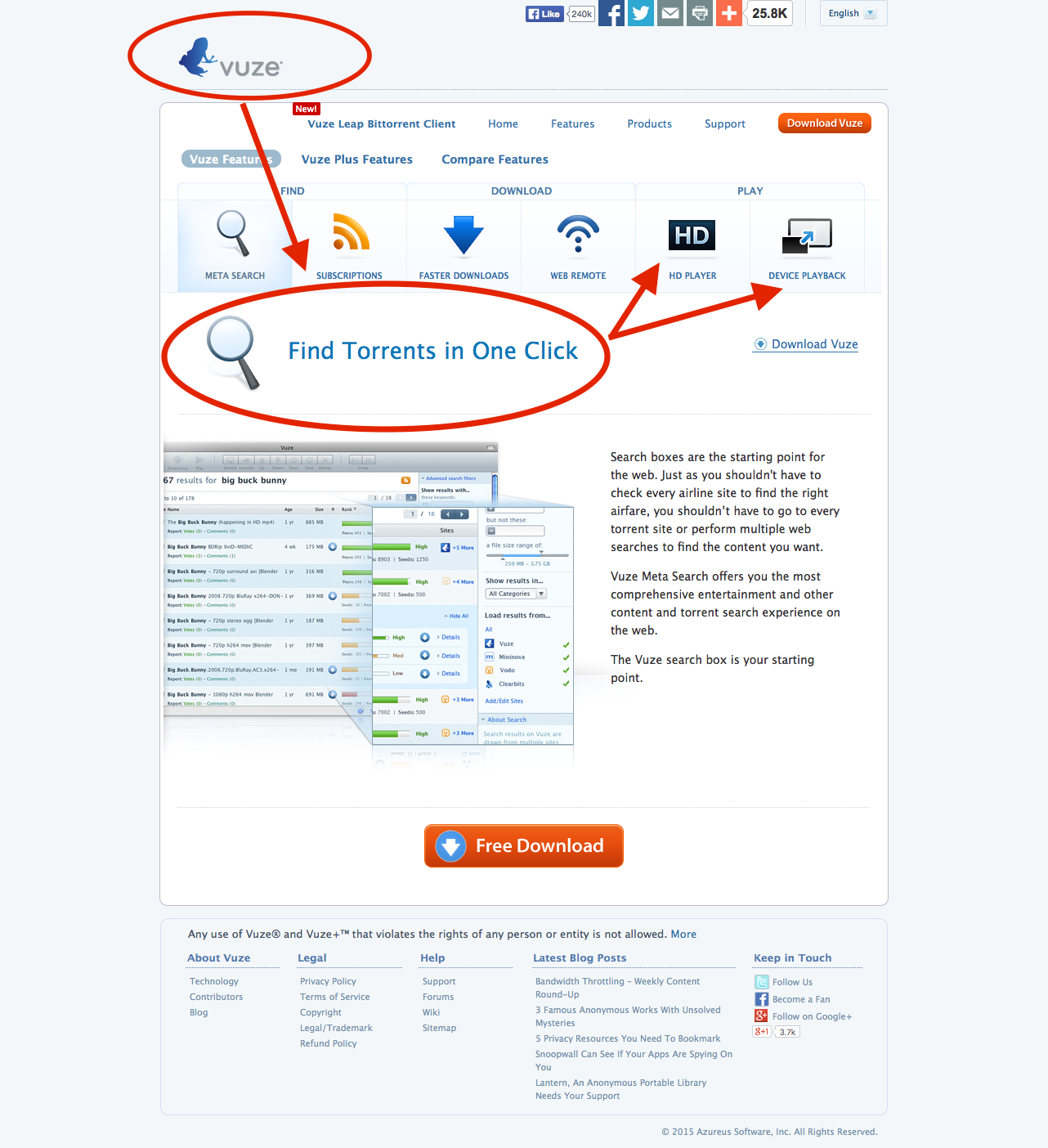
NPR CEO Jarl Mohn is a card carrying member of the dark side. He funded the  bittorrent piracy client Vuze not once but twice.  He was part of the B series round of $12 million and the C series round of $20 million.  And make no mistake Vuze is a key part of the piracy ecosystem.

Yeah yeah yeah, we heard it before:  “Vuze is just a tool and they don’t profit from piracy”  Bullshit.  Vuze profits directly from the illegal distribution of my material by knowingly serving advertising against it.

Allow me to demonstrate with the tracks from my latest album.

Screen Shot 2015-05-02 at 10.58.33 PM

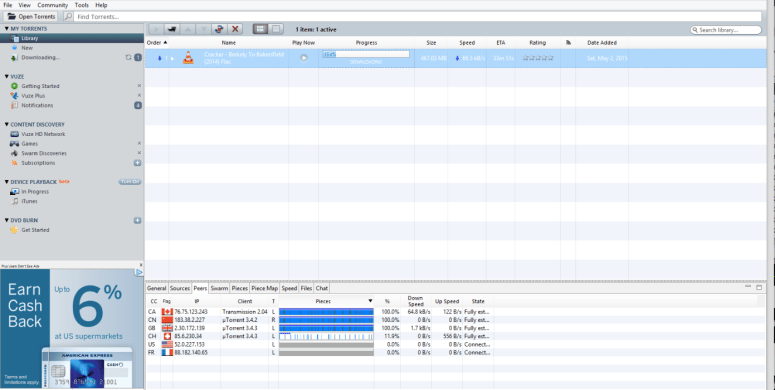
This is a screenshot of the Vuze client while downloading an unlicensed copy of my new album Berkeley to Bakersfield.  Down in the left hand corner there is an ad for American Express served by the publicly traded web advertising firm Quantcast. (Coincidentally a couple of years ago I privately defended Quantcast against similar charges, now I feel like a fucking idiot.)

To be clear this is not a webpage and ad exchange banner advertising. No one played some “tunneling” or DNS forwarding trick to make American Express and Quantcast think it wasn’t advertising on this site.  This advertising  is embedded into a piece of software that is used almost exclusively for downloading illegally distributed films music and pornography. How does American Express not know this? Quantcast? Or Jarl Mohn?

How did NPR come up with a CEO  with such questionable ethics?  This guy had to know what he was funding: A tool to infringe the rights of artists on global scale.  If not he’s really really dim.


Screen Shot 2015-05-02 at 7.34.39 PM


But it gets worse. The piracy advocating website Torrent Freak appears to be sponsored by the very same company: Vuze.   That’s right the piracy revolution will not be televised but it will be sponsored by amoral Silicon Valley Venture Capitalists.   You really thought Torrent Freak was an ideological true believer fighting for your rights to “share” against the man?  Nope looks they are the marketing department for the man who makes advertising money off of your sharing activity.  

Tool

Here’s a screenshot from the Torrent Freak website helpfully alerting it’s readers to availability of the leaked Game of Thrones Season 5 on Kick Ass Torrents and the Pirate Bay.   Look carefully at the code.  The ad for Vuze isn’t just randomly served by some online adexchange. It’s embedded into the site.  Someone had to go in and place that link and that JPG into the code.  Plus the visible text actually claims them a “sponsor.”

So you are really gonna tell me with a straight face that no money is changing hands here?  Vuze is not paying “Ernesto” the editor of Torrent Freak?  While Ernesto is pretty much inducing piracy and giving advice on how to avoid prosecution?

How is this not a conspiracy?  I mean conspiracy like  RICO Conspiracy (See details below).

And it all started with money from NPR CEO Jarl Mohn.

Fire this guy.

NPR affiliates, DJs, Journalists and independent public radio stations need to stand with artists against these assholes. Heres our olive branch.  Please join us.

Otherwise?

It’s Torches and Pitchforks time.  It’s not gonna be prett.y

+++++++++++++++++++++++++++++++++

STOP IF YOU DON’T WANT TO GO INTO A DEEP DIVE ON RACKETEERING AND CORRUPT ORGANIZATION (RICO) STATUTES.

+++++++++++++++++++++++++++++++++++++

I’m not a lawyer but the intent of the law seems pretty clear. To prevent groups of people-even if only informally organized-from engaging in coordinated criminal activity.  Specifically when it disrupts legitimate marketplaces like those for recorded music or online advertising.

“RICO is designed to attack organized criminal activity and preserve marketplace integrity by investigating, controlling, and prosecuting persons who participate or conspire to participate in racketeering.” Black’s Law Dictionary 1286 (8th ed. 2005).  

There are a host of organized “scams” that generally occur in the peer to peer advertising ecosystem including within the Vuze client. Maybe there are some prosecutors or litigators out there who can help me with this? Aren’t the following part of the RICO statute?

1)  Mass copyright infringement.

2) Advertisers publicly claim to not know where there ads are being served.  If this is true then there is fraud going on.  Someone along the way, advertising agencies, ad exchanges, and/or companies like Vuze are behaving improperly. Since it involves the online ad ecosystem wouldn’t this be Wire Fraud?

3) Uh… how do I say the obvious? P2P networks have a lot of pornography?  A lot!     I could be wrong, but I can’t imagine illegal pornography isn’t also being monetized with advertising as it’s transferred using the Vuze client.  How can you possible be allowed to make money off of illegal pornography and not be prosecuted?

4) Anyone visiting a site like The Pirate bay has probably noticed the relentless advertising for Russian or Asian Brides.  Human trafficking anyone?

5) These same sites often feature ads for third party websites that claim to enroll applicants into a  “US Green Card Lottery.”   The US has never used third parties for its “Diversity Visa” program and at the present time the US is not accepting applications for diversity visas.  All websites advertising for the 2017 lottery are highly suspect.  (An early version of this article made it seem as if the US never had a Diversity Visa or “Green Card Lottery” that was incorrect). 

Now check out the RICO definitions. My bold italics added.

18 U.S. Code § 1961 – Definitions:

As used in this chapter—
(1) “racketeering activity” means (A) any act or threat involving murder, kidnapping, gambling, arson, robbery, bribery, extortion, dealing in obscene matter, or dealing in a controlled substance or listed chemical (as defined in section 102 of the Controlled Substances Act), which is chargeable under State law and punishable by imprisonment for more than one year; (B) any act which is indictable under any of the following provisions of title 18, United States Code: Section 201 (relating to bribery), section 224 (relating to sports bribery), sections 471, 472, and 473 (relating to counterfeiting), section 659 (relating to theft from interstate shipment) if the act indictable under section 659 is felonious, section 664 (relating to embezzlement from pension and welfare funds), sections 891–894 (relating to extortionate credit transactions), section 1028 (relating to fraud and related activity in connection with identification documents), section 1029 (relating to fraud and related activity in connection with access devices), section 1084 (relating to the transmission of gambling information), section 1341 (relating to mail fraud), section 1343 (relating to wire fraud), section 1344 (relating to financial institution fraud), section 1351 (relating to fraud in foreign labor contracting), section 1425 (relating to the procurement of citizenship or nationalization unlawfully), section 1426 (relating to the reproduction of naturalization or citizenship papers), section 1427 (relating to the sale of naturalization or citizenship papers), sections 1461–1465 (relating to obscene matter), section 1503 (relating to obstruction of justice), section 1510 (relating to obstruction of criminal investigations), section 1511 (relating to the obstruction of State or local law enforcement), section 1512 (relating to tampering with a witness, victim, or an informant), section 1513 (relating to retaliating against a witness, victim, or an informant), section 1542 (relating to false statement in application and use of passport), section 1543 (relating to forgery or false use of passport), section 1544 (relating to misuse of passport), section 1546 (relating to fraud and misuse of visas, permits, and other documents), sections 1581–1592 (relating to peonage, slavery, and trafficking in persons)., [1] section 1951 (relating to interference with commerce, robbery, or extortion), section 1952 (relating to racketeering), section 1953 (relating to interstate transportation of wagering paraphernalia), section 1954 (relating to unlawful welfare fund payments), section 1955 (relating to the prohibition of illegal gambling businesses), section 1956 (relating to the laundering of monetary instruments), section 1957 (relating to engaging in monetary transactions in property derived from specified unlawful activity), section 1958 (relating to use of interstate commerce facilities in the commission of murder-for-hire), section 1960 (relating to illegal money transmitters), sections 2251, 2251A, 2252, and 2260 (relating to sexual exploitation of children), sections 2312 and 2313 (relating to interstate transportation of stolen motor vehicles), sections 2314 and 2315 (relating to interstate transportation of stolen property), section 2318 (relating to trafficking in counterfeit labels for phonorecords, computer programs or computer program documentation or packaging and copies of motion pictures or other audiovisual works), section 2319 (relating to criminal infringement of a copyright), section 2319A (relating to unauthorized fixation of and trafficking in sound recordings and music videos of live musical performances), section 2320 (relating to trafficking in goods or services bearing counterfeit marks), section 2321 (relating to trafficking in certain motor vehicles or motor vehicle parts), sections 2341–2346 (relating to trafficking in contraband cigarettes), sections 2421–24 (relating to white slave traffic), sections 175–178 (relating to biological weapons), sections 229–229F (relating to chemical weapons), section 831 (relating to nuclear materials), (C) any act which is indictable under title 29, United States Code, section 186 (dealing with restrictions on payments and loans to labor organizations) or section 501 (c) (relating to embezzlement from union funds), (D) any offense involving fraud connected with a case under title 11 (except a case under section 157 of this title), fraud in the sale of securities, or the felonious manufacture, importation, receiving, concealment, buying, selling, or otherwise dealing in a controlled substance or listed chemical (as defined in section 102 of the Controlled Substances Act), punishable under any law of the United States, (E) any act which is indictable under the Currency and Foreign Transactions Reporting Act, (F) any act which is indictable under the Immigration and Nationality Act, section 274 (relating to bringing in and harboring certain aliens), section 277 (relating to aiding or assisting certain aliens to enter the United States), or section 278 (relating to importation of alien for immoral purpose) if the act indictable under such section of such Act was committed for the purpose of financial gain, or (G) any act that is indictable under any provision listed in section 2332b (g)(5)(B);
(2) “State” means any State of the United States, the District of Columbia, the Commonwealth of Puerto Rico, any territory or possession of the United States, any political subdivision, or any department, agency, or instrumentality thereof;
(3) “person” includes any individual or entity capable of holding a legal or beneficial interest in property;
(4) “enterprise” includes any individual, partnership, corporation, association, or other legal entity, and any union or group of individuals associated in fact although not a legal entity;

screenshot-www vuze com 2015-05-03 18-48-20


screenshot-www crunchbase com 2015-05-03 18-46-16


Darth Vader not Available So NPR Hires Same Lawyer That Represents Pandora Against Songwriters

Screen Shot 2015-05-01 at 12.42.14 PM

How did we miss this before.  Just discovered this choice little gem on the Copyright Society website.  NPR has hired Ken Steinthal to represent them in the Copyright Royalty Board hearing (happening right now). As predicted looks like he is arguing for lower rates for NPR. (They already enjoy substantially lower rates than commercial radio). More on this later.   But this looks like a smoking gun to me.  NPR really has sold out artists.

Maybe @NPR Just Doesn’t Pay Vice President For Policy and Representation Enough

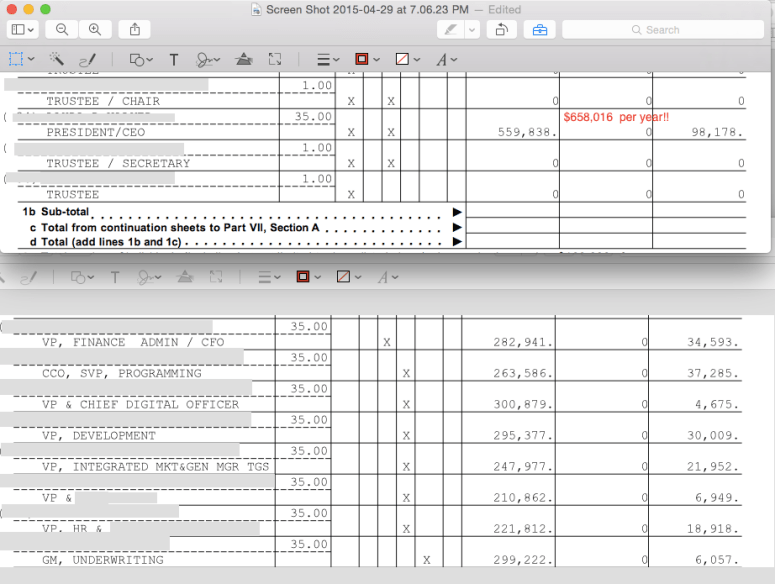
Screen Shot 2015-04-30 at 8.05.38 PMI have to say I was a little disappointed when I saw these figures.  This has to be the guy behind NPRs move to join the MIC-Coalition.org.   I mean even in the non-profit world of DC you’d think the Vice President for Policy and Representation would earn more than $211K a year.  I mean many of his colleagues are pulling down twice this amount.    Is it possible that NPR is in this mess because they just couldn’t afford to hire someone else?  I mean good Washington DC counsel doesn’t come cheap.   Maybe their move to join Pandora, Google, Clear Channel and the National Association of Broadcasters in urging congress to slash artists royalties is a sensible move after all!

Ah, it’s all fun and games until some local affiliate has a really shitty pledge drive.

Huh? Federally Funded and Chartered Public Radio Monopoly Needs “Monopoly” Protection From Songwriters?

The federally funded NPR has joined with major broadcasters and tech behemoths to form the  MIC-Coalition.org   One of the stated purposes of the organization is to keep songwriter performing rights organizations under the “temporary” 1941 DOJ  anti-competitive consent decrees.   Here is what the MIC Coalition website says:

The U.S. Department of Justice is reviewing the antitrust consent decrees that govern the Performing Rights Organizations (PROs) ASCAP and BMI, the organizations that license songs and collect royalties on behalf of rights holders like songwriters and publishers. These consent decrees promote fair music licensing while protecting music users, venues where music is played and music distributors from the anticompetitive behavior inherent to the PROs.

Notice that they don’t mention anywhere that ASCAP and BMI are non-profit “unions” of songwriters (songwriters produce goods so it’s not technically a union but more like a farm cooperative). It would sound a little different if NPR’s DC lobbyists explained that one minor detail, right?  They don’t. This is pure demagoguery,  so much for NPR’s much lauded reputation for fair reporting.

And That is really too bad because this isn’t an idea brought to you by the rank and file NPR journalist .  This is something that the real smart folks in the DC corporate headquarters dreamed up. You know the folks who do the real work.

Tellingly another important detail goes unreported. There are four competitive  “unions” of songwriters.   None of which have more than a 50% market share.  Meanwhile Pandora has more than a 70% market share.  Google/Youtube IS the online video monopoly and the Corporation for Public Broadcasting… well it’s a government chartered and funded public broadcasting monopoly ($445 million dollars in 2015).

I don’t understand this. I guess you need to be real Washington DC smart to understand why it’s necessary for the DOJ to protect monopolies from organizations of songwriters.

This entire effort by NPR national corporate headquarters is completely puzzling. No good will come to the NPR affiliates from this effort.  It’s simply tarnishing the NPR brand.  And isn’t that gonna hurt when the next pledge drive comes?

1) Public broadcasting stations already pay royalty rates much lower than commercial broadcasters.

2) Artist’s routinely and willingly support NPR stations by giving them rights to recordings in perpetuity. See NPR performance Contract.

3) Most of NPR’s programming expenses are in it’s executive salaries and non-musical programming. Further reducing artists royalties would make little difference.

4) Most of the financial benefits of royalty reductions would go to NPR’s corporate competitors.

5) Taxpayers give over $445 million a year to support public broadcasting.

What gives NPR? Why the corporate sell-out?

@NPR ‘s Pledge Drive for the National Association of Broadcasters, Pandora, Google and Clear Channel

Screen Shot 2015-04-29 at 9.38.43 AM

NPR has joined with a host of broadcasting and tech behemoths to lobby congress for lower royalties for artists. Well they don’t quite come out and say that,  there is a wishy washy statement about “affordability” but  coalition partners Pandora, NAB, Google, Clear Channel have relentlessly  lobbied for lower rates for artists and songwriters. Remember these are the same companies that lobbied to slash performer rates with the Orwellian named “Internet Radio Fairness Act.”   The act would have created “fairness” by slashing performers royalties up to 85%.  It’s not our fault that Silicon Valley firms can’t make a profit giving our music away for free while sucking out 1/2 billion dollars in executive stock compensation!  (Try selling music like Apple they don’t seem to be having any profit problems).

But I digress…

We are puzzled as to why NPR joined this fight.

1) Public broadcasting stations already enjoy lower royalty rates.

2) Artist’s routinely and willingly support NPR stations by giving them rights to recordings in perpetuity.  See NPR performance Contract.

3) Most of NPR’s programming expenses are in it’s executive salaries and  non-musical programming.  Further reducing artists royalties would make little difference.

4) Most of the financial benefits of royalty reductions would go to NPR’s corporate competitors.

5) Taxpayers give over $400 million a year to support public broadcasting.

What gives NPR?  Why the corporate sell-out?