“Rumor Has It” That Spotify May Stop Censoring and Start Segmenting

Music Technology Policy

The Wall Street Journal reports that Spotify is considering allowing the market to work so that artists can decide window their music between the Spotify free music service and Spotify’s subscription service.  Naturally, this decision to liberate artists from the bureaucrats in the Spotify Ministry of Culture will be welcome news although it may be limited to superstar artists.

The Journal reports:

In private talks, Spotify has told music executives that it is considering allowing some artists to start releasing albums only to its 20 million-plus subscribers, who pay $10 a month, while withholding the music temporarily from the company’s 80 million free users.

Spotify, initially, will try the new approach as a test, according to a person familiar with the matter. It wants to investigate how such a “windowed” approach might affect usage and subscription sign-ups. It also hasn’t decided which artist will get to withhold music from the…

View original post 599 more words

How Many More Records Could You Be Selling This Holiday Season If Your Album Wasn’t FREE Streaming?

happyholidays

Adele, Taylor Swift, Beyonce’, Coldplay and more artists are fully understanding the value of not giving away their work for free right out of the gate. This is especially important during the biggest consumer spending season of the year. Why would anyone with a solid fan base and known demand for their work give it away for free during most profitable window of the year? This then begs the question how many more records would you be selling this holiday season if your record was not available on free streaming platforms?

Spotify and other free streaming services should be structured more like Netflix. The film industry understands the value of strategic pricing in the context of time based value propositions. Friday night block buster movies are not available on Netflix at the same time for a good reason.

There has been a lot of good work and innovation by the film industry to create “day and date” titles that are available both in theaters and as video on demand at the time of release. However none of these are made available free to consumer on an advertising supported platform. In fact, all the major film and tv streaming services require payment of some kind, be it subscription (HuluPlus, Netflix, Amazon Prime) or transactional fees for rental or permanent download (Itunes, Amazon, Vudu).

“Or Else They’ll Steal It!”

The only argument that is ever made against the use of windows is that tired old song that they like to sing in Silicon Valley called, “Or Else They’ll Steal It.” The problem is of course, they’re already stealing it, and will continue to steal it until there are real consequences to not do so. But the film and tv industries are not listening to the song of Stockholm Syndrome. Instead the film and tv industries continue to innovate and experiment with new windows, digital distribution models and competitive pricing based on the new value propositions.

Converting consumers from “pirate 2 paid” is dependent upon giving consumers more value and pricing options, not less. If the record industry doubts this for even a split second the proof is expressed in a single word, “vinyl.”

By contrast the record industry has given away valuable profits to tech companies like Spotify who give little in return for the high value products that are being licensed. The ubiquity of distribution on streaming platforms drives the price of all products to zero.

Windowing allows for price elasticity and rewards consumers who are willing to spend more for the premier product or experience. Of course, for windowing to work there has to be a fair and regulated marketplace where artists and rights holders actually can withhold their work from various platforms should they chose to do so.

If we’ve learned anything at all in 2015 it is that YouTube is probably the single greatest threat to the ability of artists and rights holders to have a long term sustainable business. There can be no windows if everything appears on YouTube via User Pirated Content anyway. 

The grand irony here is that in a well controlled and regulated distribution system, it is far more likely that all stakeholders would have the ability to generate greater profits within their sectors. We now have a decade and a half of data behind us while heading towards the second half, of the second decade, of the new millennium. It’s time to for the adults to put an end to play time.  It’s just math and common sense.

Windows work. Period.

Business decisions need to developed through common sense, innovation and time tested principles of basic economics. We’ll repeat our previous suggestion for an industry wide, consistent windowing platform strategy below.

Windowing works better when there is a reasonable amount of consistency. Our friends in the film business have been highly effective at windowing for decades and there’s no reason why it can’t work similarly well for the record business.

Every new release should have the option to determine the release windows when the record is being set up. For example the default could be 0,30,60,90 day option for transactional sales, followed by 0,30,60,90 day option for Subscription Streaming prior to being available for Free Streaming.

Windowing is not new for the record business. The industry has never had pricing ubiquity across all releases, genres and catalogs. There has always been strategic and flexible pricing strategies to differentiate developing artists, hits, mid-line catalog, and deep catalog. An industry wide initiative to re-allign time proven price elasticity is the key to growing the business and developing a broad based sustainable ecosystem for more artists.

  • Windowing allows for Free Streaming to exist as a strategic price point.
  • Windowing allows for Subscription Streaming to exist as a strategic price point.
  • Windowing allows for Transactional Downloads to exist as a strategic price point.
  • Windowing allows for artists and rights holders to determine the best and most mutually beneficial way to engage with their fans.

Windowing is the key (as it always has been) in rebuilding a sustainable and robust professional middle class that will inevitably lead to more artists ascending to the ranks of stars. Some will become superstars and legends capable of creating the types of sales and revenues currently achieved by Adele, Taylor Swift and Beyonce’. To get there however we need to abandon Stockholm Syndrome and embrace windowing that works for everyone.


FREE Streaming is the Digital Cut-Out Bin. Artists You Deserve Better.

Cutouts

Today’s younger consumers who missed the glory days of the record store as a cultural hub will probably have little awareness of the cut-out bin. The cut-out bin was dreaded by artists and labels alike, but it served an important function in the ecosystem and economy of record sales. This was the rack in the record store where over manufactured titles made their last stop before the trash bin.

The cut-out bin was the last stop for an album, not the first stop. This is a very important consideration in today’s digital music economy. Artists, you deserve better service from your labels, management and partners.

Having your record appear in “the cut-outs” didn’t mean the album wasn’t successful, to the contrary, many of the records in cut-out bins were by well known name artists. Many of these records contained hit songs and singles. However, for whatever reason the quantities manufactured exceeded the markets ability to absorb those units into sales. At some point the decision was made to either monetize the overstock, or destroy the overstock.

The net result of the cut-out bin was that full length albums were often priced below the cost of a current 45 rpm single. However, this pricing distinction occurred at least a year or more after the initial release of the album. An album was “cut-out”after all of the front line sales, traditional discounts and higher margin retail channels had long been exhausted. Cut-out supplies were also limited and inconsistent. In other words, it was only the most patient and adventurous consumer who benefited from this deep discount.

Honestly, who would buy an album at full price if the same exact product (sans for the cut off top right corner) could be had for less than the price of current single?

So here we are a decade and a half into the new millennium and the best “new business model” for artists and rights holders in the 21st Century Digital Economy is to start at the last stop on the value chain?  You’re kidding us, right? We wish.

So how did we get here? Well, in three words “Ad Funded Piracy.” The lowest price for a product or service sets the price floor for all other comparable products. In the case of music that price has been set at about zero for over a decade and a half. But that’s not say there’s no money being made in the distribution of music online. No, there’s actually a lot of money being made by the Internet Advertising Networks supplying the advertising that fuels the corporate profits to over half a million infringing pirate sites.

It should also be noted that the CEO of the leading ad-funded, free to consumer streaming service was also the creator of the most successful ad-funded, bit-torrent client, u-torrent. Yup, that’s none other than Spotify’s Daniel Ek. Shocker, right?

Obviously, pirates and thieves are going to pirate and steal. These people should not be the first concern of business executives seeking to expand their profits on digital platforms. Enterprise level piracy requires the political will to enforce the law against egregious digital robber barons. Anti-Piracy is an “in addition to” action, not an “instead of” action. The future of the music business must be rooted in both innovation and advocacy.

Windows work. Period.

Business decisions need to developed through common sense, innovation and time tested principles of basic economics. We’ll repeat our previous suggestion for an industry wide, consistent windowing platform strategy below.

Windowing works better when there is a reasonable amount of consistency. Our friends in the film business have been highly effective at windowing for decades and there’s no reason why it can’t work similarly well for the record business.

Every new release should have the option to determine the release windows when the record is being set up. For example the default could be 0,30,60,90 day option for transactional sales, followed by 0,30,60,90 day option for Subscription Streaming prior to being available for Free Streaming.

Windowing is not new for the record business. The industry has never had pricing ubiquity across all releases, genres and catalogs. There has always been strategic and flexible pricing strategies to differentiate developing artists, hits, mid-line catalog, and deep catalog. An industry wide initiative to re-allign time proven price elasticity is the key to growing the business and developing a broad based sustainable ecosystem for more artists.

  • Windowing allows for Free Streaming to exist as a strategic price point.
  • Windowing allows for Subscription Streaming to exist as a strategic price point.
  • Windowing allows for Transactional Downloads to exist as a strategic price point.
  • Windowing allows for artists and rights holders to determine the best and most mutually beneficial way to engage with their fans.

Windowing is the key (as it always has been) in rebuilding a sustainable and robust professional middle class that will inevitably lead to more artists ascending to the ranks of stars. Some will become superstars and legends capable of creating the types of sales and revenues currently achieved by Adele, Taylor Swift and Beyonce’. To get there however we need to abandon Stockholm Syndrome and embrace windowing that works for everyone.

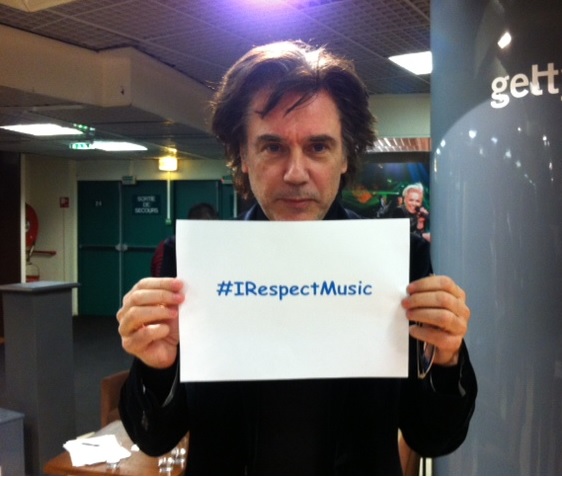
Coldplay Says #irespectmusic and Rejects Freemium: Mr. Ek, The Market Calling on Line One

Music Technology Policy

When the market shifts, it hardly ever happens all at once.  That’s because on a microeconomic level, a bunch of decision makers are making small decisions.  Successful entrepreneurs spot these small decisions before they become a trend, and react in a profit-centered way.  Observers notice that change.

It should surprise no one that Coldplay has rejected freemium on their new “Headful of Dreams” album release and Spotify’s pig headed response should also surprise no one, either.

Complete Music Update asks the question of why Spotify is painting itself into a corner:

Which brings us back to that old question: why doesn’t Spotify allow premiere league artists to window their new releases so that they become available to the service’s paying premium users first, subsequently arriving on freemium several weeks or months down the line? Because ‘A Head Full Of Dreams’, which is already available on premium-only streaming platforms like Apple…

View original post 546 more words

Quoted: Pandora CEO says free on-demand music streaming is bad | Silicon Beat

“This gray market is unsustainable. If consumers can legally listen to free on-demand music permanently without converting to paying models, the value of music will continue to spiral downward to the benefit of no one.”

Brian McAndrews, CEO of Pandora, in an op-ed published by Business Insider Tuesday.

Where have we heard this before? Now we wonder how long it may be until they acknowledge that Ad Funded Piracy Is Big Business?

READ THE FULL STORY AT SILICON BEAT:
http://www.siliconbeat.com/2015/12/02/quoted-461/


Streaming Is the Future, Spotify Is Not. Let’s talk Solutions.


Why Spotify is not Netflix (But Maybe It Should Be)


It’s Just Math : Digital Music Execs Exit, But will the Pivot to Paid Subs Be Enough To Save The Record Biz?

YouTube’s DMCA decision and the campaign to morph victims into villains | Vox Indie

YouTube will pay copyright court costs for a few users–not because it’s right–but to protect Google’s bottom line

According to a story in today’s NY Times, the folks at YouTube are ready to pony up cash to support some of its users “fair use” claims in court.

“YouTube said on Thursday that it would pick up the legal costs of a handful of video creators that the company thinks are the targets of unfair takedown demands. It said the creators it chose legally use third-party content under “fair use” provisions carved out for commentary, criticism, news and parody.”

You’ve probably read a lot about “fair use” lately.  It’s the Electronic Frontier Foundation’s mantra and if the folks there had their way, pretty much everything and anything would be considered “fair use.”  Fair use an important legal doctrine and when applied properly (criticism, comment, news reporting, teaching, scholarship, or research) is not an infringement of copyright.  However, these days, too often is used as a disingenuous defense for copyright theft.

READ THE FULL STORY AT VOX INDIE:
http://voxindie.org/youtube-covers-legal-costs-for-some-users/

Thom Yorke on the Disappointment of His Bit Torrent Experiment

Music Technology Policy

Remember when Bit Torrent, Inc. (Daniel Ek’s former employer) was trying to get higher value advertising…oh, sorry…was trying to demonstrate that they were all things pure and high minded because Bit Torrent was really designed to leverage their huge user base derived from piracy…sorry…Bit Torrent Bundle was really designed to help artists find an audience?

Remember when Thom Yorke allowed himself to be used as a poster boy for Bit Torrent Bundle on his solo record “Tomorrow’s Modern Boxes”?  Ever wonder how that worked out?  Thom Yorke is interviewed by the Italian site Repubblica and fills us in.

Complete Music Update translates thusly in answer to the interviewer’s question was the Bit Torrent experiment successful:

“No, not exactly”, he said. “But, in fact, I wanted it to be an experiment. It was a reaction to everything that was going on. At the time, people were only talking about…

View original post 161 more words

Seabrook’s Stories About Money

Music Technology Policy

ROOSTER

I don’t believe in fairy tales, sermons, or stories about money, baby sister, but thanks for the cigarette.

From True Grit written by Joel Cohen and Ethan Cohen

seabrook 1

The author John Seabrook has written another extraordinary piece on Spotify for the New Yorker that one could charitably describe as struggling with truthiness.  But to paraphrase Mrs. Longworth, if you’re not feeling charitable, come sit next to me.

Of course this is not the first time Mr. Seabrook and the New Yorker have come to the rescue of the Darling of Goldman Sachs.  Who can forget John Seabrook’s puff piece on Daniel Ek that appeared in the New Yorker after Spotify’s Taylor Swift debacle.  That was an article that IPO underwriting syndicates like a whole lot more than…let’s just say reality.

That Daniel Ek piece had some howlers that belied what is increasingly appearing to be Mr. Seabrook’s self-directed…

View original post 973 more words

Mike Doughty Responds to John Seabrook at The New Yorker about Adele Doing Windows…

Musician Mike Doughty takes on the New Yorker’s anti-artist editorial “Who Is Really Paying for Adele?”. Seabrook argues that somehow Adele is cheating fans by not giving away her new, historical, record breaking album.

Seabrook’s piece reads like it was written by the Spotify PR dept with lines like this “Could it be possible that the record business, pursuing a strategy of inflating sales by keeping an album off Spotify, Apple Music, or Deezer, is choosing short-term profits over long-term growth?” No. It’s actually long term growth that is the goal of windowing. Variable pricing and pricing elasticity works for most business and has historically worked well for the record industry as well (see below).

Doughty’s response from Facebook can be seen here. You can share it directly via this link:
https://www.facebook.com/mikedoughty/posts/10154544998845200


DoughtyVSNYTimes

What is of particular interest is that it is people like Seabrook who chastise artists and the music industry even in the the light of Rdio going defunct and owing $220m to creditors and labels! Somehow the bad bubble math of Silicon Valley is what artists should be striving for? No. Enough.

WINDOWING THAT WORKS FOR EVERYONE

So what does this mean for the non-superstar artists? Very simply, windowing works. Windowing works better when there is a reasonable amount of consistency. Our friends in the film business have been highly effective at windowing for decades and there’s no reason why it can’t work similarly well for the record business.

Every new release should have the option to determine the release windows when the record is being set up. For example the default could be 0,30,60,90 day option for transactional sales, followed by 0,30,60,90 day option for Subscription Streaming prior to being available for Free Streaming.

Windowing is not new for the record business. The industry has never had pricing ubiquity across all releases, genres and catalogs. There has always been strategic and flexible pricing strategies to differentiate developing artists, hits, mid-line catalog, and deep catalog. An industry wide initiative to re-allign time proven price elasticity is the key to growing the business and developing a broad based sustainable ecosystem for more artists.

  • Windowing allows for Free Streaming to exist as a strategic price point.
  • Windowing allows for Subscription Streaming to exist as a strategic price point.
  • Windowing allows for Transactional Downloads to exist as a strategic price point.
  • Windowing allows for artists and rights holders to determine the best and most mutually beneficial way to engage with their fans.

Windowing is the key (as it always has been) in rebuilding a sustainable and robust professional middle class that will inevitably lead to more artists ascending to the ranks of stars. Some will become superstars and legends capable of creating the types of sales and revenues currently achieved by Adele, Taylor Swift and Beyonce’. To get there however we need to abandon Stockholm Syndrome and embrace windowing that works for everyone.


Did Cox Communications Just Do the Dirty to Shareholders?

Last week Cox Communications lost its DMCA “safe harbor” defense against songwriters in BMG Rights Management’s lawsuit against Cox for failing to maintain a repeat infringer policy in Cox’s ISP business.  It has always seemed pretty obvious that an ISP running a “whack a mole” business requiring songwriters and artists to send repeated DMCA notices shouldn’t get the protection of the safe harbor if the law was working the way it should.  Finally a U.S. federal judge things so, too.

As we are often told by Big Tech, the DMCA safe harbors were a negotiated balance, a “grand bargain.”  What usually comes next is some spin that would have you believe that the “notice and takedown” operates as a kind of “tag you’re it” functionality that allows certain anointed ones to get away with not doing the actual stealing, but providing the means for the stealing to occur.  You know, because the Internet.

But now it looks like at least Cox Communications executives might have a real problem on their hands depending on how the facts turn out in the BMG case.  Why?

As Professor Tim Wu taught us before he started working for the New York Attorney General:

If the Internet were not a bookstore, or tubes, but rather a red-light district, YouTube would best be imagined as the hotel, and Napster, well, the pimp. YouTube, like a hotel, provides space for people to do things, legal or not. It’s not doing anything illegal itself, but its visitors may be. But Napster, everyone more or less now admits, was cast as the pimp: It was mainly a means of getting illegal stuff.

To extend Professor Wu’s pimp allegory, in Cox’s case it is the ISP who is providing the means of getting illegal stuff, and Cox wants to hide behind the “grand bargain” of the DMCA in order to look less like that metaphorical pimp.  In a way, it’s actually more complex than that.  According to Cox’s insurance carrier that is suing Cox to get out of any coverage, Cox’s executives intentionally failed to implement a repeat infringer policy.  The burden of implementing that policy is what ISPs take on in return for the benefit of the safe harbor.  The “grand bargain,” remember?

This notwithstanding the fact that BMG gave Cox many opportunities to get out of the middle.  Although Cox received far fewer DMCA notices than Google has, by failing to adopt a meaningful repeat infringer policy, Professor Wu might say that Cox has pimped its way to do the opposite of what the Congress intended with the DMCA’s repeat infringer requirement.  Or that seems to be clear to Cox’s insurance carrier who ought to know.

This is the real significance of the ruling and why notice and stay down is both vital to artists and entirely consistent with the goals of Congress when drafting the DMCA.

Continuing the criminal motif, Mr. Wu’s new boss, New York Attorney General Eric T. Schneiderman, had this to say in an op-ed that could easily have been written about Cox and certainly could at least be applied to ISPs:

Regulators should not be deterred and, as a practical matter, they can’t and won’t be — we are now living in an online world, one that offers great promise but is also becoming one of the primary crime scenes of the 21st century. Major service providers cannot be allowed to treat it as a digital Wild West. The only question is how long it will take for these cybercowboys to realize that working with the sheriffs is both good business and the right thing to do.

There is, however, a new face at the table now that Cox has both lost the protection of the safe harbor and may well be denied coverage by their insurance underwriter at Lloyds of London.  That face is Cox’s stockholders.

Lloyds is already trying to get out of paying Cox’s legal bill which appears to be north of $1 million already with trial starting next week.  Why is Lloyds denying coverage?  Because Lloyds quite correctly says it won’t insure Cox for its intentional refusal to comply with the DMCA for largely the same reason that the DMCA has a repeat infringer requirement in the first place.  If you try to do it right and screw up, you can get insurance or you might be entitled to the safe harbor (and you can probably more easily get insurance if you promise to comply with the safe harbor).  You cannot insure your way out of doing something that is purposely bad behavior.

The Hollywood Reporter tell us:

According to Lloyds’ complaint filed in New York Supreme Court, Cox has been told that its insurance policy doesn’t cover the BMG claim because it “arose out of intentional and not negligent acts” and “did not arise out of acts in rendering internet services but rather Cox’s business policy and practice of ignoring and failing to forward infringement notices and refusing to terminate or block infringing customers’ accounts.”

….It’s one thing for an ISP to put up a brave front — and maybe even win some goodwill among customers by fighting those like Rightscorp — but to do so with neither safe harbor nor possibly insurance raises the risk level quite substantially. Time will tell if this is a game-changer on the piracy front.

May be–but what this means is that the individual conduct of Cox Communications executives has now put the company’s shareholders on the hook for what could be massive copyright infringement damages for failing to implement a practice that’s not much more complicated than what you would expect from a university network.

Remember when Google paid a fine of $500,000,000 of the stockholders’ money to keep its senior executive team (many of whom are insider board members) from being criminally prosecuted for violating the Controlled Substances Act?  Google stockholders sued Google’s board members for breach of fiduciary duty and a bunch of other nasty things.

The argument goes like this:  We hired you executives to comply with the law.  If you choose to operate outside of the law that is your business, but you can’t use our money to pay for your bad behavior.  Cox Communications is the 17th largest private company in America, so we would have to assume that there are some institutional investors who hold shares of Cox and who are not too pleased about the pimping part.