Darth Vader not Available So NPR Hires Same Lawyer That Represents Pandora Against Songwriters

Screen Shot 2015-05-01 at 12.42.14 PM

How did we miss this before.  Just discovered this choice little gem on the Copyright Society website.  NPR has hired Ken Steinthal to represent them in the Copyright Royalty Board hearing (happening right now). As predicted looks like he is arguing for lower rates for NPR. (They already enjoy substantially lower rates than commercial radio). More on this later.   But this looks like a smoking gun to me.  NPR really has sold out artists.

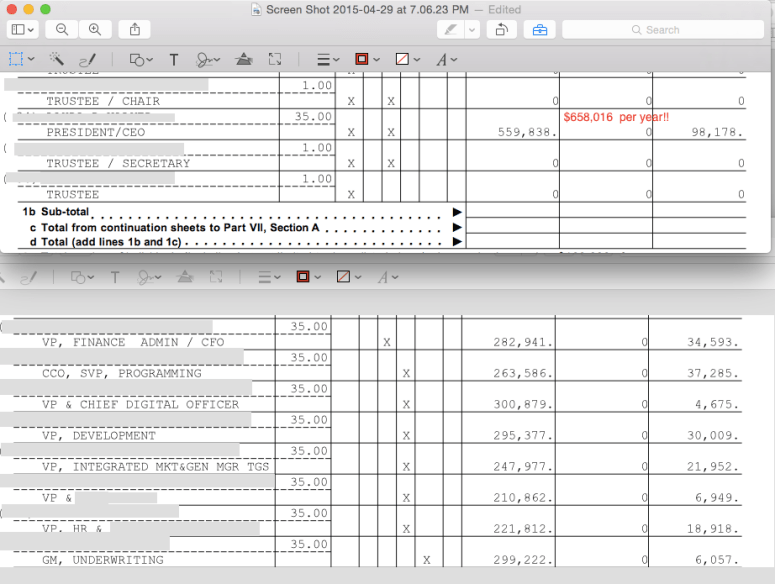
Maybe @NPR Just Doesn’t Pay Vice President For Policy and Representation Enough

Screen Shot 2015-04-30 at 8.05.38 PMI have to say I was a little disappointed when I saw these figures.  This has to be the guy behind NPRs move to join the MIC-Coalition.org.   I mean even in the non-profit world of DC you’d think the Vice President for Policy and Representation would earn more than $211K a year.  I mean many of his colleagues are pulling down twice this amount.    Is it possible that NPR is in this mess because they just couldn’t afford to hire someone else?  I mean good Washington DC counsel doesn’t come cheap.   Maybe their move to join Pandora, Google, Clear Channel and the National Association of Broadcasters in urging congress to slash artists royalties is a sensible move after all!

Ah, it’s all fun and games until some local affiliate has a really shitty pledge drive.

Why NPR Should Stand With #irespectmusic

National Public Radio stations around the U.S. have long been great friends and allies of artists.  Artists have long been great friends and allies of National Public Radio stations.  The friendship has been based on a bona fide mutual admiration.  The stations are tastemakers and the artists give the stations something to make taste about.

Make no mistake–this is what makes NPR different from Clear Channel, Pandora and Google.  We know that there are real music people at NPR stations and we are willing to do things for NPR that we would never do for the others.  Including work for free as David has said.  Including fight with our labels to let us work for free because NPR stations actually play new music.  We cut NPR stations a tremendous amount of slack and they return the favor by playing new music.  They are cool people.

This is why it seems so idiotic for NPR to take a side against artist pay for radio play by agreeing to be a human shield for “Mic Coalition” featuring Amazon, Google, Pandora, Clear Channel (iHeartMedia) and the lobbying groups Computer & Communications Industry Association, Consumer Electronics Association, the National Association of Broadcasters and the Digital Media Association.  Yes, NPR is leading the way to stand with North Korea, Iran and Rwanda and continue to deny fair compensation to artists for radio airplay.

Clear Channel, Pandora, Amazon, Google, CEA, CCIA, DIMA–we know who these people  are.  While they may not overtly loathe us, we are just a commodity to them.  We could just as well be soap.  If Clear Channel could get away with never playing a new record they’d do it.  Amazon owes its start to authors and artists, and all they’ve done is try to screw us ever since.  Pandora’s shenanigans are well known–especially since they recruited songwriter enemy #1 Chris Harrison–and Google’s indifference to artists rights was appallingly crystalized with their mistreatment of Zoë Keating.  These are not and never will be cool people.  They stab us in the back all the time, so we’re used to that treatment from them.  And after all–Clear Channel’s biggest threat is to continue not playing our records.  NPR is different, though.

So you have to ask what is sadder than someone who used to be cool.  Maybe someone who wants to stand with North Korea.  Maybe someone who wants to make sure that artists don’t get paid for radio play now or ever.

We notice when these people stab us in the back.  We thought they were our friends.  That’s why they got the freebies.  Maybe if they’re going to act like Clear Channel they should get treated like Clear Channel?

But here’s the thing about it–we’re not quite ready to believe yet that these people who are so committed to music have thrown us under the bus.  Here’s what we know–unlike Tim Westergren, they’re not sitting around thinking about it in a 13 bathroom house.

We’re also not ready to believe that NPR’s reporters are ready to abandon their journalistic principles either.  Because make no mistake–they can’t hold their heads up and report on this story when they are part of the story.  They’re not objective.  They’ve been coopted and corporatized.  And we bet nobody in the NPR powers that be bothered to ask them.

No, what we have to believe has happened here is that some suits inside the NPR organization have decided to throw their entire music and news teams under the bus.  These dimwitted suits have been lured into this “coalition” by some of the richest companies in the history of commerce that have no cultural connection to NPR whatsoever.  And make no mistake about this, either–the currency they used to buy their way into this “coalition” is the goodwill of NPR’s music and news divisions.  That’s right–our friends in music and news have been commoditized every bit as much as Pandora & Co. want to commoditize us and they’ve been sold down the river, too.

We think that’s exactly what happened and that, dear readers, is some real inside the Beltway skullduggery.  That is some low down bullshit.

So we hold out a hand to our friends and say join us in this fight.  Join us tonight.  Our cause is just and the time is now.  We would be proud to stand with you if you would have us.

Huh? Federally Funded and Chartered Public Radio Monopoly Needs “Monopoly” Protection From Songwriters?

The federally funded NPR has joined with major broadcasters and tech behemoths to form the  MIC-Coalition.org   One of the stated purposes of the organization is to keep songwriter performing rights organizations under the “temporary” 1941 DOJ  anti-competitive consent decrees.   Here is what the MIC Coalition website says:

The U.S. Department of Justice is reviewing the antitrust consent decrees that govern the Performing Rights Organizations (PROs) ASCAP and BMI, the organizations that license songs and collect royalties on behalf of rights holders like songwriters and publishers. These consent decrees promote fair music licensing while protecting music users, venues where music is played and music distributors from the anticompetitive behavior inherent to the PROs.

Notice that they don’t mention anywhere that ASCAP and BMI are non-profit “unions” of songwriters (songwriters produce goods so it’s not technically a union but more like a farm cooperative). It would sound a little different if NPR’s DC lobbyists explained that one minor detail, right?  They don’t. This is pure demagoguery,  so much for NPR’s much lauded reputation for fair reporting.

And That is really too bad because this isn’t an idea brought to you by the rank and file NPR journalist .  This is something that the real smart folks in the DC corporate headquarters dreamed up. You know the folks who do the real work.

Tellingly another important detail goes unreported. There are four competitive  “unions” of songwriters.   None of which have more than a 50% market share.  Meanwhile Pandora has more than a 70% market share.  Google/Youtube IS the online video monopoly and the Corporation for Public Broadcasting… well it’s a government chartered and funded public broadcasting monopoly ($445 million dollars in 2015).

I don’t understand this. I guess you need to be real Washington DC smart to understand why it’s necessary for the DOJ to protect monopolies from organizations of songwriters.

This entire effort by NPR national corporate headquarters is completely puzzling. No good will come to the NPR affiliates from this effort.  It’s simply tarnishing the NPR brand.  And isn’t that gonna hurt when the next pledge drive comes?

1) Public broadcasting stations already pay royalty rates much lower than commercial broadcasters.

2) Artist’s routinely and willingly support NPR stations by giving them rights to recordings in perpetuity. See NPR performance Contract.

3) Most of NPR’s programming expenses are in it’s executive salaries and non-musical programming. Further reducing artists royalties would make little difference.

4) Most of the financial benefits of royalty reductions would go to NPR’s corporate competitors.

5) Taxpayers give over $445 million a year to support public broadcasting.

What gives NPR? Why the corporate sell-out?

@NPR ‘s Pledge Drive for the National Association of Broadcasters, Pandora, Google and Clear Channel

Screen Shot 2015-04-29 at 9.38.43 AM

NPR has joined with a host of broadcasting and tech behemoths to lobby congress for lower royalties for artists. Well they don’t quite come out and say that,  there is a wishy washy statement about “affordability” but  coalition partners Pandora, NAB, Google, Clear Channel have relentlessly  lobbied for lower rates for artists and songwriters. Remember these are the same companies that lobbied to slash performer rates with the Orwellian named “Internet Radio Fairness Act.”   The act would have created “fairness” by slashing performers royalties up to 85%.  It’s not our fault that Silicon Valley firms can’t make a profit giving our music away for free while sucking out 1/2 billion dollars in executive stock compensation!  (Try selling music like Apple they don’t seem to be having any profit problems).

But I digress…

We are puzzled as to why NPR joined this fight.

1) Public broadcasting stations already enjoy lower royalty rates.

2) Artist’s routinely and willingly support NPR stations by giving them rights to recordings in perpetuity.  See NPR performance Contract.

3) Most of NPR’s programming expenses are in it’s executive salaries and  non-musical programming.  Further reducing artists royalties would make little difference.

4) Most of the financial benefits of royalty reductions would go to NPR’s corporate competitors.

5) Taxpayers give over $400 million a year to support public broadcasting.

What gives NPR?  Why the corporate sell-out?

Breaking: Pandora’s IRFA Lobbyists Return for the Astroturf Reheat in NPR Alliance Against Artist Rights

More to follow:

Is @NPR “Bearding” for National Association of Broadcasters @nabtweets, Pandora and Google?

See todays earlier story:

Will @NPR still #IRESPECTMUSIC and @allsongs After Joining Dark Side Coalition?

You can’t get much lower than “free and in perpetuity.”   NPR already enjoys an enormous subsidy from artists. Plus many of us contribute directly to our local NPR affiliates. Why is NPR “bearding” for Google PandoraClear Channel and National Association of Broadcasters?

Here is a contract for a recorded live performance on one of the flagship NPR stations.   We artists happily sign these contracts because we believe in the public good that NPR provides.   We help subsidize your stations. I  have signed almost this exact contract on dozens of occasions.  Why are you stabbing artists in the back? We are on your side.  You think NAB, Clear Channel and the libertarians of Silicon Valley are gonna support public radio?

Screen Shot 2015-04-29 at 2.35.51 PM


Will @NPR still #IRESPECTMUSIC and @allsongs After Joining Dark Side Coalition?

Screen Shot 2015-04-29 at 9.38.43 AM

Gee this wasn’t coordinated at all. Two new Astroturf (squared) organizations in two days (with possibly the same web designer?)  The day after the announcement of the the new ReCreateCoalition, an AstroTurf organization composed almost exclusively of Google connected Astroturf organizations,   some of the same companies plus The National Association of Broadcasters, I Heart Media (Clear Channel)  Pandora and NPR have announced the creation of the MIC-Coalition in order to lobby AGAINST fair digital royalties to artists; AGAINST terrestrial royalty for performers,  and to keep songwriters under the oppressive and unconstitutional DOJ consent decrees.  Read the website it’s unbelievable.   Why the hell did NPR join?

Does NPR really want to have this fight with artists? Cause we are ready.

NPR: Do you think it’s fair that the US is one of the only industrialized nations to not pay performers for terrestrial broadcast?

NPR: Do you think it’s fair that ASCAP songwriters are kept under the 1941 anti-monopoly  DOJ consent decree which forces them to give special treatment to companies that look very much like monopolies  (YouTube/Google, Pandora, NAB etc)?

NPR: You realize that you get an artificially low rate from songwriters and performers right?  Largely because there is/was goodwill between us.  Do you want us to lobby the CRB to make you pay the same as everyone else? Also aren’t there still a bunch of public broadcasting haters in congress?

Answer us. We’re waiting.

Innovation: Did Google Just Launch a New Astroturf Organization Made Out of Own Astroturf Orgs?

A new astroturf organization called the Recreate Coalition just launched in Washington DC.   Here’s the press release!

<Yawn>

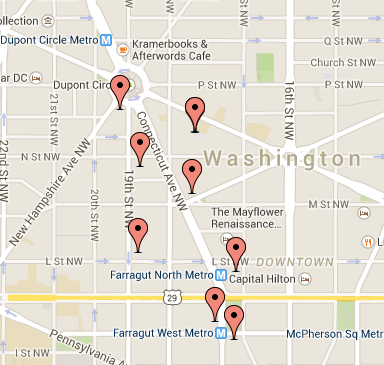
But wait you should be really excited because this is essentially an astroturf organization created out of other Google connected astroturf lobbying organizations. Almost all located within a few blocks of each other!  Now that is innovation!  While Apple is still stupidly producing iPhones and increasing net profit 33% a year,  Google is running circles around Apple by creating new ways to pretend like they are NOT influencing anyone in Washington DC.  You know kind of like how they were “hands off” in the Net Neutrality debate.**

EFF?  CCIA? CEA? CDT? MDF*? Public Knowledge?   Are we getting the band back together?  Is this a reunion tour?  Well maybe not,  ’cause the ALA isn’t a Google astroturf organization (yet), but then again they also receive  substantial funding and support from Google.

Hmm… so maybe this is more like a 80’s supergroup.  Some old tired-assed DC lobbyists plus some slightly younger librarians.  Brilliant! Green light that shit! We need a name!  Let’s see Asia is taken…  The Traveling Wilburys taken…Mississippi Google Amicus Brief? too obscure… Why don’t we call it  ReHeatCoaliton.org!  Cause you know it’s just something new made out of leftovers.  (Go ahead it’s safe to click on that link.)

Here is how you can tell if I’m right, that this is simply Google astroturf squared.   If this new coalition advocates anything that is somehow substantially different from what these organizations and Google haven’t already advocated then I’m wrong.  And If so I will personally come to your house and wash your car if you are the first prove I’m wrong.

But you know I’m not wrong.  You know I won’t be washing any cars.

Screen Shot 2015-04-28 at 10.27.12 PM

Recreate Coalition’s “Diverse Group”

+++++++++++++++++++++++++++++++++++++++++++++++++++++++++
*MDF.  Media Democracy Fund is the sugar daddy of the “grassroots” Fight For The Future which fought for net neutrality and against SOPA. And I do mean sugar daddy cause they’ve funded them to the tune of millions of dollars (between SOPA and NN). They have to be FFF’s main donor. HTF is that grassroots?   But look at MMF  list of grants again and look at the Google Policy Fellowship list (now and over the years) and tell me with a straight face that they are not somehow part of the Google un-Lobby™ network.

**Seriously?  You think Google were hands off? C’mon guys…I’ve got some swampland to sell you.   Look I’m Net Neutrality agnostic.  It’s a well intentioned idea. I’m definitely for the idea behind net neutrality. Depending on how it’s implemented it might be a good law. But another law, the law of unintended consequences comes to mind.  That’s all I’ll say.