
TWITTER HASHTAG FEED HERE #irespectmusic
https://twitter.com/search?q=%23irespectmusic&src=typd
The “Bad Romance” of Musicians and Silicon Valley : Happy Valentines Day
You’ve heard this story before, or actually – you’ve seen the movie. This is like a John Hughes film the 80s. You know the ones about High School Romance. The plot lines from these movies remind us a lot of the bad romance between Silicon Valley and Musicians over the last decade or so.
You’ve heard this one before…Before the internet musicians had a largely dysfunctional but not entirely bad relationship with record labels, like the self obsessed jock. Labels would wine and dine artists, buy them gifts, lure them back to the fancy label HQ and fawn all over them. This love affair would usually continue through the making of the record and up and until the album was released. After that, the honeymoon period would be over and disagreements over money and creative issues would start to surface. Eventually, artists would become increasingly dissatisfied with their partner and the dirty laundry would become public. Labels would be accused of taking the artist for granted, not giving them enough attention and be unresponsive to their needs.
Then one day, the Silicon Valley drives up the school in a shiny new Ferrari convertible, music blasting, well dressed and charming. Silicon Valley says all the right things to artists, “labels are bad news, they don’t appreciate you.” Artists are wooed by the possibilities of their wind blowing in the air in the passenger seat of the Ferrari on their way to a better future. Silicon Valley tells the artists that not only do they not need the labels, but Silicon Valley will empower the artist to be truly independent. The artist, enamored with this world of possibility and opportunity joins hand in hand with Silicon Valley. And all seems well, for a while…
Over time the artist seems to notice that things are not really getting better. Silicon Valley becomes less available to the artist and less responsive than the label. Making maters worse, Silicon Valley insists the artists path to freedom is self reliance, and Silicon Valley refuses to support the artist unless the artist is willing to do more work from themselves.
The artist starts to reflect on the relationship with the label. The label paid for dinners, bought them gifts, and offered support. Silicon Valley made a lot of promises but never actually delivered. Silicon Valley had become more demanding, and refuses to communicate with the artist in any way other than barking orders and suggesting that the artist use their primary asset to make money on their own, unless they want to give up their new found freedom.
As the plot develops we see that Silicon Valley’s wealth has been earned by going from town to town and helping artists join the worlds oldest profession for “personal empowerment.” Of course, Silicon Valley connects the artists to customers and controls the flow of revenue to the artist. If the artist protests, Silicon Valley gets very angry and berates and bullies the artists with insults and threats of poverty.
The artist reflects on what Silicon Valley “freedom” really is and decides to speak up and speak out to help other artists break free of the exploitation they have experienced. As the Prom approaches the label and the artist make fleeting eye contact passing in the hallway. In the end the artist, having had the experience of being with both the label and Silicon Valley arrives at the prom empowered, with other artists, and hopeful for a better future.


Google pretends to care about human rights | Vox Indie
It’s not the message, but the messenger–a hypocrite to its very corporate core. If Google as a company truly believed in “human rights” why does it continue to disregard the rights of artists at every turn? Perhaps those who doodle for Google might want to review the United Nation’s Universal Declaration of Human Rights (Article 27, paragraph 2) which includes this passage:
(2) Everyone has the right to the protection of the moral and material interests resulting from any scientific, literary or artistic production of which he is the author.
Why is Google so keen on “fair play” and the rights of athletes to compete, but when it comes to artists, not so much?
READ THE FULL STORY AT VOX INDIE:
http://voxindie.org/google-lgbt-olympic-doodle-opportunism
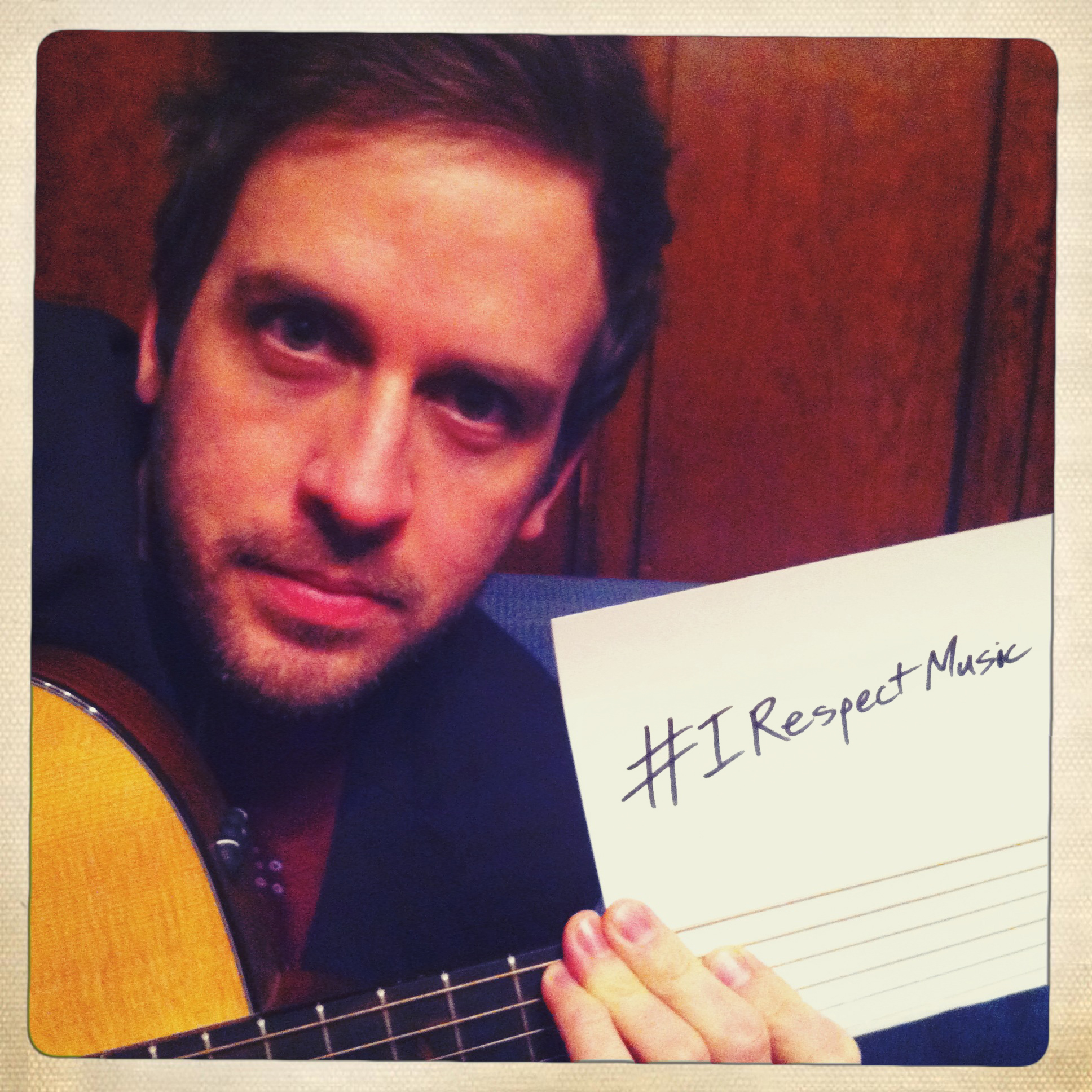
Washington Turned a Deaf Ear to Artists’ Rights Until One Guy Wrote The Words “I Respect Music” on an Index Card and Showed It to the World | Digital Journal
The Washington beltway turned a deaf ear to artists’ rights until one guy, one activist, wrote the words “I Respect Music” on an index card and showed it to the world.
Now, thousands upon thousands of music makers and music lovers are standing together and making history by adding their names to a petition that is not only shaking up the music world, it’s shaking up Congress.
To sign the petition, please visit http://www.irespectmusic.org.
#irespectmusic
READ THE FULL STORY DIGITAL JOURNAL:
http://www.digitaljournal.com/pr/1729302
Jean Michel Jarre: ‘Artists are the collateral damage of the tech giants’ | The Guardian UK
The ‘monsters’ of Google, Facebook and the tech giants need to work with musicians, the electronic music star said, to develop new ways of protecting creative property.
Jean Michel Jarre has called on music artists to work with the world’s most powerful technology companies, urging them to explore new ways of making money for their work.
“We are the people creating the future – not manufacturers of computers or cables. We are the extraordinary,” Jarre told the Guardian. “[The lack of enforcement of] intellectual property is not just a problem for artists from Europe and America – it’s a global problem . It’s one of the strongest elements of what democracy is all about.”
READ THE FULL STORY AT THE GUARDIAN UK:
http://www.theguardian.com/technology/2014/feb/05/jean-michel-jarre-smartphone-google-creators
RELATED:
Google, Advertising, Money and Piracy. A History of Wrongdoing Exposed.
Two Simple Facts about Technology and Piracy : iTunes Vs. YouTube
If the Internet is working for Musicians, Why aren’t more Musicians Working Professionally?
The Music Industry’s YouTube Problem | Music Ally
“Google are not music people, and that scares me.” This single quote from Colin Daniels, of Australian independent music firm Inertia, summarised a whole conference worth of anti-Google unrest at this year’s Midem, which spilled over onto YouTube too.
Whenever a YouTube exec appeared in a panel session, they were put on the defensive about the company’s approach to music and creators, often by pointed questions from audience members – and on one occasion, angry heckling.
After the last year of Spotify taking constant flak over streaming’s value to artists, at Midem that company was being praised – “everyone there are music people,” said Daniels before making his Google comment in a session on indie label strategies – while YouTube (and, more surprisingly, Facebook) were being attacked.
Music good, Big Tech evil. We’ve been writing about this clash for years now, but it was more open and more emotional than we remember at any previous Midem. Yet we also found a more positive, if challenging takeaway from this year’s conference: the music industry can shed its victim status and make these Big Tech platforms work better for rightsholders and creators.
READ THE FULL STORY AT MUSIC ALLY:
http://musically.com/2014/02/07/music-allys-midem-recap-the-music-industrys-youtube-problem/
RELATED:
Meet the New Boss: Google’s Kent Walker Shows Us What Monopoly Looks Like
Kent Walker’s Grooveshark Problem
Worshiping the Great God Scale: Google’s Four Great Lies as read to you by Kent Walker
Poll :First Tech/Copyleft Blog to Praise “Dumb Starbucks”
If you haven’t seen this, someone has opened a “parody” of a Starbucks in Los Feliz. The FAQ posted at the store claims that it is “fair use” and protected by “parody law” (whatever that is.) While this may turn out to be simply a “dumb” marketing strategy or clever piece of performance art we can’t help but notice quite a few Copyleft buzzwords. Also the specific Weird Al song mentioned should raise some eyebrows among copyright lawyers. So regardless, intended or not we are certain this will be Tech/Copyleftblog fodder for the next two weeks.
http://www.scpr.org/news/2014/02/08/42085/dumb-starbucks-coffee-shop-opens-in-los-feliz/
So might as well have a little fun and guess who will be the first tech/copyleft blog to cover this “spontaneous” event.
Music Thievery Laid Bare : When Pirates Rip Off Working Class Artists : Guest Post by David Cloyd
The naked truth of how music piracy hurts working class artists
Let’s face it. “Piracy” is a loaded word. As Captain Phillips played in theatres last fall, the word “pirate” found itself in a very different context than it did right after any of the Pirates Of The Caribbean movies. Real-life pirates aren’t funny, quirky, eccentric characters based on Keith Richards. They’re terrifying criminals with a desperate bottom line. And while a lot of people may enjoy dressing up as Captain Jack Sparrow for Halloween, nobody wants to be mistaken for an actual Somali pirate.
So maybe it’s time we all took a second look at “music piracy.”
Defined typically as an act of robbery or criminal violence at sea, “piracy” was initially used as slang for copyright infringement because the “pirates” in question were trying to profit from the crime by reselling the product. As the recording industry evolved beyond vinyl, it became much easier for music to be copied for personal enjoyment, and as federal legislation dictated, a mandatory fee was tacked on to the price of blank audio to help account for the loss. What’s more, copying music—or anything else—came at a substantial loss of quality.
But with the birth of digital music, the Internet, peer-to-peer networks, and now the behemoth of social media, there is no such safety net. Digital copies don’t require a physical copy and are indistinguishable from the originals. Coupled with the fact that most people today listen to music on computers instead of stereo systems, it shouldn’t surprise anyone that even major radio stations play low-quality mp3s without anyone noticing.
When the “pirate” station Radio Caroline hit the airwaves in the UK in 1964, it did so with the rebellious attitude of rock n’ roll. They broadcast from a Danish ship just outside English territorial waters, but the metaphor stops there. Their self-perceived purpose was much closer to Robin Hood’s—to steal from the rich (circumvent the monopolies of popular broadcasting) and give to the poor (supply the people with great music from great artists they wouldn’t have heard otherwise). They were the rebel alliance, a small band of freedom fighters mounting a hopeless attack against a domineering and impenetrable station.
In a similar fashion, today’s exuberant supporters of “music piracy” are not advocating profiteering at the expense of artists and musicians. Today’s “pirates” see themselves as modern-day Robin Hoods, fighting against corporate greed and the tyranny of the big bad music industry. They are fighting for a perceived right to access music and share it with their friends in the same way they share every other aspect of their daily lives. Their lives aren’t analog anymore—they’re digital, and for them, digital means free.
Sadly, today’s pirates may act the irreverent hero and plead the helpless victim, but in fact, they play only the hapless villain. In their minds they’re valiantly battling the same big bad corporate music industry, and though they’ve wounded their sworn enemy in a way pirate radio could have only dreamed of, the collateral damage for artists is just as bad.
To make matters worse, while these same so-called pirates are each saving the price of a few coffees at Starbucks each month, they’re unintentionally aiding and abetting a global army of parasitic digital King Johns who are collectively making billions each year by stealing from the rich and the poor—opportunistic vultures circling the battlefield, feeding on the dreams of digital freedom, and biting every single hand that feeds them.
Pirate radio wanted to make a point. These new King Johns—the true pirates of today’s music world— only want to make a profit.
In my life as a musician, I have encountered these true pirates myself. During my time with ECR Music Group over the past six years, I have worked together with the other artists on the label doing something that most musicians today have to do: everything. By and large we do all of our own marketing and promotion in house, and so every day we all collectively roll up our sleeves and just get it done. One thing that I used to do was deliver cease and desist messages to bit torrent sites to take down our music, something that our system of Google alerts still brings to our attention daily. But after a bit torrent site ate my hard drive a few years ago, we reevaluated the importance of this effort and decided that the cost far outweighed the altruism, and it didn’t stop the pirates from making a single cent of their advertising profits.
So “piracy” might not be the best word to describe what’s going on with music anymore—and perhaps it never was. Maybe it’s time for a new generation of music pirates to reclaim the word and take it back to its rock n’ roll roots . . . People of all ages who rebel against the powers that be, rather than mimic them and hide behind a thin veil of approval . . . Real-life Robin Hoods that can distinguish challenging unjust authority from simple petty thievery…
People who understand that free always has a price, and freedom always has a cost.
As artists, it is our responsibility to lead the way, and as a part of a record label where the artists run the asylum, I live that pledge every day.
Do I respect music? Arrrrrrrrrr, I do, matey.
#IRespectMusic
MORE ABOUT DAVID CLOYD:
http://www.ecrmusicgroup.com/artists/david-cloyd/
The Beastie Boys Fight for Your Rights : Guest Post by East Bay Ray
[An update. The corporation Intuit sponsored a competition for small businesses to get a Super Bowl ad and awarded it to GoldieBlox, despite the company being invovled in a lawsuit for doing something that violated the contest’s own rules. What kind of message does that send?]
First, we have the Supreme Court ruling that corporations are people. Now, with a recent dispute between toymaker Goldieblox Inc. and the Beastie Boys we have a corporation — in the fine tradition of the Dred Scott decision — attempting to justify the exploitation of people’s work for the benefit of a business.
The reasoning Goldieblox, Inc. — which hijacked the Beastie Boys’ song “Girls” in a recent promotional video — uses to justify economic exploitation is right out of the book 1984: in the name of the greater “common good” (and to make even bigger profits), an individual’s autonomy is not important. To paraphrase George Orwell, Exploitation is Innovation.
There are some legal commentators who try to contend that the Goldieblox ad is not primarily aimed at advertising a product but “spreading” the company’s message that “traditional girl toys aren’t all that great for modern girls.”
Somehow that makes economic exploitation okay.
Well, looking past their doublethink, “a commercial ad is not an ad,” the video was, bottom line, to advertise the brand Goldieblox, Inc., a for-profit company. Whatever other message the ad has isn’t relevant. Just because you claim the message is positive, you don’t have to ask? Who decides if it’s a positive message or not? What if a company like Walmart wanted to use someone’s work without compensation to promote their “message,” would that be okay too? What is so hard about asking permission first? It’s the human thing to do.
What some are advocating here is ultimately nothing less than the violation of a basic human right everyone has: the right to the material and moral benefit in work you’ve created. The authors of the Slate article seem to have no problem that people are to work while others get rich off that labor. Why not at least demand that Goldieblox pay the Beastie Boys a share of the company’s profits? Or is treating people like sweatshop peasants, framed as “innovation” in true 1984-style, just too important a “social value” that it overrides people’s rights? Maybe it’s of value for a corporation, but absolutely not for human beings. Think about it, how can you be free if they take away your right to say “No”? Or take away your right to share in income you produce?
This is not just a problem for artists. From the viewpoint of many Internet companies, your personal information and photos are the same as the Beastie Boys music. If it draws eyeballs then corporations can use it without your consent to get rich selling advertising, like your Instagram photos, your Facebook profile, etc.
What’s happening to musicians will happen to you. Anyone who wants internet business executives to step up and treat us all as humans, stand up and say, “I am the Beastie Boys.”
###
 East Bay Ray is the guitarist and co-founder of the band Dead Kennedys. He serves on the advisory board of the the Content Creators Coalition, an artists rights organization that enables people who create content — recording artists, songwriters, journalists, filmmakers, producers, photographers, visual artists, and performers — to join together and gain fair treatment from those who profit from their work.
The Content Creators Coalition link is http://www.contentcreatorscoalition.org/
.
.
RELATED:


You must be logged in to post a comment.