An Independent Copyright Office! Radical Copyleft and @ALALibrary Overreach Backfires

screen-shot-2017-02-15-at-11-34-10-pm

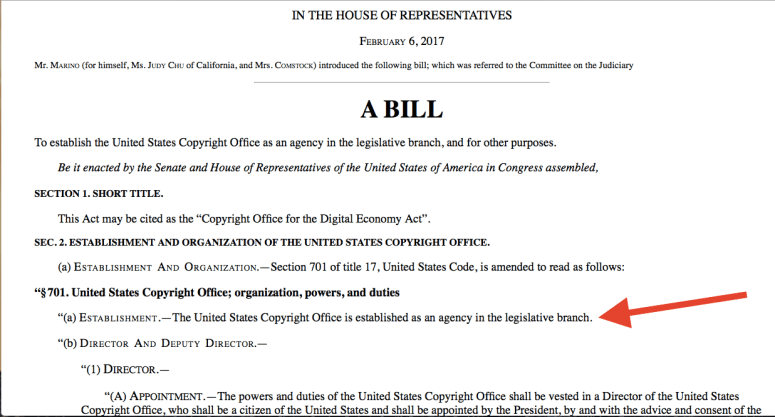
Reps Marino, Chu and Comstock just released text to house bill that would make the Copyright Office (mostly) independent from the Library of Congress.  This is a good thing for authors, photographers, filmmakers and songwriters. And it’s all thanks to aggressive overreach by radical copyleft academics and librarians.

Let me explain.

Over the last decade once stodgy library organizations like the American Library Association have become quite hostile to the notion of copyright protections for authors, photographers and recording artists and filmmakers.   They’ve also become quite friendly with Silicon Valley corporations like Google.

For example in 2003 the ALA filed an amicus brief in defense of  P2P companies  Grokster and Morpheus.   In 2016 they sided with BIG CABLE and pirates against songwriters in BMG vs Cox.  This again had the librarians on the wrong side of authors rights.   I count at least another dozen times in between inwhich ALA has been on the wrong side of authors’ rights.  And almost every time their amicus briefs were filed alongside amicus briefs from Silicon Valley companies.

Do you think rank and file librarians have any idea what the ALA is really up to?   Most librarians who haven’t been in the Washington DC-Google-Copyleft-OSF bubble seem to understand that authors have inviolable rights and should be fairly compensated.  I’m sure they understand that books don’t magically appear on the shelves of their libraries.  Further I bet most of them understand that without copyright incentives, freedom of expression dependent would be dependent on corporate donations, private donors  or government grants.  Most sensible librarians get that controversial expression would not be funded.  I suggest we all perform this little experiment. Go  into your local public library and ask any of the librarians if they think the ALA should be expending members limited resources defending pirate sites or BIG CABLE outlaws like Cox (who were caught red handed faking copyright law compliance).  I bet not a single rank and file librarian supports these initiatives or has any idea that the ALA is doing this on their behalf.

(Ed Note: I would say The ALA have always been pretty pro corporate, for instance they filed an Amicus brief FOR Texaco and AGAINST copyright holders in 1993).

In 2016 Librarian Dr Hayden, a Soros-OSF-Baltimore board member, was appointed the Librarian of Congress.  What was her first act?  She constructively terminated the long serving Register of Copyrights Maria Pallante by giving her the humiliating assignment of overseeing the Library of Congress Gift shop.

I did not make up that last part up.  The gift shop.   You can read Hayden’s letter to Pallante here.

Hayden appeared to be responding to a steady drumbeat from the usual (Google funded) copyleft suspects.  The party line (and I do mean party line) was that Pallante was terrible because she kept giving federal agencies advice on copyright.  You know, doing her job.  Don’t bother trying to figure that out, like much of the nonsense that comes from the copyleft it makes absolutely no fucking sense. Especially since libraries don’t have a dog in the fight, they already have broad copyright exemptions.

I guess they want a Copyright Office that does nothing?  That would certainly be helpful to pirate sites and companies like Google/YouTube that generate hundreds of millions of dollars from the unlicensed use of authors works.  You don’t think that the Google funding is having some sort of effect on the policy positions that the ALA takes do you?   Librarians of the world unite for the benefit of Silicon Valley corporations?

Anyway thanks stupid radical copyleft librarians.  This was such blatant overreach, everyone could see it for what it was. A naked power grab. And congress doesn’t want it happening again.    Looks like librarians have given us an independent Copyright Office.


Forget PewDiePie YouTube Still Hosts 100s of Hate Rock Bands

weisse-wolfe

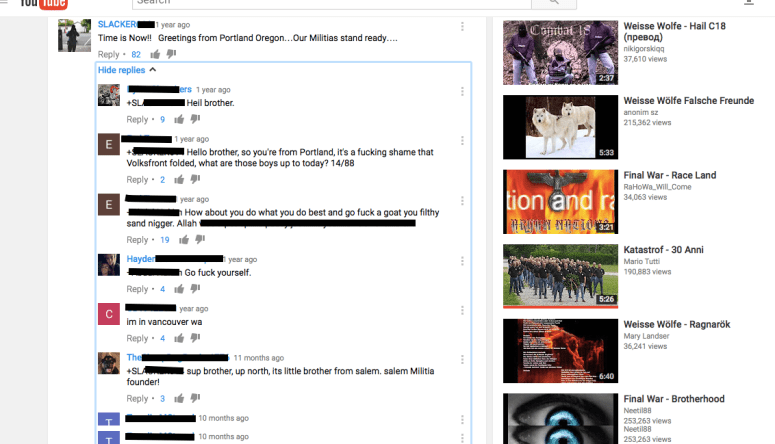
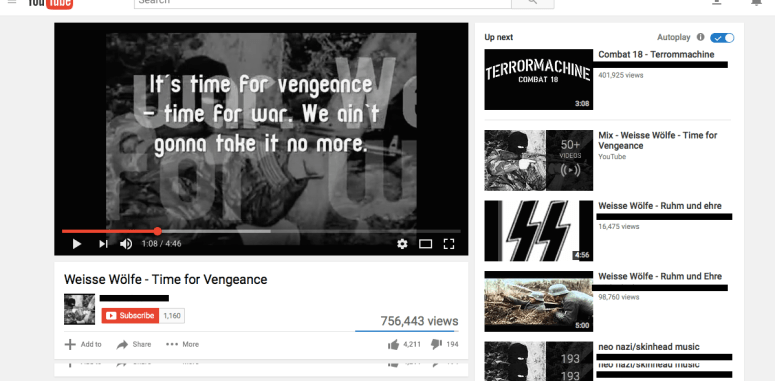
Neo Nazi bands like Weisse Wölfe have large followings on YouTube.   Comments sections for these videos are used for recruitment and organizing by neo Nazi groups.

As I’ve noted on this blog and on twitter in the last few days.  The Trichordist has been reporting on the YouTube’s sordid history of hosting and monetizing (with advertising and data mining) hate rock and other  speech intended to provoke violence against vulnerable groups.

A number of years ago I did some research for a private individual on the extent that hate rock permeates YouTube, and if there was evidence that neo-Nazi groups were using these videos to recruit members and radicalize followers.    The results were shocking.  At the time virtually every band on the Anti-Defamation League’s list of “Bigots Who Rock: an ADL List of Hate Music Groups” had a presence on YouTube.   And by any realistic measure there was clearly an effort to recruit and organize those who shared this ideology.

Well I just did a cursory inspection of YouTube and the previous results still seem to hold true:

For example this (somewhat portlandia-ish) effort, here we see Neo-Nazis in the northwest of the US organizing

screen-shot-2017-02-15-at-1-00-45-pm


Google Puts PewDiePie on “Double Secret Probation” for Antisemitism

screen-shot-2017-02-14-at-1-08-12-pm

screen-shot-2017-02-14-at-1-10-59-pm

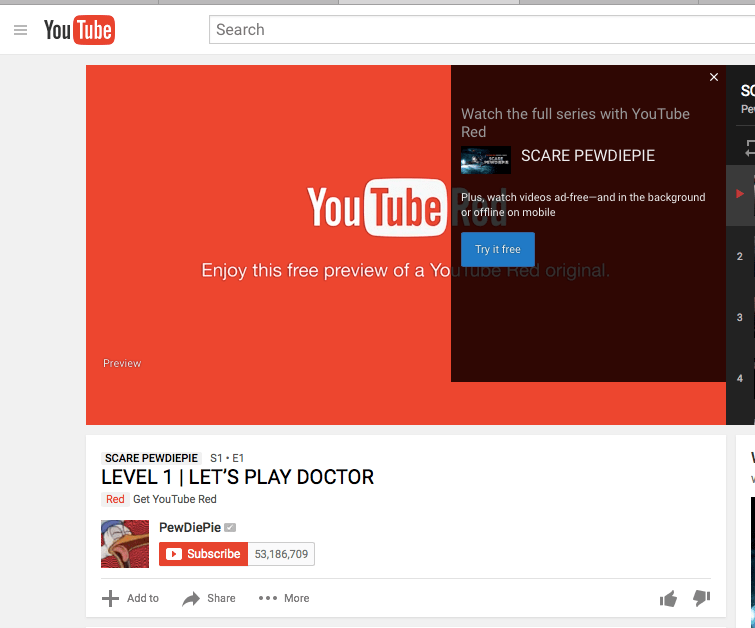
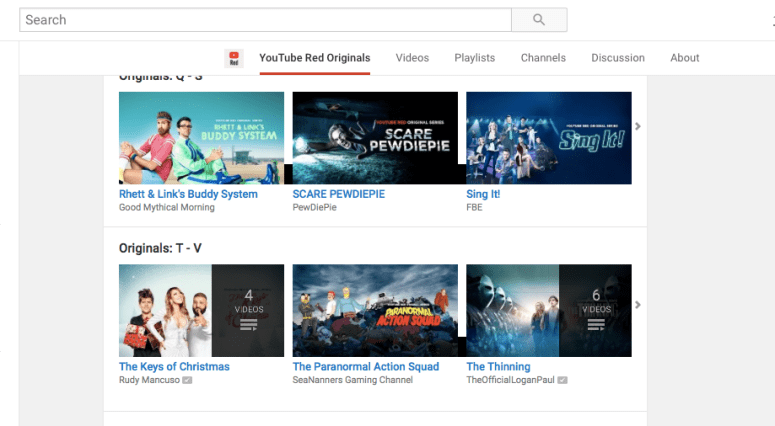
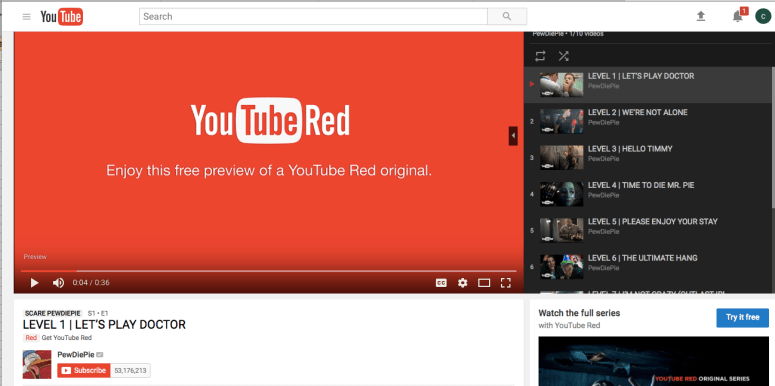
Fact check:  As of 1:09 pm EDT PewDiePie original content is still on YouTube Red Premium subscription service.  PewDiePie show is also being promoted on the YouTube red original content home page.

If you read the headlines may think that Google has actually severed relations with their biggest video star PewDiePie for making at least 9 antisemitic videos.  Not true.  This seems to be some sort of bullshit “double secret probation” type punishment.  As the Wall Street Journal accurately reports:

YouTube hasn’t removed any of the videos because it determined they don’t violate its community guidelines, which have a higher bar for removal than its rules for advertiser-friendly content, according to a person familiar with the matter.

and…

Mr. Kjellberg will be able to post videos to his channel and earn revenue from ads sold before his videos play, but those ads will only be sold through an automated ad auction that generally fetches lower prices than the preferred program.

But as it turns out PewDiePie show is still live on the YouTube Red premium subscription channel, which must involve some sort of money (hence the term “subscription). Further YouTube appears to still slinging ads on PewDiePie’s YouTube channel.  Double Secret Probation in deed.


Should Artists Tell Labels to Pull Their Videos? YouTube Continues Ties With PewDiePie Even After “Death To All Jews” Video

pewdiepie death to jews

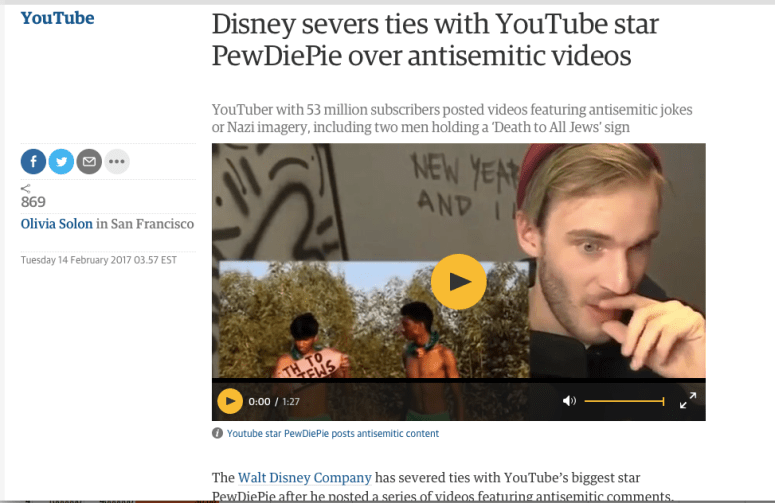
Disney severs ties, but YouTube continues to host support and promote PewDiePie’s Videos on YouTube and the subscription YouTube Red service. 

While much has been made of the Disney severing its relationship with YouTube star PewDiePie after his series of what most are calling anti-Semitic videos, few have said anything about the fact that YouTube seems to be  standing strong with their biggest star PewDiePie.  (Stock analysts take note,  this is why YouTube will always be an also-ran when it comes to lucrative video advertising.)

screen-shot-2017-02-14-at-4-29-06-am

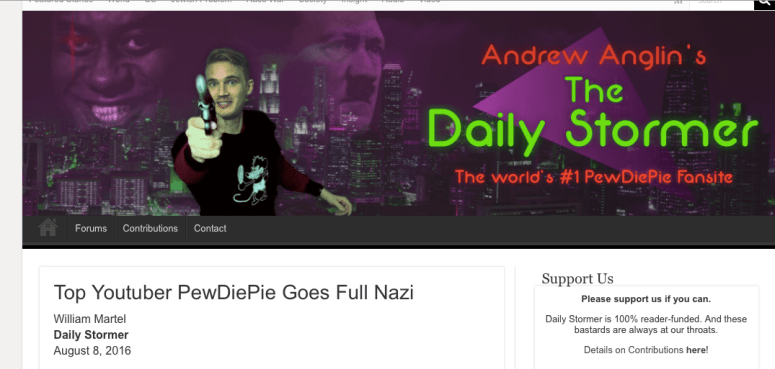
YouTube continues to promote its YouTube red original content from PewDiePie.  (UPDATE Screenshot was taken on Feb 14 2017 at  8:21 AM GMT, YouTube now claims to have “dropped” PewDiePie from YouTube, but this  is clearly not true.  This video and channel is still live, and still on YouTube Red Premium Subscription.  )  While some are characterizing PewDiePie’s videos as tasteless and hurtful trolling, clearly the videos go well beyond that.  But don’t just take my word for it, just ask Andrew Anglin at the American Nazi website The Daily Stormer. He declared the Daily Stormer  “The worlds #1 PewDiePie fansite after PewDiePie’s series of anti-semetic videos (below).

screen-shot-2017-02-14-at-5-12-13-am

I suppose everyone makes mistakes.  But this isn’t a one time thing with YouTube. There is a pattern here.    For nearly 4 years The Trichordist has been documenting YouTube’s Hate Rock/Nazi videos advertising problem.   Imagine if VHI kept running anti-semitic and hate rock videos to sell advertising.  Who would want to do business with them?

As artists we could be excused for being somewhat ambivalent when it seemed the problem was a  “user generated hate” problem.   But PewDiePie has a deal to produce exclusive content for YouTube!  WTF?  These videos were produced with the backing of Disney and YouTube.  This is NOT UGC. At least Disney severed ties with PewDiePie.  YouTube has not. This is simply inexcusable.

So why do labels and artist continue to support the YouTube platform? Individual artists can’t take down their videos down but labels can.  Artists should tell their labels they don’t want to do business with a platform that hosts and monetizes anti-semitism and hate rock (Ed note: And ISIS recruitment videos!!).

++++++++++++++++++++++++++++++++

We’ve been on this for 4 years.  No one in the music industry has been listening.  Why?  Are labels too scared to stand up to YouTube?  Too scared to stand up to hate and anti-semitism? I urge all artists and labels to review our coverage:

November 7 2013

The Trichordist asks YouTube Music Award Guest Stars to ask YouTube to stop hosting and serving ads on hate rock videos and rape playlists.

https://thetrichordist.com/2013/11/07/ytma-artists-can-help-clean-up-youtube-an-open-letter-to-jason-schwartzman-lady-gaga-spike-jonze-m-i-a-arcade-fire-and-macklemore/

April 15 2014

In the wake of the Jewish Community Center Shootings:

https://thetrichordist.com/2014/04/15/youtube-still-serving-ads-on-hate-rock-videos/

November 14 2014

YouTube launches subscription service without dealing with Hate Rock problem.

Will The New YouTube Streaming Service Feature All the Hate Rock Currently Featured On YouTube?

November 17 2014

We made the same point to artists and labels in 2014.  They failed to act. Frankly this is when I gave up for a while cause I came to the realization that artists and labels are essentially quislings.

Do You Want Your Music Alongside Hate Rock Songs? Artist Face YouTube Music Dilemma.

July 16 2015

Much press about Reddit, racist and violent misogynist sub-reddits but the same stuff can be found on YouTube.

Advertisers: How is YouTube Any Different Than Reddit?


Songwriters File Motion to Proceed in Constitutional Lawsuit Against DOJ on 100% Licensing

Incoming Trump Administration DOJ officials have to deal with the mess that revolving door Silicon Valley lawyers left over at the antitrust division:  A constitutional challenge to the 100% licensing rule forced on songwriters, and all those damn feral cats that Litigation Section III was feeding. According to career staff at DOJ ATR LIT SECT III cat nicknames (from front to back): Google, Public Knowledge, Mic-Coalition, NAB,  Spotify, Pandora, American Restaurant Association, Darth Vader, Satan, Johanna Shelton, and Snookums. 

The most important fight for songwriters is proceeding. SONA (Songwriters of North America)  has responded to the DOJ motion to dismiss, with a motion to proceed.

As reported by Billboard:

“No one knows whether the Department of Justice under the Trump administration will alter its approach to the antitrust consent decrees that essentially regulate the collection societies ASCAP and BMI, but the legal fight against the Justice Department’s June 2016 decision on “100 percent licensing” is proceeding.”

Read more here

The importance of the constitutional arguments can not be overstated. The results of this lawsuit will be very important to everyone, not just songwriters.  The lawsuit challenges the DOJ regulations specifically for violation of the 5th amendment on “takings.” But other important issues are at stake. For instance the DOJ essentially used a “time machine” to make an end run around already existing private contracts (“the consent decrees always required  100% licensing, this is just a clarification” ). This would seem to violate constitutional prohibitions against laws or rule making that makes previously legal activity illegal after the fact.  The DOJ also appears to have violated the Administrative Procedures Act when they enacted this new rule. And never mind that no one can seem to figure out when songwriters not-yet-born  (“temporary” ASCAP consent decree dates from 1941)  got their due process!


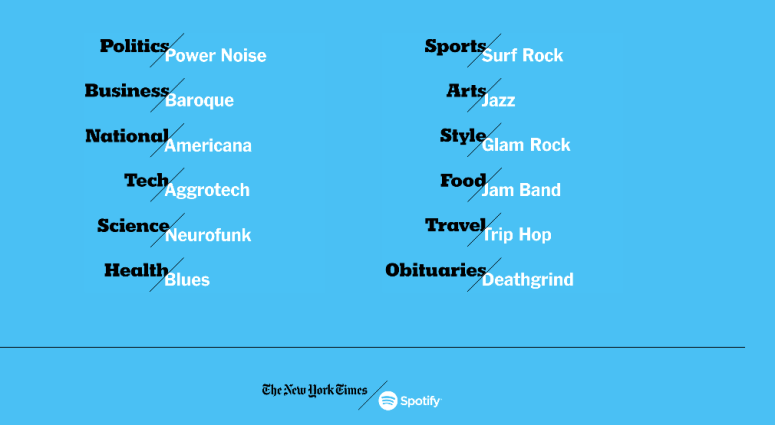
The NY Times/Spotify Joint Subscription is Weird, Very Weird

screen-shot-2017-02-09-at-9-20-05-pm

We did not photoshop any of this.  This is a real screenshot! 

A lot of people in the music community have been scratching their heads over the new NY Times subscription offer that includes Spotify Premium.  Songwriters are trying to figure out:

Exactly how it is we ended up subsidizing newspaper subscriptions?  You see the COMPULSORY (can’t say no)  federal license for songwriters gives us 10.5% of revenue generated by streaming services.  So a cut rate Spotify subscription bundled with The NY Times, is essentially a pay cut to songwriters.

 Or wait, did songwriters just get a pay boost because now we get some percentage of The NY Times subscription revenue?

More likely the former rather than the latter. But we will never know since the federal compulsory license doesn’t allow songwriters to audit!  

Meanwhile most media commentators have focused on the joint subscription as an apparent sign of weakness, or weirdness from the NY Times. Certainly the screenshot above argues for weirdness. 

On the face of it the NY Times does have something to gain.   Spotify reports it has 40 million subscribers* while NY Times has just 3 million subscribers.  Bloomberg noted that NY Times could reach Spotify’s millennial (snake people) audience,  you know, cause like Buzzfeed.

But I personally wonder if this doesn’t have  something to do with the Spotify IPO disaster. If you don’t know Spotify took $1.5 Billion in convertible debt premised on a 2016 or early 2017 IPO.  There are now only a few weeks left before the reported terms of that debt begin ratcheting up. Higher interest rates and promised stock discounts will cut deeper. There are now reports that the Spotify IPO won’t happen til 2018.   Yet every six months the interest rates on the convertible debt go up and discounts get larger.  Ouch! Could the metastasizing debt makes the young company’s IPO offering less attractive?  

But this is where it gets very weird. With  Spotify now helping improve the bottom line at The NY Times will editors at “the newspaper of record” be hesitant to  cover Spotify financials in a negative way?   Give them the  benefit of the doubt on a disputed point? Soften a headline? 

Let’s hope not. 

* it’s never clear what Spotify really  means when they report “subscribers.” Are these real full price $9.99 subscriptions or highly discounted trial subscriptions subject to massive churn? 


Up, Up and Away: The Spotify Balloon is a Cautionary Tale

Must read. Castle questions whether the IPO delay has been leaked by Spotify to try to shift blame to labels and artists. Nevermind that hundreds of thousands of songwriters have NEVER been paid.

“Why is Spotify leaking this IPO information now? Was any serious person refreshing their news feed in anticipation of a Spotify IPO announcement? My bet is that it is mostly, if not entirely, to get out ahead of an anticipated breakdown in their negotiations with major labels and to try to put some chum in the water about the beastly record companies, greedy artists and nasty songwriters. You know–the people who make Spotify’s only product.”

Music Technology Policy

Already we see leaks to the tech press that Spotify is pushing off its IPO to next year while it pursues a “path to profitability”.  Now that’s a new one–the company has previously told investors a growth story like many other startups.  But unlike most other startups, Spotify now has a $1,000,000,000 convertible loan from private equity companies staring it in the face–along with what will no doubt turn out to be credit card interest rates when the total cost of the money is calculated (interest plus discounts on Spotify’s anticipated public stock).

Why is Spotify leaking this IPO information now?  Was any serious person refreshing their news feed in anticipation of a Spotify IPO announcement?  My bet is that it is mostly, if not entirely, to get out ahead of an anticipated breakdown in their negotiations with major labels and to try to put some chum in the water…

View original post 880 more words

Don’t You Have More Important Things to Do? DOJ Should Drop the 100% Licensing Push

Now that most of the DOJ lawyers who pushed the 100% licensing rule on songwriters are gone, who’s gonna deal with all those feral cats that former Acting Assistant Attorney General Renata Hesse was feeding? 

Last year, in what can only be described as an elaborate Kabuki, a small group of DOJ lawyers led by a former Google attorney, took up a question that no one except Google was asking:  Do the DOJ consent decrees that govern songwriter public performance licenses require a songwriter to license 100% of the song or does each songwriter “fractionally” license their own share?

(How 100% licensing benefits Google)

The simple and obvious answer is, no.   For 70+ years songwriters have been governed by these same consent decrees, and during that time songwriters have licensed fractionally.   The DOJ and the federal courts that supervised this process were clearly aware that this was the practice and they didn’t object.  In fact many of the opinions from the courts and DOJ documents explicitly reference and require the practice of fractional licensing.

Yet last summer this small group of lawyers “answered” the question that no one was asking.  They in effect said “yes in fact the consent decrees have always required 100% licensing.”  Ok…then why has  the DOJ been involved in the business of fractional licensing for the last 70+ years?

There are only two conclusions:

For the last 70 years the consent decrees were improperly administered by dozens of really sharp DOJ attorneys and federal judges, but this new crew is smarter than all of them combined.

or

This was a political decision designed to benefit a favored corporation.  Or in the popular vernacular: corruption.

What do you think?

Fortunately BMI and SONA (Songwriters of North America)  separately sued the DOJ (two different and distinct legal complaints against 100% licensing).   In mid September a federal judge considered BMI’s complaint and  ruled against the DOJ.   However a few days after the presidential election the lame duck DOJ antitrust division appealed the ruling.   I suppose this was timed to come after the election when popular songwriters were no longer needed on the election trail.  Right? Perfect time to twist the knife!

The status of the SONA lawsuit is unclear, but last I heard the DOJ were on the books as still fighting it.

But honestly it’s kind of hard to tell.  If you go to the DOJ Antitrust website there are animated gifs of tumbleweeds going across the page accompanied by wind and yipping coyote sound effects. A hobo camp has been set up on the FAQ page and someone needs to deal with all those feral cats that former Assistant AG Renata Hesse was feeding.

Regardless, it’s time.   Time to shut this sucker down. Virtually all the 100% licensing lawyers are gone.  Probably off to cash in their chips in the Googley parts of the private sector.  The DOJ should drop the appeal, settle the SONA lawsuit, and give up the 100% licensing push.  Continuing this ridiculous fight only makes the DOJ look petty, corrupt and stupid.  Especially with the very real, life or death legal questions face the DOJ these days.


@BMI smacks down @AmericanSpectator and Eric Peters on Music Licensing #FakeNews

Stick to cars Eric Peters.  So many alternative facts in this piece.  Great to see BMI smack him down.

But I have to admit that I love the fact that the American Spectator was bamboozled into supporting a position on music licensing  that was pushed only by  radical copyleft Obama DOJ officials and Google.  Pure Li-BRAT-arian nonsense.  Can someone explain to me how collectivizing any property right (even if they belong to mostly non trump supporting songwriters)  a conservative free market position?

Read BMI’s reply to Peters here.

‘No Macarena for Trump’? A Response From Broadcast Music, Inc. (BMI)


Will Spotify Convertible Debt Cannibalize Major Label and Insider Equity?

screen-shot-2017-02-01-at-10-47-32-pm

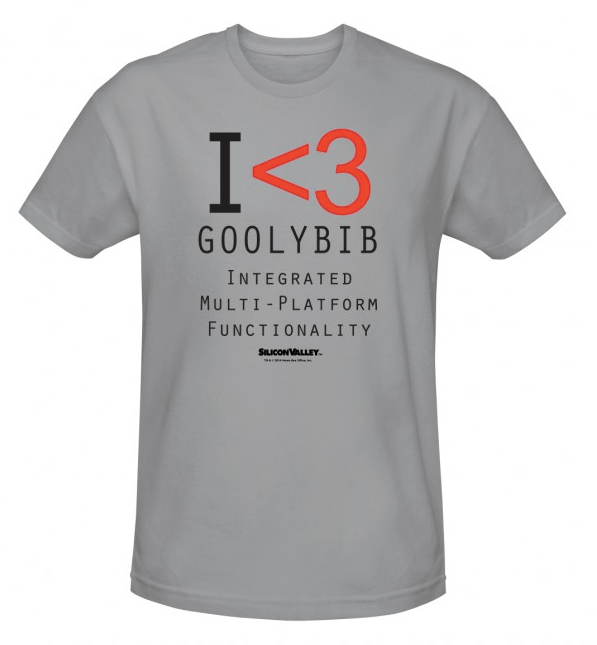
Hypothetically, the one shirt Spotify employees and investors will have left after down round(s), debt conversion(s) and dilution(s). 

Bruce Houghton at Hypebot has a great article on Spotify’s tough financial situation, in particular the soaring interest rates and the ratcheting stock discounts attached to the convertible debt it took from private equity firms TPG and Dragoneer.   As Hypebot reports:

“Spotify pays 5% annual interest on the debt, adding 1% every six months for a total of up to 10%. Investors can convert their debt to equity at a 20% discount of Spotify’s IPO share price; and if there is no IPO within a year, the discount at which they can eventually buy stock increases 2.5% every extra six months. Additionally, these investors can sell their shares just 90 days after the IPO, well before the 180 day lockup for Spotify’s other investors and employees.”

http://www.hypebot.com/hypebot/2017/01/music-industry-has-upper-hand-as-spotify-faces-soaring-interest-rates-stock-discounts.htm

Houghton astutely points out that this gives the major labels some serious negotiating leverage as Spotify needs long term licensing deals from the majors in order to get to an IPO, and hence get out from under the metastasizing debt.

I’d just like to add something else: this looks like one of those nasty funding vehicles that are often the grist of HBO’s Silicon Valley Series.

What seems to be happening here is that Dragoneer and TPG have a radically different set of financial incentives than the current stockholders.   I haven’t seen the terms of the debt, but it appears that the longer it takes for Spotify to IPO the better it is for Dragoneer and TPG.  Why?  They have ratcheting interest rates and ratcheting discounts on the stock and the longer it takes to IPO the more money they get, and the more of the company they can buy with that convertible debt at a steeper discount.  If the IPO is late and the price is low, it’s entirely possible that the convertible debt allows Dragoneer and TPG to swallow most or even all the company.  This is especially likely if the IPO is spread over multiple offerings.   And why might the post-IPO Spotify stock price collapse?   Well, a lack of buyers will hurt a stock price.   And why might there be a lack of buyers? Perhaps the market is wary of the dilution implied by the  convertible debt held by Dragoneer and TPG?  See how that works?  This is a negative reinforcing loop.

So to all those labels, managers, Spotify employees and other sundry insiders who thought they got in on a “can’t lose” deal with that pre-IPO Spotify stock?  Check out what happened to Goolybib.